

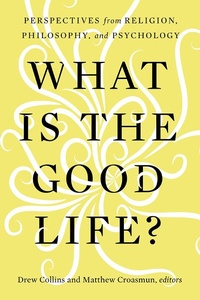
What Is the Good Life?
Description

We have more options and choices to make about how we want to live than ever before. But where do we turn for guidance as we choose how to live? Are we so focused on choosing what we want for our lives that we have forgotten to ask ourselves what is a good life and what is worth wanting? In What Is the Good Life?: Perspectives from Religion, Philosophy, and Psychology, leading scholar-practitioners from nine different traditions-religious and secular-each offer an account of the good life. These accounts explore the distinct visions construed by their respective traditions from within a shared threefold heuristic schema of agency, circumstance, and affect.
Presented in this way, the existential concern and normative force of these traditions are brought to the fore, inviting readers to explore the commonality of this central question across a variety of traditions alongside their unique and distinct responses. What Is the Good Life? offers readers a conceptual guide for navigating our pluralistic world and specific examples of the visions of the good life they might encounter. Although these traditions provide decidedly different accounts of the good life, they are united in their capacity to make claims about the world and our place in it-normative claims, with ineradicable existential force-with which we might grapple, provided we are given the opportunity. And it is the invitation to take up such first-person grappling that this book provides.
More details
Other editions
Additional editions
Persons
Content
- Cover Page
- Half Title Page, Title Page, Copyright
- Contents
- Introduction
- 1. A Hindu Vision
- 2. A Buddhist Vision
- 3. A Ruist (Confucian) Vision
- 4. A Jewish Vision
- 5. A Christian Vision
- 6. A Muslim Vision: On the Truly Happy Life
- 7. A Utilitarian Vision
- 8. A Positive Psychology Vision
- Contributors
