

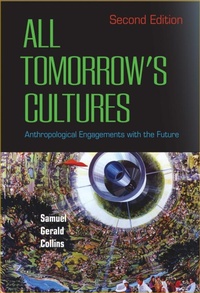
All Tomorrow's Cultures
Description

The first edition of All Tomorrow's Cultures explored the legacy of futures-thinking in anthropology and marked the beginning of a resurgence of interest in anthropological futures. The new edition has been updated to reflect some of the outpouring of work since then, particularly in science and technology studies and in anthropological analyses of indigenous futures. In addition, Collins has updated the final chapter to expand the field of anthropological possibility in an age of both despair and hope.
More details
Other editions
Additional editions
Person
Samuel Gerald Collins is Professor of Anthropology at Towson University. His research includes urban studies, social media, design anthropology and information technologies in South Korea and the United States. Among other books and articles, he is the co-author (with Matthew Durington) of Networked Anthropology (Routledge, 2015).
Content
Preface to the Revised Edition
Introduction: Tomorrow's Cultures Today?
Chapter 1. Anthropological Time Machines
Chapter 2. Ask Margaret Mead
Chapter 3. Chad Oliver
Chapter 4. Close Encounters
Chapter 5. Playing Games with Futurology
Chapter 6. The Surprising Future
Conclusion: The Open Future
References
