

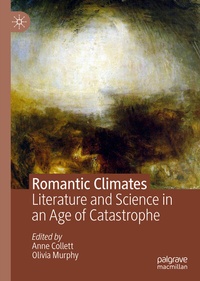
Romantic Climates
Description

This book seeks to uncover how today's ideas about climate and catastrophe have been formed by the thinking of Romantic poets, novelists and scientists, and how these same ideas might once more be harnessed to assist us in the new climate challenges facing us in the present.
The global climate disaster following Mt Tambora's eruption in 1815 - the 'Year without a Summer' - is a starting point from which to reconsider both how the Romantics responded to the changing climates of their day, and to think about how these climatic events shaped the development of Romanticism itself.
As the contributions to this volume demonstrate, climate is an inescapable aspect of Romantic writing and thinking. Ideologies and experiences of climate inform everything from scientific writing to lyric poetry and novels. The 'Diodati circle' that assembled in Geneva in 1816 - Lord Byron, Percy and Mary Shelley, John Polidori and John Cam Hobhouse and the gothic novelist MG 'Monk' Lewis - is synonymous with the literature of that dreary, uncanny season. Essays in this collection also consider the work of Jane Austen, John Keats and William Wordsworth, along with less well-known figures such as the scientist Luke Howard, and later responses to Romantic climates by John Ruskin and Virginia Woolf.
More details
Other editions
Additional editions
Persons
Olivia Murphy is a Postdoctoral Research Fellow in English at the University of Sydney, Australia.
Content
1. Romantic Climates: A Change in the Weather: Olivia Murphy.- 2. Domesticating Climate: Scale and the Meteorology of Luke Howard: Alexis Harley.- 3. Wordsworth in the Tropics of Cumbria: Elias Greig.- 4. Keats and the Poetics of Climate Change, 1816 and Beyond: Nikki Hessell.- 5. 'Out of season': The Narrative Ecology of Persuasion : Amelia Dale.- 6. 'This Thing of Darkness': Reading Atmospheric Disturbance in Matthew Lewis's Journal of a West India Proprietor : Anne Collett.- 7. When the Earth Moves: Clara Tuite.- 8.Utopia or Dystopia? The Romantics in Switzerland, 1816: Steven Hampton.- 9. Metaphor and the Unprecedented: Byron's 'Darkness' and Responding to Ecological Disaster: James Phillips.- 10. Orlando 's Romantic Climate Change: Thomas H Ford.- 11. Afterword: Ghosts of 1816: Gillen D'Arcy Wood.
