


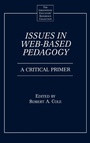
Issues in Web-Based Pedagogy
A Critical Primer
1st Edition
Published on 30. June 2000
432 pages
978-0-313-00541-1 (ISBN)
Description

There has been an explosion of Web-based courses in higher education. Aiming at an interdisciplinary audience, the contributors draw upon diverse philosophical and empirical backgrounds to make claims about Web-based pedagogy. Among the points they raise is the concern that education is more easily commodified through Internet technologies, implying that traditional faculty roles in teaching (and research) are at risk. Moreover, current understandings of what it means to be a teacher or a student are undergoing redefinition as a result of these new distance-learning technologies.
The contributors note that Web-based pedagogy is associated with sound instruction when particular strategies are adopted. As a corollary, this form of teaching is least effective when attempts are made to directly translate traditional styles of teaching. Political, social, and economic interests are competing to shape the direction that online education will take. The authors argue that opportunities exist for administrators and faculty to define the terms under which Web-based learning will occur in their institutions.
The contributors note that Web-based pedagogy is associated with sound instruction when particular strategies are adopted. As a corollary, this form of teaching is least effective when attempts are made to directly translate traditional styles of teaching. Political, social, and economic interests are competing to shape the direction that online education will take. The authors argue that opportunities exist for administrators and faculty to define the terms under which Web-based learning will occur in their institutions.
More details
Series
Language
English
Place of publication
New York
United States
Publishing group
Bloomsbury Publishing Plc
Target group
Interest Age: From 7 to 17 years
File size
63,12 MB
ISBN-13
978-0-313-00541-1 (9780313005411)
Copyright in bibliographic data and cover images is held by Nielsen Book Services Limited or by the publishers or by their respective licensors: all rights reserved.
Schweitzer Classification
Other editions
Additional editions
Book
06/2000
Greenwood Press
€87.90
Shipment within 15-20 days
Person
ROBERT A. COLE is Assistant Professor, Department of Communication Studies, State University of New York at Oswego./e
Content
Introduction
Philosophical and Theoretical Considerations
Expectations Exploded by R. Stanton Hales
Using the Internet for Teaching and Research: A Political Evaluation by Michael Margolis
The Web, the Millennium, and the Digital Evolution of Distance Education by David C. Leonard
Critical Reflections: Political Philosophy and Web Technology by John Steel
Communication Technologies in an Educational Environment: Lessons from a Historical Perspective by Patrick B. O'Sullivan
When and Where Appropriate: Lessons from "Foreign" Contexts for the Pedagogical Use of Web-Based Technologies in the United States by Julian Kilker
From Rhetoric to Technology: A Transformation from Citizens into Consumers by Laura Blasi and Walter Heinecke
Is There a Professor in This Class? by David C. Paris
Where Is Every-body? by Paulette Robinson
Transforming Professionals via the Web: Promoting Social Justice in Web-Based Ethics Education for Counselors by Marvin J. McDonald
The Roles and Interrelationships of Presence, Reflection, and Self-Directed Learning in Effective World Wide Web-Based Pedagogy by Sherry Wulff, Joan Hanor, and Robert J. Bulik
Using the Web to Create Student-Centered Curriculum by Bijan B. Gillani
The Scholarship of Web-Based Teaching by Martha Daugherty, Autumn Grubb, Jude Hirsch, and Lee Gillis
Empirical and Practical Considerations
Creating an Environment for Successful Technology Integration by Kay S. Dennis
The `Time' Factor in On-line Teaching: Implications for Faculty and Their Universities by Claudine Schweber
Seven Principles for Good Practice in Teaching and Technology by Alec M. Testa
Copyright and Web-Based Education: What All Faculty Should Know by David Throne
Using the Web in Live Lectures: Examples and Issues by Graeme Lang
Untangling the Web: Developing Web-Enhanced Instruction for Political Science by Donald L. Goff
The Promise--and Potential Pitfalls--of Cyberlearning by Peter Navarro
Preparing Higher Education Learners for Success on the Web by May Lowry, Christine Thornam, and Cason White
A Hierarchy of Access Issues Affecting On-line Participation by Community College Students by Allan Craig Lauzon, Tricia Bertram Gallant, and Susan Rimkus
On-line Is on Target for Motivated Learners by Michael S. Ameigh
Teaching Research Skills Using the Internet by Mark Gellis
Tearing Down Barriers and Building Communities: Pedagogical Strategies for the Web-Based Environment by Autumn Grubb and Margaret Hines
Facilitating On-line Discussion in an Asynchronous Format by Tisha Bender
Web-Based Instruction and People with Disabilities by Sheryl Burgstahler
Index
Philosophical and Theoretical Considerations
Expectations Exploded by R. Stanton Hales
Using the Internet for Teaching and Research: A Political Evaluation by Michael Margolis
The Web, the Millennium, and the Digital Evolution of Distance Education by David C. Leonard
Critical Reflections: Political Philosophy and Web Technology by John Steel
Communication Technologies in an Educational Environment: Lessons from a Historical Perspective by Patrick B. O'Sullivan
When and Where Appropriate: Lessons from "Foreign" Contexts for the Pedagogical Use of Web-Based Technologies in the United States by Julian Kilker
From Rhetoric to Technology: A Transformation from Citizens into Consumers by Laura Blasi and Walter Heinecke
Is There a Professor in This Class? by David C. Paris
Where Is Every-body? by Paulette Robinson
Transforming Professionals via the Web: Promoting Social Justice in Web-Based Ethics Education for Counselors by Marvin J. McDonald
The Roles and Interrelationships of Presence, Reflection, and Self-Directed Learning in Effective World Wide Web-Based Pedagogy by Sherry Wulff, Joan Hanor, and Robert J. Bulik
Using the Web to Create Student-Centered Curriculum by Bijan B. Gillani
The Scholarship of Web-Based Teaching by Martha Daugherty, Autumn Grubb, Jude Hirsch, and Lee Gillis
Empirical and Practical Considerations
Creating an Environment for Successful Technology Integration by Kay S. Dennis
The `Time' Factor in On-line Teaching: Implications for Faculty and Their Universities by Claudine Schweber
Seven Principles for Good Practice in Teaching and Technology by Alec M. Testa
Copyright and Web-Based Education: What All Faculty Should Know by David Throne
Using the Web in Live Lectures: Examples and Issues by Graeme Lang
Untangling the Web: Developing Web-Enhanced Instruction for Political Science by Donald L. Goff
The Promise--and Potential Pitfalls--of Cyberlearning by Peter Navarro
Preparing Higher Education Learners for Success on the Web by May Lowry, Christine Thornam, and Cason White
A Hierarchy of Access Issues Affecting On-line Participation by Community College Students by Allan Craig Lauzon, Tricia Bertram Gallant, and Susan Rimkus
On-line Is on Target for Motivated Learners by Michael S. Ameigh
Teaching Research Skills Using the Internet by Mark Gellis
Tearing Down Barriers and Building Communities: Pedagogical Strategies for the Web-Based Environment by Autumn Grubb and Margaret Hines
Facilitating On-line Discussion in an Asynchronous Format by Tisha Bender
Web-Based Instruction and People with Disabilities by Sheryl Burgstahler
Index
