

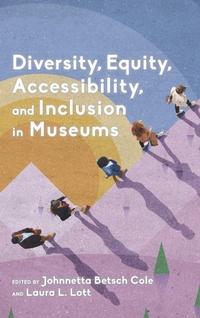
Diversity, Equity, Accessibility, and Inclusion in Museums
1st Edition
Published on 1. February 2019
182 pages
979-8-7651-9346-4 (ISBN)
Description

Diversity, equity, accessibility, and inclusion in all aspects of museums' structure and programming are top issues in the field today - and in the overall arts/culture sector. Much has been written, from various perspectives, over several decades. Yet, a lack of diversity remains and exclusive practices and inequities persist in all types of museums.
A go-to resource for readers interested in learning about diversity and inclusion work in the field - past, present and future. This edited collection of the most important essays, speeches, and reports on these topics seeks to facilitate a much-needed intergenerational dialogue that builds on lessons from the past, broadens thinking about the many different facets of this complex work, and ignites inspiration for continuing to correct inequities across museums of all types, sizes, and locations.
In this book compiled and edited by Dr. Johnnetta Betch Cole, who has served as both director of the Smithsonian National Museum of African Art and as the president of both historically Black colleges for women in the United States, Spelman College and Bennett College (a distinction she alone holds) and Laura Lott, president and CEO of the American Alliance of Museums, (the first woman to the lead the organization), thought leaders in the museum field present their research, analysis and work to answer some of the most challenge questions facing the museum field. Why do these problems persist? How can a new generation of museum leaders champion change to better represent the communities that museums strive to serve and engage? What can we learn from those who have been observing, experiencing, and writing about these issues?
A go-to resource for readers interested in learning about diversity and inclusion work in the field - past, present and future. This edited collection of the most important essays, speeches, and reports on these topics seeks to facilitate a much-needed intergenerational dialogue that builds on lessons from the past, broadens thinking about the many different facets of this complex work, and ignites inspiration for continuing to correct inequities across museums of all types, sizes, and locations.
In this book compiled and edited by Dr. Johnnetta Betch Cole, who has served as both director of the Smithsonian National Museum of African Art and as the president of both historically Black colleges for women in the United States, Spelman College and Bennett College (a distinction she alone holds) and Laura Lott, president and CEO of the American Alliance of Museums, (the first woman to the lead the organization), thought leaders in the museum field present their research, analysis and work to answer some of the most challenge questions facing the museum field. Why do these problems persist? How can a new generation of museum leaders champion change to better represent the communities that museums strive to serve and engage? What can we learn from those who have been observing, experiencing, and writing about these issues?
More details
Other editions
Additional editions
Johnnetta Betsch Cole | Laura L. Lott
Diversity, Equity, Accessibility, and Inclusion in Museums
Book
02/2019
American Alliance of Museums
€48.30
Shipment within 3-4 weeks
Persons
Dr. Johnnetta Betsch Cole is a principal consultant with Cook Ross, Inc., a leading firm advising organizations on matters of diversity, equity, accessibility and inclusion. She is also a senior consulting fellow at the Andrew W. Mellon Foundation. Dr. Cole previously served as Director of the Smithsonian National Museum of African Art and as President of Spelman College and Bennett College. During her long and distinguished career in higher education and the arts, she consistently addresses racial, gender, and all other forms of inequality.
Laura L. Lott is the President and CEO of the American Alliance of Museums the only organization representing the entire scope of the museum community. A passionate advocate for strong and engaged boards, as well as diversity, equity, accessibility, and inclusion in the nonprofit sector, Laura frequently speaks to non-profit and museum boards about governance, strategy, and inclusion.
Laura L. Lott is the President and CEO of the American Alliance of Museums the only organization representing the entire scope of the museum community. A passionate advocate for strong and engaged boards, as well as diversity, equity, accessibility, and inclusion in the nonprofit sector, Laura frequently speaks to non-profit and museum boards about governance, strategy, and inclusion.
Content
Part 1: A Call to Action
1. Flies in the Buttermilk: Museums, Diversity, and the Will to Change
Lonnie Bunch
2. Museums, Racism, and the Inclusiveness Chasm
Carlos Tortolero
3. 2015 American Alliance of Museums Annual Meeting Keynote Address
Johnnetta Betsch Cole
4. Women's Locker Room Talk: Gender and Leadership in Museums
Kaywin Feldman
Part 2: Diversity, Equity, Accessibility, and Inclusion Strategies
5. Twin Threats: How Ignorance and Instrumentality Create Inequality and Injustice
Darren Walker
6. The Leadership Imperative: Diversity, Equity, Accessibility, and Inclusion as Strategy
Laura L. Lott
7. History That Promotes Understanding in a Diverse Society
Cinnamon Catlin-Legutko
8. Pipeline is a Verb: Field Notes on the Spelman College Curatorial Studies Pilot Program
Andrea Barnwell Brownlee
9. Museums and ADA at 25: Progress and Looking Ahead
Beth Bienvenu
10. Catalyzing Inclusion: Steps Towards Sustainability in Museums
Natanya Khashan
11. It's Time to Stop and Ask "Why?"
Lisa Sasaki
Part 3: The Necessity and Power of First Person Voices
12. Much Has Been Taken, But All is Not Lost: The Restorative Promise of First-Voice Representation
Eduardo Díaz
13. No Longer Hiding in Plain Sight
William Underwood Eiland
14. The National Museum of the American Indian: Whence the 'Art Object'
W. Richard West, Jr.
Part 4: Personal Journeys
15. Disability and Innovation: The Universal Benefits of Inclusive Design
Haben Girma
16. Maybe This Time: A Personal Journey Toward Racial Equity in Museums
Elaine Gurian
17. Museum Musings: Then and Now
Cecile Shellman
Appendix A: Diversity, Equity, Accessibility, and Inclusion Definitions
Appendix B: The Andrew W. Mellon Foundation Art Museum Staff Demographic Survey
Appendix C: Museum Board Leadership Report Excerpt - The People
Appendix D: Selected Resources
1. Flies in the Buttermilk: Museums, Diversity, and the Will to Change
Lonnie Bunch
2. Museums, Racism, and the Inclusiveness Chasm
Carlos Tortolero
3. 2015 American Alliance of Museums Annual Meeting Keynote Address
Johnnetta Betsch Cole
4. Women's Locker Room Talk: Gender and Leadership in Museums
Kaywin Feldman
Part 2: Diversity, Equity, Accessibility, and Inclusion Strategies
5. Twin Threats: How Ignorance and Instrumentality Create Inequality and Injustice
Darren Walker
6. The Leadership Imperative: Diversity, Equity, Accessibility, and Inclusion as Strategy
Laura L. Lott
7. History That Promotes Understanding in a Diverse Society
Cinnamon Catlin-Legutko
8. Pipeline is a Verb: Field Notes on the Spelman College Curatorial Studies Pilot Program
Andrea Barnwell Brownlee
9. Museums and ADA at 25: Progress and Looking Ahead
Beth Bienvenu
10. Catalyzing Inclusion: Steps Towards Sustainability in Museums
Natanya Khashan
11. It's Time to Stop and Ask "Why?"
Lisa Sasaki
Part 3: The Necessity and Power of First Person Voices
12. Much Has Been Taken, But All is Not Lost: The Restorative Promise of First-Voice Representation
Eduardo Díaz
13. No Longer Hiding in Plain Sight
William Underwood Eiland
14. The National Museum of the American Indian: Whence the 'Art Object'
W. Richard West, Jr.
Part 4: Personal Journeys
15. Disability and Innovation: The Universal Benefits of Inclusive Design
Haben Girma
16. Maybe This Time: A Personal Journey Toward Racial Equity in Museums
Elaine Gurian
17. Museum Musings: Then and Now
Cecile Shellman
Appendix A: Diversity, Equity, Accessibility, and Inclusion Definitions
Appendix B: The Andrew W. Mellon Foundation Art Museum Staff Demographic Survey
Appendix C: Museum Board Leadership Report Excerpt - The People
Appendix D: Selected Resources
