

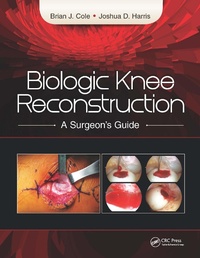
Biologic Knee Reconstruction
A Surgeon's Guide
1st Edition
Published on 1. June 2024
278 pages
978-1-040-13626-3 (ISBN)
Description

Treatment of articular cartilage pathology in the knees of young and active patients is a challenging and controversial issue. Biologic Knee Reconstruction: A Surgeon's Guide is a how-to, step-by-step guide that addresses the evaluation and management of this unique patient population.
Internationally renowned cartilage experts Dr. Brian J. Cole and Dr. Joshua D. Harris, along with their contributors, present information on normal and abnormal history and physical examination. The reader will learn proper decision-making using a patient-centered approach of treatment, increasing the likelihood of a successful outcome. In addition to radiographic assessment of articular cartilage, Biologic Knee Reconstruction discusses the use of biomarkers, defect classification, and patient-reported and surgeon-measured outcomes. Aggressive nonsurgical medical management, including medications, injections, physiotherapy, and rehabilitation, is also presented.
Biologic Knee Reconstruction also discusses the management of concomitant pathologies such as malalignment, meniscal deficiency, and ligamentous instability. Selection of surgical cartilage restorative treatment options is multifactorial, requiring consideration of several patient-, knee-, and defect-specific issues. All contemporary open and arthroscopic cartilage techniques are presented in detail with high resolution figures. A unique feature of Biologic Knee Reconstruction is the presentation of several chapters discussing non-medical issues highly pertinent to the advancement and future of this field: funding of research and cost of new advanced technologies, regulation of advanced cellular, tissue, and genetic technologies, evidence-based medicine and clinical trial design and conduct, and the ethics of allograft tissues and stem cell use.
Features:
Technique preference cards from the experts performing cartilage surgery
Patient education information
The most up-to-date descriptions of advanced cartilage techniques
Unique chapters not covered in books elsewhere, including:
Biomarkers
Patient-reported outcomes assessment
Newer injection techniques (PRP, stem cells)
One- and two-stage open and arthroscopic techniques using chondrocyte- and stem cell based cell therapies
Costs and public and private funding of research
Barriers to high-quality randomized trials
Governmental regulation and availability/accessibility to patients
Gene therapy and tissue engineering
Ethics of articular cartilage surgery with stem cells, ex-vivo cell manipulation, and juvenile tissue sources
With the most up-to-date content and step-by-step methods for surgical procedures, Biologic Knee Reconstruction: A Surgeon's Guide is the perfect addition to the bookshelf of the orthopedic surgeon, cartilage researcher, sports physical therapist, or athletic trainer who evaluates and manages this unique patient population.
Internationally renowned cartilage experts Dr. Brian J. Cole and Dr. Joshua D. Harris, along with their contributors, present information on normal and abnormal history and physical examination. The reader will learn proper decision-making using a patient-centered approach of treatment, increasing the likelihood of a successful outcome. In addition to radiographic assessment of articular cartilage, Biologic Knee Reconstruction discusses the use of biomarkers, defect classification, and patient-reported and surgeon-measured outcomes. Aggressive nonsurgical medical management, including medications, injections, physiotherapy, and rehabilitation, is also presented.
Biologic Knee Reconstruction also discusses the management of concomitant pathologies such as malalignment, meniscal deficiency, and ligamentous instability. Selection of surgical cartilage restorative treatment options is multifactorial, requiring consideration of several patient-, knee-, and defect-specific issues. All contemporary open and arthroscopic cartilage techniques are presented in detail with high resolution figures. A unique feature of Biologic Knee Reconstruction is the presentation of several chapters discussing non-medical issues highly pertinent to the advancement and future of this field: funding of research and cost of new advanced technologies, regulation of advanced cellular, tissue, and genetic technologies, evidence-based medicine and clinical trial design and conduct, and the ethics of allograft tissues and stem cell use.
Features:
Technique preference cards from the experts performing cartilage surgery
Patient education information
The most up-to-date descriptions of advanced cartilage techniques
Unique chapters not covered in books elsewhere, including:
Biomarkers
Patient-reported outcomes assessment
Newer injection techniques (PRP, stem cells)
One- and two-stage open and arthroscopic techniques using chondrocyte- and stem cell based cell therapies
Costs and public and private funding of research
Barriers to high-quality randomized trials
Governmental regulation and availability/accessibility to patients
Gene therapy and tissue engineering
Ethics of articular cartilage surgery with stem cells, ex-vivo cell manipulation, and juvenile tissue sources
With the most up-to-date content and step-by-step methods for surgical procedures, Biologic Knee Reconstruction: A Surgeon's Guide is the perfect addition to the bookshelf of the orthopedic surgeon, cartilage researcher, sports physical therapist, or athletic trainer who evaluates and manages this unique patient population.
Reviews / Votes
"This is a wonderful reference on a growing area and that has had an important impact on patient function, especially over the past decade. This guide provides foundational knowledge and well thought out approaches for residents and fellows in training and a thorough reference for orthopedic surgeons in practice who wish to stay current on the state of the art of biological knee reconstruction."- Mark R. Hutchinson, MD, University of Illinois at Chicago College of Medicine, Doody's Review Service
More details
Edition
1. Auflage
Language
English
Place of publication
London
United Kingdom
Publishing group
Taylor & Francis Ltd
Target group
Professional and scholarly
ISBN-13
978-1-040-13626-3 (9781040136263)
Copyright in bibliographic data and cover images is held by Nielsen Book Services Limited or by the publishers or by their respective licensors: all rights reserved.
Schweitzer Classification
Other editions
Additional editions
Book
07/2015
1st Edition
SLACK Incorporated
€253.70
Shipment within 3-4 weeks
Persons
Brian J. Cole, MD, MBA is a Professor in the Department of Orthopedics with a conjoint appointment in the Department of Anatomy and Cell Biology at Rush University Medical Center in Chicago, Illinois. In 2011, he was appointed as Chairman of Surgery at Rush Oak Park Hospital. He is the Section Head of the Cartilage Research and Restoration Center at Rush University Medical Center, a multidisciplinary program specializing in the treatment of arthritis in young, active patients. He also serves as the head of the Orthopedic Master's Program and trains residents and fellows in sports medicine and research. He lectures nationally and internationally, and through his basic science and clinical research has developed several innovative techniques for the treatment of shoulder, elbow, and knee conditions. He has published more than 1000 articles and has published 11 widely read textbooks in orthopedics.
Dr. Cole was chosen as one of the "Best Doctors in America" each year since 2004 and as a "Top Doctor" in the Chicago metro area each year since 2003. In 2006, he was featured on the cover of Chicago Magazine as "Chicago's Top Doctor" and was selected NBA Team Physician of the Year in 2009. In 2012, 2013, and 2014, Orthopedics This Week named Dr. Cole as one of the top 19 sports medicine specialists and one of the top 28 North American shoulder surgeons as chosen by his peers. He is the team physician for the Chicago Bulls National Basketball Association team and co-team physician for the Chicago White Sox Major League Baseball team and DePaul University in Chicago.
Joshua D. Harris, MD is an Assistant Professor at Houston Methodist Hospital Department of Orthopedics and Sports Medicine in the Institute of Academic Medicine in Houston, Texas. He holds a conjoint appointment as Assistant Professor of Clinical Orthopedic Surgery at Weill Cornell Medical College in New York, New York. He trains fellows in sports medicine and residents in orthopedic surgery at Houston Methodist Hospital, and medical students from Texas A&M University. He is co-director of the Houston Methodist Cartilage Repair Center and the Houston Methodist Hip Preservation Center.
Dr. Harris received his MD from The Ohio State University in Columbus, Ohio, in 2006. He completed General Surgery internship in 2007 and Orthopedic Surgery residency in 2012, both at The Ohio State University Wexner Medical Center. He completed his Sports Medicine Fellowship at Rush University Medical Center in Chicago, Illinois. Dr. Harris also serves as head team physician for the Houston Dash and the Houston Methodist Endurance Medicine Program and serves as assistant team physician for the Houston Ballet.
Dr. Harris specializes in knee, hip, and shoulder surgery. His clinical interests include articular cartilage surgery of the knee, hip, and shoulder; meniscoligamentous and realignment surgery of the knee; arthroscopic and endoscopic hip preservation surgery; and open and arthroscopic shoulder surgery. His research interests include clinical, translational, and basic science of knee, hip, and shoulder pathologies and treatments. He has authored and edited more than 150 peer-reviewed publications and book chapters and presented more than 250 national and international presentations. He is a member of several national and international societies, reviews and serves on the editorial board for multiple orthopedic sports medicine journals, and is a member of numerous committees in the American Academy of Orthopaedic Surgeons and other national and regional societies.
Dr. Cole was chosen as one of the "Best Doctors in America" each year since 2004 and as a "Top Doctor" in the Chicago metro area each year since 2003. In 2006, he was featured on the cover of Chicago Magazine as "Chicago's Top Doctor" and was selected NBA Team Physician of the Year in 2009. In 2012, 2013, and 2014, Orthopedics This Week named Dr. Cole as one of the top 19 sports medicine specialists and one of the top 28 North American shoulder surgeons as chosen by his peers. He is the team physician for the Chicago Bulls National Basketball Association team and co-team physician for the Chicago White Sox Major League Baseball team and DePaul University in Chicago.
Joshua D. Harris, MD is an Assistant Professor at Houston Methodist Hospital Department of Orthopedics and Sports Medicine in the Institute of Academic Medicine in Houston, Texas. He holds a conjoint appointment as Assistant Professor of Clinical Orthopedic Surgery at Weill Cornell Medical College in New York, New York. He trains fellows in sports medicine and residents in orthopedic surgery at Houston Methodist Hospital, and medical students from Texas A&M University. He is co-director of the Houston Methodist Cartilage Repair Center and the Houston Methodist Hip Preservation Center.
Dr. Harris received his MD from The Ohio State University in Columbus, Ohio, in 2006. He completed General Surgery internship in 2007 and Orthopedic Surgery residency in 2012, both at The Ohio State University Wexner Medical Center. He completed his Sports Medicine Fellowship at Rush University Medical Center in Chicago, Illinois. Dr. Harris also serves as head team physician for the Houston Dash and the Houston Methodist Endurance Medicine Program and serves as assistant team physician for the Houston Ballet.
Dr. Harris specializes in knee, hip, and shoulder surgery. His clinical interests include articular cartilage surgery of the knee, hip, and shoulder; meniscoligamentous and realignment surgery of the knee; arthroscopic and endoscopic hip preservation surgery; and open and arthroscopic shoulder surgery. His research interests include clinical, translational, and basic science of knee, hip, and shoulder pathologies and treatments. He has authored and edited more than 150 peer-reviewed publications and book chapters and presented more than 250 national and international presentations. He is a member of several national and international societies, reviews and serves on the editorial board for multiple orthopedic sports medicine journals, and is a member of numerous committees in the American Academy of Orthopaedic Surgeons and other national and regional societies.
Content
Dedication Acknowledgments About the Editors Contributing Authors Foreword by Lars Peterson, MD, PhD Section I Introduction Chapter 1 Articular Cartilage and Subchondral Bone Anatomy and PhysiologyJason J. Shin, MD; Adam B. Yanke, MD; and Nikhil N. Verma, MD Chapter 2 Articular Cartilage and Subchondral Bone PathologyBrian Chilelli, MD; Gloria Matthews, DVM, PhD; Tom Minas, MD; and Andreas H. Gomoll, MD Chapter 3 Patient Evaluation: History and Physical ExaminationMichael B. Ellman, MD and Charles A. Bush-Joseph, MD Chapter 4 Preoperative Articular Cartilage and Subchondral Bone ImagingAmit Gupta, MD; Michael C. Forney, MD; and Carl S. Winalski, MD Chapter 5 Postoperative Articular Cartilage and Subchondral Bone ImagingMichael C. Forney, MD; Amit Gupta, MD; and Carl S. Winalski, MD Chapter 6 Biomarkers in Early and Post-Traumatic OsteoarthritisAriel M. Bodker, MD; Christian Lattermann, MD; and Susan Chubinskaya, PhD Chapter 7 Chondral and Osteochondral Defect ClassificationJonathan M. Frank, MD and Bernard R. Bach Jr, MD Chapter 8 Patient- and Surgeon-Reported Outcomes AssessmentBrandon Beamer, MD and Frank McCormick, MD Section II Nonsurgical Treatment Chapter 9 Pharmacological TreatmentsJulia Bruene, MD and Kathleen Weber, MD, MS Chapter 10 Rehabilitation and PhysiotherapyBrandon Johnson, MD and Bert R. Mandelbaum, MD, DHL (Hon) Section III Cartilage Palliation Techniques Chapter 11 Debridement and Chondroplasty for Focal Chondral DefectsSanjeev Bhatia, MD; Rachel M. Frank, MD; and Brian Forsythe, MD Section IV Cartilage Repair Techniques Chapter 12 Subchondral Bone TreatmentGeoffrey D. Abrams, MD; Joshua D. Harris, MD; and Brian J. Cole, MD, MBA Chapter 13 Internal Fixation for Chondral and Osteochondral LesionsRyan J. McNeilan, MD; David C. Flanigan, MD; and Kyle Randall, MD Chapter 14 Microfracture, Nanofracture, PowerPick, and Abrasion ArthroplastyEthan Kellum, MD, MS and Kai Mithoefer, MD Chapter 15 Enhanced Marrow-Stimulation TechniquesRachel M. Frank, MD; Kai Mithoefer, MD; Sanjeev Bhatia, MD; and Brian J. Cole, MD, MBA Section V Cartilage Restoration Techniques: Cell-Based Therapies Chapter 16 Osteochondral AutograftAdam S. Wilson, MD and Mark D. Miller, MD Chapter 17 Fresh Osteochondral AllograftJoshua D. Harris, MD and Brian J. Cole, MD, MBA Chapter 18 Autologous Chondrocyte ImplantationAndreas H. Gomoll, MD Chapter 19 Other Chondrocyte-Based Cell TherapiesGiuseppe Filardo, MD, PhD; Luca Andriolo, MD; Elizaveta Kon, MD; and Maurilio Marcacci, MD, Prof Chapter 20 Stem Cell-Based Cell Therapies 1Elizaveta Kon, MD; Alice Roffi, BSc; Giuseppe Filardo, MD, PhD; and Maurilio Marcacci, MD, Prof Section VI Combined Techniques: Biologic Knee Reconstruction Chapter 21 Malalignment-Varus-High Tibial OsteotomyFrancesca de Caro, MD and Annunziato Amendola, MD Chapter 22 Malalignment-Valgus-Distal Femoral OsteotomyGregory A. Sawyer, MD and Robert F. LaPrade, MD, PhD Chapter 23 Proximal and Distal Patellofemoral SurgeryJack Farr, MD and Andreas H. Gomoll, MD Chapter 24 Meniscal Deficiency: Repair and TransplantationPeter N. Chalmers, MD; Robert A. Sershon, MD; and Brian J. Cole, MD, MBA Section VII The Future of Articular Cartilage Surgery Chapter 25 Costs and Research Funding: Public and Private SourcesGeoffrey S. Van Thiel, MD, MBA and Brian J. Cole, MD, MBA Chapter 26 Governmental Regulation and Availability and Accessibility to PatientsJonathan A. Godin, MD, MBA and Richard C. Mather III, MD, MBA Chapter 27 Barriers to High-Quality Randomized Trials: Noninferiority to SuperiorityJaskarndip Chahal, MD, MSc, FRCSC and Ken Zaslav, MD Chapter 28 Gene Therapy and Tissue EngineeringLaurie R. Goodrich, DVM, PhD, Diplomate ACVS Chapter 29 Ethics of Articular Cartilage Surgery: Stem Cells, Ex Vivo Manipulation, and Juvenile SourcesH. Davis Adkisson, PhD; Philip R. Streeter, PhD; Kevin F. Bonner, MD; and Joseph Feder, PhD Financial Disclosures Index
