

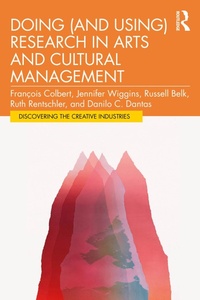
Doing (and Using) Research in Arts and Cultural Management
Published on 19. December 2025
204 pages
978-1-040-51283-8 (ISBN)
Description

This book offers a rich, critical, and engaging exploration of cutting-edge methods for studying arts and cultural management in a digital age. The content will appeal to those who seek to study these topics by employing the latest data gathering and analytical methods. It is an informative resource for academics, including advanced masters' and PhD candidates, as well as professional arts managers seeking to understand the changing landscape. This book is relevant to arts and cultural management, creative industries, cultural policy, festivals and events, heritage, museum studies, arts consumption and marketing, and cultural tourism. It will also appeal to consultants, evaluators, and fundraisers who do research on a regular basis. The chapters engage with both traditional and contemporary research topics, including providing examples of high-quality research from national, regional, and local settings in various parts of the world. The co-authors are five diverse scholars who are experienced not only in standard qualitative and quantitative methods but also emerging techniques such as netnography and digital analysis. This book provides real-world, empirical, and theoretical insights on how to navigate the complexities of research methods in a creative context.
Reviews / Votes
"As data continue to drive decision making, funding, and policy cultural managers need resources like this book to aid them in learning, doing, and using research." Constance DeVereaux, State University of New York at Buffalo, USA"Written by five experienced arts management professors this comprehensive and digestible book about research methods and publication practices in arts and cultural management, specifically, is a much-needed practical resource for undergraduate and graduate students as well as their professors and mentors. The authors provide clear definitions, detailed research design descriptions and examples that will inspire fellow researchers and professional managers working in an increasingly complex and complicated arts and cultural economy." Diane Claussen, DePaul University, USA
More details
Series
Language
English
Place of publication
London
United Kingdom
Publishing group
Taylor & Francis Ltd
Target group
College/higher education
Illustrations
13 Tables, black and white; 21 Line drawings, black and white; 6 Halftones, black and white; 27 Illustrations, black and white
File size
5,40 MB
ISBN-13
978-1-040-51283-8 (9781040512838)
Copyright in bibliographic data and cover images is held by Nielsen Book Services Limited or by the publishers or by their respective licensors: all rights reserved.
Schweitzer Classification
Other editions
Additional editions
Francois Colbert | Jennifer Wiggins | Russell Belk
Doing (and Using) Research in Arts and Cultural Management
Book
approx. 12/2025
1st Edition
Routledge
€187.00
Not yet published
Francois Colbert | Jennifer Wiggins | Russell Belk
Doing (and Using) Research in Arts and Cultural Management
Book
approx. 12/2025
1st Edition
Routledge
€63.00
Not yet published
Persons
Russell Belk is York University Distinguished Research Professor and Kraft Foods Canada Chair in Marketing at Schulich School of Business, York University. His research involves the extended self, the arts, collecting, gift-giving, sharing, digital consumption, and materialism. He is primarily qualitative and often conceptual, visual, and cultural. He has over 800 publications; in 2012 a 10-volume subset was published in Sage's Legends in Consumer Behavior series. In 2023 he received an honorary doctorate with festschrift from Universite de Reims. He co-initiated the Consumer Behavior Odyssey, the ACR Film Festival, and the Consumer Culture Theory Conference.
Francois Colbert has been active in the field of arts and culture for over 50 years, particularly in the performing arts, museum, and film sectors. He has given numerous training and professional development seminars in arts management, with a focus on the field of marketing management in a cultural context. He is professor of marketing and holder of the Carmelle and Remi Marcoux Chair in Arts Management at HEC Montreal. He founded the AIMAC Conference and the International Journal of Arts Management. He is the codirector of the Master of Management in International Arts Management and author of the book Marketing Culture and the Arts published in 16 languages.
Danilo C. Dantas is Professor of Marketing at HEC Montreal, Canada, where he serves as the pedagogical director of the Professional Master's and Graduate Diploma in Management of Cultural Organizations. His research focuses on the marketing of music, employing various research methods. His work has been published in the European Journal of Marketing, the Journal of Interactive Marketing, the International Journal of Arts Management, and the Journal of Public Policy & Marketing, among others. He is also the co-chair of AIMAC, the International Association of Arts and Culture Management.
Ruth Rentschler OAM is Professor of Arts and Cultural Leadership, UniSA Business, Adelaide, Australia. Her research entails creative topics focusing on inclusion and diversity. Ruth's work is often qualitative, with particular interest in unique longitudinal secondary data sets, the self and others, and more recently film and the digital world. She has designed and taught research methods at PhD level in numerous universities around the world. Ruth has received national and international awards for her contributions to arts and cultural management and higher education. She is widely published, including her most recent book, Routledge Companion to Governance in the Arts World (Rentschler, Reid & Donelli, Routledge, Eds., 2025).
Jennifer Wiggins is Professor of Marketing and Entrepreneurship at Kent State University, Ohio, USA, and Co-Editor in Chief of the International Journal of Arts Management. Her research on consumer willingness to donate, willingness to pay for arts experiences, and willingness to support new creative and social ventures has been published in top journals in marketing, entrepreneurship, and arts management. Her methodological expertise is in experimental design and measurement. She has mentored over two dozen doctoral students and teaches philosophy of science, theory development, and research methods at the doctoral level.
Francois Colbert has been active in the field of arts and culture for over 50 years, particularly in the performing arts, museum, and film sectors. He has given numerous training and professional development seminars in arts management, with a focus on the field of marketing management in a cultural context. He is professor of marketing and holder of the Carmelle and Remi Marcoux Chair in Arts Management at HEC Montreal. He founded the AIMAC Conference and the International Journal of Arts Management. He is the codirector of the Master of Management in International Arts Management and author of the book Marketing Culture and the Arts published in 16 languages.
Danilo C. Dantas is Professor of Marketing at HEC Montreal, Canada, where he serves as the pedagogical director of the Professional Master's and Graduate Diploma in Management of Cultural Organizations. His research focuses on the marketing of music, employing various research methods. His work has been published in the European Journal of Marketing, the Journal of Interactive Marketing, the International Journal of Arts Management, and the Journal of Public Policy & Marketing, among others. He is also the co-chair of AIMAC, the International Association of Arts and Culture Management.
Ruth Rentschler OAM is Professor of Arts and Cultural Leadership, UniSA Business, Adelaide, Australia. Her research entails creative topics focusing on inclusion and diversity. Ruth's work is often qualitative, with particular interest in unique longitudinal secondary data sets, the self and others, and more recently film and the digital world. She has designed and taught research methods at PhD level in numerous universities around the world. Ruth has received national and international awards for her contributions to arts and cultural management and higher education. She is widely published, including her most recent book, Routledge Companion to Governance in the Arts World (Rentschler, Reid & Donelli, Routledge, Eds., 2025).
Jennifer Wiggins is Professor of Marketing and Entrepreneurship at Kent State University, Ohio, USA, and Co-Editor in Chief of the International Journal of Arts Management. Her research on consumer willingness to donate, willingness to pay for arts experiences, and willingness to support new creative and social ventures has been published in top journals in marketing, entrepreneurship, and arts management. Her methodological expertise is in experimental design and measurement. She has mentored over two dozen doctoral students and teaches philosophy of science, theory development, and research methods at the doctoral level.
Content
Preface
Chapter 1 Foundations of arts and cultural research
What is research?
Academic research
Information search from the manager's point of view
Qualitative Research
Quantitative research
The importance of writing clearly
How to use this Book
References
Chapter 2: Research Questions and Research Designs
Introduction
Step 1: Identify Your Potential Contribution
Step 2: Clarify Your Research Goal
Step 3: Specify Your Research Question
Step 4: Select Your Research Design
Conclusion
References
Chapter 3: Doing ethics in arts and cultural management research
Introduction
Ethical dilemmas
Types of ethical dilemmas
Types of ethical breaches
A research ethics framework
Steps in the research ethics process
Gaining Respect
Building Trust
Being responsible and accountable
Individual
Community
Institutional
Conclusion
References
Chapter 4 What, Why and How: Writing a Literature Review
Introduction
What is a literature Review
Steps in a Literature Review
1. Define the boundaries/gaps of your subject.
2. Define the constructs or concepts you are going to use.
3. Explain your contribution to knowledge.
4. Address Your Audience
Types of Literature Review
Thematic literature review
Systematic Literature review
Annotated bibliographic analysis
Netnography
Meta-analysis
Spectroscopy
Conclusion
References
Chapter 5: Survey Research
Introduction
Step 1: Selecting and Sampling Participants
Step 2: Measuring the Variables
Step 3: Designing and Distributing the Survey Questionnaire
Step 5: Analyzing and Presenting the Data
Conclusion
References
Chapter 6: Depth Interview Research
Introduction
Step 1: Literature Review and Research Question
Step 2: Locating Participants and Preparing for Interviews
Step 3: Conducting the Interview
Step 4: Transcribe, Code, Analyze
Step 5: Write-up or Edit your Findings
Conclusion
References
Chapter 7: Experimental Research
Introduction
Step 1: Selecting the Type of Experiment
Step 2: Determining the Factorial Design
Step 3: Designing and Pretesting the Manipulations
Step 4: Designing and Distributing the Questionnaire
Step 5: Analyzing and Presenting the Data
Conclusion
References
Chapter 8: Case Studies
Introduction
What is Case Study?
When to Use Case Studies as a Research Method?
3.0 Key stages in case study research
Step 1: Define a research question
Step 2: Determine the subject and set the boundaries
Step 3: Craft and test the tools
Step 4: Collect data
Principle 1: use multiple sources of evidence
Principle 2: create a case study database
Step 5: Analyze the data
Conclusion
References
Chapter 9: Ethnography, Netnography, and Observation
Introduction
Ethnography
Netnography
Step 1: Locate Data
Step 2: Data Analysis
Step 3: Data Interpretation
Step 4. Publishing your Netnography
Observation
Autoethnography
Mechanical Observation
Non-Participant and Unobtrusive Observation
Conclusion
References
Chapter 10: Effective Writing and Presentations
Introduction
Step 1: Preparing to Communicate Your Research
Step 2: Framing the Phenomenon and Research Question
Step 3: Writing a Literature Review and Theoretical Foundation
Step 4: Writing Methods Sections and Findings
Step 5: Writing Discussion and Conclusion Sections
Writing for a Managerial Audience
Conclusion
References
Conclusion
Chapter 1 Foundations of arts and cultural research
What is research?
Academic research
Information search from the manager's point of view
Qualitative Research
Quantitative research
The importance of writing clearly
How to use this Book
References
Chapter 2: Research Questions and Research Designs
Introduction
Step 1: Identify Your Potential Contribution
Step 2: Clarify Your Research Goal
Step 3: Specify Your Research Question
Step 4: Select Your Research Design
Conclusion
References
Chapter 3: Doing ethics in arts and cultural management research
Introduction
Ethical dilemmas
Types of ethical dilemmas
Types of ethical breaches
A research ethics framework
Steps in the research ethics process
Gaining Respect
Building Trust
Being responsible and accountable
Individual
Community
Institutional
Conclusion
References
Chapter 4 What, Why and How: Writing a Literature Review
Introduction
What is a literature Review
Steps in a Literature Review
1. Define the boundaries/gaps of your subject.
2. Define the constructs or concepts you are going to use.
3. Explain your contribution to knowledge.
4. Address Your Audience
Types of Literature Review
Thematic literature review
Systematic Literature review
Annotated bibliographic analysis
Netnography
Meta-analysis
Spectroscopy
Conclusion
References
Chapter 5: Survey Research
Introduction
Step 1: Selecting and Sampling Participants
Step 2: Measuring the Variables
Step 3: Designing and Distributing the Survey Questionnaire
Step 5: Analyzing and Presenting the Data
Conclusion
References
Chapter 6: Depth Interview Research
Introduction
Step 1: Literature Review and Research Question
Step 2: Locating Participants and Preparing for Interviews
Step 3: Conducting the Interview
Step 4: Transcribe, Code, Analyze
Step 5: Write-up or Edit your Findings
Conclusion
References
Chapter 7: Experimental Research
Introduction
Step 1: Selecting the Type of Experiment
Step 2: Determining the Factorial Design
Step 3: Designing and Pretesting the Manipulations
Step 4: Designing and Distributing the Questionnaire
Step 5: Analyzing and Presenting the Data
Conclusion
References
Chapter 8: Case Studies
Introduction
What is Case Study?
When to Use Case Studies as a Research Method?
3.0 Key stages in case study research
Step 1: Define a research question
Step 2: Determine the subject and set the boundaries
Step 3: Craft and test the tools
Step 4: Collect data
Principle 1: use multiple sources of evidence
Principle 2: create a case study database
Step 5: Analyze the data
Conclusion
References
Chapter 9: Ethnography, Netnography, and Observation
Introduction
Ethnography
Netnography
Step 1: Locate Data
Step 2: Data Analysis
Step 3: Data Interpretation
Step 4. Publishing your Netnography
Observation
Autoethnography
Mechanical Observation
Non-Participant and Unobtrusive Observation
Conclusion
References
Chapter 10: Effective Writing and Presentations
Introduction
Step 1: Preparing to Communicate Your Research
Step 2: Framing the Phenomenon and Research Question
Step 3: Writing a Literature Review and Theoretical Foundation
Step 4: Writing Methods Sections and Findings
Step 5: Writing Discussion and Conclusion Sections
Writing for a Managerial Audience
Conclusion
References
Conclusion
