

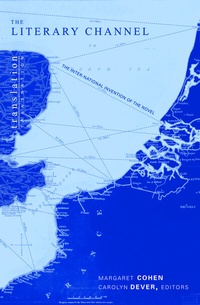
The Literary Channel
The Inter-National Invention of the Novel
1st Edition
Published on 14. February 2009
336 pages
978-1-4008-2951-4 (ISBN)
Description

The Literary Channel defines a crucial transnational literary "zone" that shaped the development of the modern novel. During the first two centuries of the genre's history, Britain and France were locked in political, economic, and military struggle. The period also saw British and French writers, critics, and readers enthusiastically exchanging works, codes, and theories of the novel. Building on both nationally based literary history and comparatist work on poetics, this book rethinks the genre's evolution as marking the power and limits of modern cultural nationalism.
In the Channel zone, the novel developed through interactions among texts, readers, writers, and translators that inextricably linked national literary cultures. It served as a forum to promote and critique nationalist clichés, whether from the standpoint of Enlightenment cosmopolitanism, the insurgent nationalism of colonized spaces, or the non-nationalized culture of consumption. In the process, the Channel zone promoted codes that became the genre's hallmarks, including the sentimental poetics that would shape fiction through the nineteenth century.
Uniting leading critics who bridge literary history and theory, The Literary Channel will appeal to all readers attentive to the future of literary studies, as well as those interested in the novel's development, British and French cultural history, and extra-national patterns of cultural exchange. Contributors include April Alliston, Emily Apter, Margaret Cohen, Joan DeJean, Carolyn Dever, Lynn Festa, Françoise Lionnet, Deidre Shauna Lynch, Sharon Marcus, Richard Maxwell, and Mary Helen McMurran.
In the Channel zone, the novel developed through interactions among texts, readers, writers, and translators that inextricably linked national literary cultures. It served as a forum to promote and critique nationalist clichés, whether from the standpoint of Enlightenment cosmopolitanism, the insurgent nationalism of colonized spaces, or the non-nationalized culture of consumption. In the process, the Channel zone promoted codes that became the genre's hallmarks, including the sentimental poetics that would shape fiction through the nineteenth century.
Uniting leading critics who bridge literary history and theory, The Literary Channel will appeal to all readers attentive to the future of literary studies, as well as those interested in the novel's development, British and French cultural history, and extra-national patterns of cultural exchange. Contributors include April Alliston, Emily Apter, Margaret Cohen, Joan DeJean, Carolyn Dever, Lynn Festa, Françoise Lionnet, Deidre Shauna Lynch, Sharon Marcus, Richard Maxwell, and Mary Helen McMurran.
More details
Edition
Core Textbook
Language
English
Place of publication
Princeton, NJ
United States
Publishing group
De Gruyter
Target group
Professional and scholarly
Edition type
Digital original
Product notice
Reflowable
Illustrations
1 line illus.
File size
1,45 MB
ISBN-13
978-1-4008-2951-4 (9781400829514)
Schweitzer Classification
Other editions
Additional editions

Book
01/2002
Princeton University Press
€76.88
Article exhausted; check different version
Book
01/2002
Princeton University Press
€44.10
Shipment within 10-20 days
Persons
Margaret Cohen is Professor of Comparative Literature at New York University. She is the author of The Sentimental Education of the Novel (Princeton) and Profane Illumination and the coeditor of Spectacles of Realism. Carolyn Dever is Associate Professor of English at Vanderbilt University. She is the author of Feminism, In Theory and Death and the Mother from Dickens to Freud.
Content
ACKNOWLEDGMENTS vi
Introduction by Margaret Cohen and Carolyn Dever 1
PART I: The Novel without Borders 35
CHAPTER ONE: Transnationalism and the Origins of the (French) Novel by Joan DeJean 37
CHAPTER TWO: National or Transnational? The Eighteenth-Century Novel 50
CHAPTER THREE: Sentimental Bonds and Revolutionary Characters: Richardson's Pamela in England and France by Lynn Festa 73
CHAPTER FOUR: Sentimental Communities by Margaret Cohen 106
CHAPTER FIVE: Transnational Sympathies, Imaginary Communities by April Slliston 133
PART II: Imaging the "Othered" Nation 149
CHAPTER SIX: Phantom States: Cleveland, The Recess and the Origins of Historical Fiction by Richard Maxwell 151
CHAPTER SEVEN: Gender, Empire, and Episolarity: FromJane Austen's Mansfeild Park to Marie-Therese Humbert's La montogue des Signaux by Francoise Lionnet 183
CHAPTER EIGHT: The (Dis)locations of Romantic Nationalism: Shelley, Stael, and the Home-Schooling of Monsters by Deidre Shauna Lunch 194
CHAPTER NINE: "An Occult and Immoral Tyranny": The Novel, the Police, and the Agent Provocateur by Carolyn Dever 225
CHAPTER TEN: Comparative Sapphism by Sharon marcus 251
AFTERWORD: From Literary Channel to Narrative Chunnel by Emily Apter 286
SELECTED BIBLIOGRAPHY 295
CONTRIBUTORS 303
INDEX 305
Introduction by Margaret Cohen and Carolyn Dever 1
PART I: The Novel without Borders 35
CHAPTER ONE: Transnationalism and the Origins of the (French) Novel by Joan DeJean 37
CHAPTER TWO: National or Transnational? The Eighteenth-Century Novel 50
CHAPTER THREE: Sentimental Bonds and Revolutionary Characters: Richardson's Pamela in England and France by Lynn Festa 73
CHAPTER FOUR: Sentimental Communities by Margaret Cohen 106
CHAPTER FIVE: Transnational Sympathies, Imaginary Communities by April Slliston 133
PART II: Imaging the "Othered" Nation 149
CHAPTER SIX: Phantom States: Cleveland, The Recess and the Origins of Historical Fiction by Richard Maxwell 151
CHAPTER SEVEN: Gender, Empire, and Episolarity: FromJane Austen's Mansfeild Park to Marie-Therese Humbert's La montogue des Signaux by Francoise Lionnet 183
CHAPTER EIGHT: The (Dis)locations of Romantic Nationalism: Shelley, Stael, and the Home-Schooling of Monsters by Deidre Shauna Lunch 194
CHAPTER NINE: "An Occult and Immoral Tyranny": The Novel, the Police, and the Agent Provocateur by Carolyn Dever 225
CHAPTER TEN: Comparative Sapphism by Sharon marcus 251
AFTERWORD: From Literary Channel to Narrative Chunnel by Emily Apter 286
SELECTED BIBLIOGRAPHY 295
CONTRIBUTORS 303
INDEX 305
