

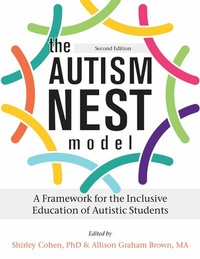
The Autism Nest Model
Description

The Autism Nest Model describes the people, processes, program structures and strategies essential for producing strong, positive educational outcomes for autistic children. Well-researched, and using evidence-based practices, it incorporates strategies that build on areas of strength and support areas of common difficulties, including sensory processing, social development, and self-regulation. The Nest Model is designed for use in grades K-12. However, this book focuses on the elementary version which serves students in K-5th grade.
Formulated in response to the severe shortage of educational programs for school-age autistic children, the Nest Model helps schools create inclusive settings in which children engage comfortably and successfully.
The original book, The ASD Nest Model, presented the Nest Model from conception in 2001 through development and implementation in 2012. It established the foundation of the Nest program from which the current model evolved. This second edition covers the entire period of 20 plus years from conception to the present, showcasing the evolution of the model over that period. The book's change in title from The ASD Nest Model to The Autism Nest Model is indicative of the evolution not only of language but also the understanding and practice that the new edition reflects.
This new edition has three parts. Part One highlights the foundational strategies and supports of the model during its first ten years, including the partnership between the New York City Public Schools and the Nest Model developers. Part Two describes the ongoing development and evolution of the program across the following 10 years, with a focus on neurodiversity-affirming practices, including what the authors have learned from the autistic community, updated research, and changes in the field. Part Three presents challenges to scaling the model, and considerations for responding to those challenges, while highlighting the outstanding successes of the program across two decades.
