

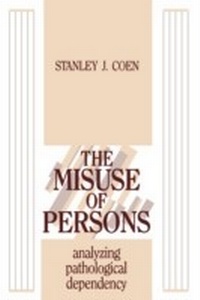
The Misuse of Persons
Analysing Pathological Dependency
1st Edition
Published on 26. November 2013
336 pages
978-1-317-75806-8 (ISBN)
Description

In this major contribution to contemporary psychoanalysis, Stanley Coen illuminates a heretofore undescribed character structure especially resistant to analytic process. Pathologically dependent patients, for Coen, are identified not by surface character traits, but by their response to the intrapsychic demands of analysis. Such patients remain in treatment, sometimes contentedly, sometimes amid rebukes and complaints, but they do not profit from it. Their inability to use insight, especially in the transference, is matched by a proclivity for sadomasochistic enmeshment. In analysis, this tendency translates into a continuing dependent attachment to the analyst.
In exploring the genetic roots of pathological dependency, Coen ranges beyond extant trauma theories in describing a pattern of parent-child interaction in which repetitive behavioral enactments substitute for the acceptance and resolution of conflicts, both intrapsychic and interpersonal. In analysis, pathologically dependent patients use the analyst as they have come to use significant others throughout their lives: as part of a defensive structure characterized by repetitive enactments and a refusal to face what is wrong with them. This "misuse of others" is infused with destructiveness, hostility, and rage, and the analyst necessarily becomes the object of these powerful emotions. With such patients, then, the road to therapeutic progress invariably passes through the analysis of mutual transferential and countertransferential hate, the patient's tempting invitations to collusion and avoidance notwithstanding.
In exploring the genetic roots of pathological dependency, Coen ranges beyond extant trauma theories in describing a pattern of parent-child interaction in which repetitive behavioral enactments substitute for the acceptance and resolution of conflicts, both intrapsychic and interpersonal. In analysis, pathologically dependent patients use the analyst as they have come to use significant others throughout their lives: as part of a defensive structure characterized by repetitive enactments and a refusal to face what is wrong with them. This "misuse of others" is infused with destructiveness, hostility, and rage, and the analyst necessarily becomes the object of these powerful emotions. With such patients, then, the road to therapeutic progress invariably passes through the analysis of mutual transferential and countertransferential hate, the patient's tempting invitations to collusion and avoidance notwithstanding.
Reviews / Votes
"This excellent book provides a comprehensive survey of the developmental, dynamic, and structural characteristics of a frequently encountered and difficult to treat group of patients: the pathologically dependent. Along with instructive accounts of pathological parenting is a steady focus on intrapsychic conflict, especially on that often underestimated factor: conflict over destructiveness. There is careful articulation of the persisting danger situations of childhood and the wide array of defensive strategies that develop in response to them; especially illuminating are the discussions of the defensive 'sense of defect,' sexualization, somatization, and attitudes of entitlement. All are illustrated with well-chosen clinical examples. Dr. Coen teaches many useful lessons of technique, especially in handling transference-countertransference impasses. Readers will be challenged by his interweaving of countertransference acknowledgment with traditional interpretation. Altogether, a welcome addition to every clinician's bookshelf."- Roy Schafer, Ph.D., Training and Supervising Analyst, Columbia University Center for Psychoanalytic Training and Research
"'Dependency' has been a psychoanalytic cliche desperately in need of systematic explication. It has been relegated to a terminological graveyard where words that have become devoid of meaning are put to rest. To the great benefit of our field, Stanley Coen has breathed new life into the term and placed it center stage in the drama of contemporary psychoanalysis, particularly in the subplot concerning the 'widening scope'. Through an impressive synthesis of object relations and traditional conflict theory, he has demonstrated the relevance of pathological dependency to the broad spectrum of patients we see who prefer to repeat rather than to change. His detailed clinical vignettes compellingly illustrate the crucial role of destructiveness in the pathogenesis of pathological dependency and the necessity of facing our own aggression if we are to be of any help to our patients. This is one of the freshest and most provocative psychoanalytic books in recent years - a landmark contribution."
- Glen O. Gabbard, M.D., Director, C.F. Menninger Memorial Hospital
"Stanley Coen has focused on pathological dependency as a central dynamic in those patients who, despite initial promise, frustrate all our therapeutic efforts. In a scholarly survey of the American and European literature and a masterful presentation of clinical material, Coen presents a challenging and stimulating theory that has relevance to the clincal practice of analysts and therapists alike."
- Jack Novick, Ph.D., Supervising Child Psychoanalyst, Michigan Psychoanalytic Institute
"[T]his is an original and valuable integration of a large amount of challenging clinical and theoretical material. In this book, Coen gives us much to learn from, to think about, and to use as the basis for further analytic discussion and dialogue."
- Barry Landau, M.D., International Journal of Psychoanalysis
More details
Language
English
Place of publication
London
United Kingdom
Publishing group
Taylor & Francis Ltd
Target group
Professional and scholarly
File size
4,56 MB
ISBN-13
978-1-317-75806-8 (9781317758068)
Copyright in bibliographic data and cover images is held by Nielsen Book Services Limited or by the publishers or by their respective licensors: all rights reserved.
Schweitzer Classification
Other editions
Additional editions
Book
04/1992
1st Edition
Analytic Press,U.S.
€73.10
Shipment within 3-4 weeks
Person
Stanley J. Coen, M.D., is Training and Supervising Analyst, Columbia University Center for Psychoanalytic Training and Research, and Clinical Professor of Psychiatry, Columbia University College of Physicians and Surgeons. Dr. Coen is a member of the Editorial Board of the Journal of the American Psychoanalytic Association.
Content
I. Background for the Study of Pathological Dependency 1. Introduction 2. What Is Pathological Dependency? 3. What Is Destructiveness and Why Is It So Frightening in Dependency? II. The Inability to Manage Oneself 4. Responsibility for Conflict and the Incapacity to Bear It 5. Dependency and the Superego 6. Repetition Versus Change 7. The Sense of Defect III. The Need to Avoid Destructiveness 8. Sexualization 9. Superego Aspects of Entitlement 10. Psychosomatic Avoidance of Conflict IV. The Pathological Need for the Other 11. Some Problems for the Analyst in Analyzing Pathological Dependency 12. The Excitement of Sadomasochism 13. Perversion 14. Pathological Jealousy V. Conclusion 15. Toward a Passionate Analysis: Technique in the Analysis of Pathological Dependency
