

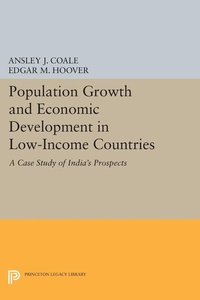
Population Growth and Economic Development
Published on 22. August 2016
412 pages
978-1-4008-7859-8 (ISBN)
Description

The main contribution of this book lies in its focus on real alternatives in future population growth. At some time-taken as 1956 in India for this case study-a low-income country may have the option of effectively promoting the reduction of fertility, or (by inaction) of permitting fertility to remain at high levels. This book clearly shows the nature and extent of the economic gains resulting from fertility reduction. Since most low-income areas are destined for rapid population growth even with substantial fertility declines, the emphasis is placed between moderately rapid and very rapid growth. The extensive quantitative population projections show the importance of the growth rate itself and of changes in age distribution in addition to population size. The results for India have direct implications for all low-income, primarily agrarian areas entering a program of economic development.
Originally published in 1958.
The Princeton Legacy Library uses the latest print-on-demand technology to again make available previously out-of-print books from the distinguished backlist of Princeton University Press. These editions preserve the original texts of these important books while presenting them in durable paperback and hardcover editions. The goal of the Princeton Legacy Library is to vastly increase access to the rich scholarly heritage found in the thousands of books published by Princeton University Press since its founding in 1905.
Originally published in 1958.
The Princeton Legacy Library uses the latest print-on-demand technology to again make available previously out-of-print books from the distinguished backlist of Princeton University Press. These editions preserve the original texts of these important books while presenting them in durable paperback and hardcover editions. The goal of the Princeton Legacy Library is to vastly increase access to the rich scholarly heritage found in the thousands of books published by Princeton University Press since its founding in 1905.
More details
Other editions
Additional editions
Ansley Johnson Coale | Edgar M. Hoover
Population Growth and Economic Development
Book
04/2016
Princeton University Press
€134.60
Article not available at the moment
Ansley Johnson Coale | Edgar M. Hoover
Population Growth and Economic Development
Book
12/2015
Princeton University Press
€52.70
Article not available at the moment

Ansley Johnson Coale | Edgar M. Hoover
Population Growth and Economic Development
Book
11/1958
Princeton University Press
€5.69
Article exhausted; check different version
Persons
Ansley Johnson Coale & Edgar M. Hoover
Content
Frontmatter, pg. i
Foreword, pg. v
Preface, pg. vii
Contents, pg. xiii
Tables, pg. xv
Charts, pg. xx
I. Introduction, pg. 1
II. The Effects of Economic Development on Population Growth, pg. 9
III. The Effects of Population Growth on Economic Development, pg. 18
IV. India's Population-Current and Prospective, pg. 29
V. Recent Indian Mortality and Fertility Trends, pg. 43
VI. Prospective Changes in Indian Mortality and Fertility, pg. 55
VII. Guiding Principles In Indian Economic Development, pg. 75
VIII. Potential Development in Agriculture, pg. 85
IX. Agricultural Manpower, pg. 111
X. Agricultural And Overall Economic Development, pg. 119
XI. Nonagricultural and Total Output-limiting Factors and Development Policies, pg. 141
XII. The Financing of Development, pg. 148
XIII. The Productivity Of Developmental Outlays, pg. 181
XIV. Demographic Influences on India's Prospective Economic Growth, pg. 227
XV. Population Growth And Labor Supply, pg. 231
XVI. Population Growth and the Disposition of Income, pg. 238
XVII. Projections of the Effect of Reduced Fertility on Indian Economic Growth, pg. 259
XVIII. Summary and Conclusions of Part Four, pg. 284
XIX. Introduction to Part Five, pg. 295
XX. Population Change and Economic Development in Low-Income Areas with Different Demographic Conditions, pg. 297
XXI Population Change and Economic Development with Different Initial Economic Conditions, pg. 304
XXII. The Economic Effects of Different Courses of Fertility after 30 Years, pg. 321
XXIII. Population Growth and Economic Development in Low Income Areas: Summary, pg. 332
Appendix A. Methods Employed in Adjusting Indian Population Data and Preparing Projections of the Indian Population, 1956-1986, pg. 337
Appendix B. Methods Employed in Adjusting Mexican Population Data in Preparing Projections of the Mexican Population, 1955-1985, pg. 368
Appendix C. Notes on the Population of Mexico, pg. 375
Index, pg. 385
Foreword, pg. v
Preface, pg. vii
Contents, pg. xiii
Tables, pg. xv
Charts, pg. xx
I. Introduction, pg. 1
II. The Effects of Economic Development on Population Growth, pg. 9
III. The Effects of Population Growth on Economic Development, pg. 18
IV. India's Population-Current and Prospective, pg. 29
V. Recent Indian Mortality and Fertility Trends, pg. 43
VI. Prospective Changes in Indian Mortality and Fertility, pg. 55
VII. Guiding Principles In Indian Economic Development, pg. 75
VIII. Potential Development in Agriculture, pg. 85
IX. Agricultural Manpower, pg. 111
X. Agricultural And Overall Economic Development, pg. 119
XI. Nonagricultural and Total Output-limiting Factors and Development Policies, pg. 141
XII. The Financing of Development, pg. 148
XIII. The Productivity Of Developmental Outlays, pg. 181
XIV. Demographic Influences on India's Prospective Economic Growth, pg. 227
XV. Population Growth And Labor Supply, pg. 231
XVI. Population Growth and the Disposition of Income, pg. 238
XVII. Projections of the Effect of Reduced Fertility on Indian Economic Growth, pg. 259
XVIII. Summary and Conclusions of Part Four, pg. 284
XIX. Introduction to Part Five, pg. 295
XX. Population Change and Economic Development in Low-Income Areas with Different Demographic Conditions, pg. 297
XXI Population Change and Economic Development with Different Initial Economic Conditions, pg. 304
XXII. The Economic Effects of Different Courses of Fertility after 30 Years, pg. 321
XXIII. Population Growth and Economic Development in Low Income Areas: Summary, pg. 332
Appendix A. Methods Employed in Adjusting Indian Population Data and Preparing Projections of the Indian Population, 1956-1986, pg. 337
Appendix B. Methods Employed in Adjusting Mexican Population Data in Preparing Projections of the Mexican Population, 1955-1985, pg. 368
Appendix C. Notes on the Population of Mexico, pg. 375
Index, pg. 385
