


The Punishment Imperative
The Rise and Failure of Mass Incarceration in America
Published on 1. November 2013
277 pages
978-1-4798-2902-6 (ISBN)
Description

Clear and Frost chart the rise of penal severity in the U.S. and the forces necessary to end it
Over the last 40 years, the US penal system has grown at an unprecedented rate-five times larger than in the past and grossly out of scale with the rest of the world. In The Punishment Imperative, eminent criminologists Todd R. Clear and Natasha A. Frost argue that America's move to mass incarceration from the 1960s to the early 2000s was more than just a response to crime or a collection of policies adopted in isolation; it was a grand social experiment. Tracing a wide array of trends related to the criminal justice system, this book charts the rise of penal severity in America and speculates that a variety of forces-fiscal, political, and evidentiary-have finally come together to bring this great social experiment to an end. The authors stress that while the doubling of the crime rate in the late 1960s represented one of the most pressing social problems at the time, it was instead the way crime posed a political problem-and thereby offered a political opportunity-that became the basis for the great rise in punishment. Clear and Frost contend that the public's growing realization that the severe policies themselves, not growing crime rates, were the main cause of increased incarceration eventually led to a surge of interest in taking a more rehabilitative, pragmatic, and cooperative approach to dealing with criminal offenders that still continues to this day. Part historical study, part forward-looking policy analysis, The Punishment Imperative is a compelling study of a generation of crime and punishment in America.
Over the last 40 years, the US penal system has grown at an unprecedented rate-five times larger than in the past and grossly out of scale with the rest of the world. In The Punishment Imperative, eminent criminologists Todd R. Clear and Natasha A. Frost argue that America's move to mass incarceration from the 1960s to the early 2000s was more than just a response to crime or a collection of policies adopted in isolation; it was a grand social experiment. Tracing a wide array of trends related to the criminal justice system, this book charts the rise of penal severity in America and speculates that a variety of forces-fiscal, political, and evidentiary-have finally come together to bring this great social experiment to an end. The authors stress that while the doubling of the crime rate in the late 1960s represented one of the most pressing social problems at the time, it was instead the way crime posed a political problem-and thereby offered a political opportunity-that became the basis for the great rise in punishment. Clear and Frost contend that the public's growing realization that the severe policies themselves, not growing crime rates, were the main cause of increased incarceration eventually led to a surge of interest in taking a more rehabilitative, pragmatic, and cooperative approach to dealing with criminal offenders that still continues to this day. Part historical study, part forward-looking policy analysis, The Punishment Imperative is a compelling study of a generation of crime and punishment in America.
Reviews / Votes
"Criminologists Clear (Imprisoning Communities) and Frost (The Punitive State) offer an accessible study of mass incarceration in the U.S. that is theoretically sophisticated and rich in statistical data . . . . A meticulously organized concluding chapter lays out their proposals with an eye toward reducing sentences and making them more humane for nonviolent offenders. The book merits serious consideration beyond an academic audience." (Publishers Weekly) "This short, efficiently conveyed study cannot delve into all of the ramifications of how to integrate those returning to society, however,The Punishment Imperativeattests to the need for a better way to manage the millions that our nation have, for too long, relegated to simply lock up, forever." (Popmatters) "Backed up by the best science, Todd Clear and Natasha Frost make a compelling case for why the nations forty-year embrace of the punitive spirit has been morally bankrupt and endangered public safety. But this is far more than an expose of correctional failure. Recognizing that a policy turning point is at hand, Clear and Frost provide a practical blueprint for choosing a different correctional futurecounsel that is wise and should be widely followed." - Francis Cullen,Distinguished Research Professor of Criminal Justice, University of Cincinnati "For forty years, the heavy hammer of criminal punishment has been the nation's primary tool for addressing social problems. And when the hammer has failed to fix these problems or does further damage, we've responded by grabbing an even bigger hammer. In The Punishment Imperative, Todd Clear and Natasha Frost convincingly demonstrate that the hammer has, finally, become too heavy for us to raise. They offer a masterful dissection of this 'grand social experiment'; showing how we embarked on this strategy, its costs to individuals and communities, and a clear-headed path to real reform. The Punishment Imperative is neither armchair critique nor utopian vision, but rather an eye-opening and truly authoritative treatment by two true experts on punishment's past, present, and future." - Christopher Uggen,co-author of Locked Out: Felon Disenfranchisement and American Democracy "It is too soon to tell if a sea of change is upon the US penal system, but the authors make their cogent argument in this well-written book. Summing Up:Highly recommended." - P. Horne (Choice) "Part historical study, part forward-looking policy analysis, The Punishment Imperativeis a compelling study of a generation of crime and punishment in America." - Douglas A. Berman (Sentencing Law and Policy) "This well-documented volume will interest anyone connected to our criminal justice system and may appeal to general readers concerned about the subject of incarceration." - Frances O. Sandiford (Library Journal) "This compelling narrative helps us better understand the history, trajectory, and complexity of the politics of punishment in the United States over the past four decades. At a time of impending shifts in the correctional landscape in this country, this impressive volume should be on the reading list not only for scholars and students of mass incarceration, but also for corrections practitioners and policymakers everywhere who care about a new vision for America's penal system." - Laurie O. Robinson,Former Assistant Attorney General of the United States Department of Justice "The book's 200 pages of details and its prescriptions will be intriguing even to those who know the field." (Jotwell) "Clear and Frost have helped start the most important conversation facing criminologists at the moment. How do we substantively reduce prison populations?" (Crime Law Social Change)More details
Language
English
Place of publication
New York
United States
Target group
Professional and scholarly
File size
2,45 MB
ISBN-13
978-1-4798-2902-6 (9781479829026)
Copyright in bibliographic data and cover images is held by Nielsen Book Services Limited or by the publishers or by their respective licensors: all rights reserved.
Schweitzer Classification
Other editions
Additional editions
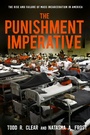
Todd R. Clear | Natasha A. Frost
The Punishment Imperative
The Rise and Failure of Mass Incarceration in America
Book
09/2015
New York University Press
€36.50
Shipment within 10-20 days
Todd R. Clear | Natasha A. Frost
The Punishment Imperative
The Rise and Failure of Mass Incarceration in America
Book
11/2013
New York University Press
€89.33
Shipment within 15-20 days
Persons
Todd R. Clear is Provost at Rutgers University, Newark. He is the author of Imprisoning Communities and What Is Community Justice? And is the founding editor of the journal Criminology & Public Policy.
Natasha A. Frost is Associate Dean and Associate Professor in the School of Criminology and Criminal Justice at Northeastern University. Her books include The Punitive State and Contemporary Issues in Crime and Justice Policy.
Natasha A. Frost is Associate Dean and Associate Professor in the School of Criminology and Criminal Justice at Northeastern University. Her books include The Punitive State and Contemporary Issues in Crime and Justice Policy.
Content
- Cover
- Contents
- Acknowledgments
- 1. The Beginning of the End of the Punishment Imperative
- 2. The Contours of Mass Incarceration
- 3. The Punishment Imperative as a Grand Social Experiment
- 4. The Policies of the Punishment Imperative
- 5. Two Views on the Objectives of the Punishment Imperative
- 6. Assessing the Punishment Imperative
- 7. Dismantling the Punishment Imperative
- Notes
- References
- Index
- A
- B
- C
- D
- E
- F
- G
- H
- I
- J
- K
- L
- M
- N
- O
- P
- Q
- R
- S
- T
- U
- V
- W
- Z
- About the Authors
