

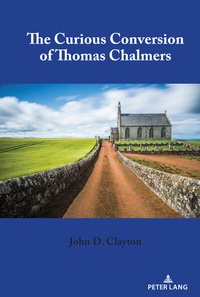
The Curious Conversion of Thomas Chalmers
Description

Thomas Chalmers was arguably the most popular Scot and influential churchman of his age. However, when he was first educated, ordained, installed, and serving as a parish minister in the Church of Scotland, he was by his own admission not yet a converted Christian. How could a minister of the gospel not believe the gospel? How this happened is telling of his context, country, and church, but it is not a short story. From a confusion of church and state dating back to the Scottish Reformation to an increasing secularism in and through the Scottish Enlightenment, the Church of Scotland moved increasingly away from its Reformation roots and the necessity of the gospel in Christian conversion, as evidenced in the early life of Thomas Chalmers.
More details
Other editions
Additional editions
Person
John D. Clayton (PhD, Columbia International University) is the Senior Minister of Covenant Presbyterian Church in Fort Smith, Arkansas.
Content
Introduction - An Unexpected Conversion - The Scottish Church and State in Historical Context - A Divine Right - Blasphemous Crime and Capital Punishment - Telling Trials in the Kirk - Midnight in the Kirk - The Rise of Moderatism - Moderate Ministers - An Evangelical Spark - Revival in the Kirk - Disruption in the Kirk - The Westminster Assembly and the Confusion of Church and State - The Influential Doctrine of George Gillespie and Samuel Rutherford - Patronage in Scotland - Natural Religion and the Scottish Enlightenment - The Marrow's Four Points of Divergence from the Kirk - The Secession of 1733 - Revival in the Parishes of Early 19th Century Scotland - Bibliography.
