


Powering Up Children
The Learning Power Approach to primary teaching
Published on 20. December 2018
336 pages
978-1-78583-382-3 (ISBN)
Description

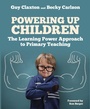
In Powering Up Children: The Learning Power Approach to primary teaching, Guy Claxton and Becky Carlzon harness the design principles of the Learning Power Approach (LPA) to provide a rich resource of effective teaching strategies for use in the primary school classroom.
Foreword by Ron Berger.
The LPA is a way of teaching which aims to develop all children as confident and capable learners ready, willing, and able to choose, design, research, pursue, troubleshoot, and evaluate learning for themselves, alone and with others, in school and out. This approach therefore empowers teachers to complement their delivery of content, knowledge, and skills with the nurturing of positive habits of mind that will better prepare students to flourish in later life.
Building upon the foundations carefully laid in The Learning Power Approach (ISBN 9781785832451), the first book in the Learning Power series, Guy Claxton and Becky Carlzon's Powering Up Children embeds the ideas of this influential method in the context of the primary school.
It offers a thorough explanation of how the LPA's design principles apply to this level of education and, by presenting a wide range of practical strategies and classroom examples, illustrates how they can be put into action with different age groups and in different curricular areas especially relating to literacy and numeracy, but also in specific subjects such as science, history, art, and PE.
Bursting with tips and techniques to get students' learning muscles stretching from a young age, the book is designed for busy primary school teachers who want to get started on the LPA journey as well as for those who have already made good progress and are looking for fresh ideas. The central chapters are structured around thematic clusters of the LPA's design principles, and follow a common format:
1. First, the authors explain why the design principles focused on are important; including what's in it for the teacher and what's in it for the children.
2. Next, they offer a menu of practical low-risk tweaks to classroom practice that enable teachers to engage with the design principles and experience some quick wins.
3. Then they provide some ideas about how to embed the principles more deeply in the ongoing life of the classroom including some rich lesson examples from across the primary age range, and from different school subjects.
4. Finally, they address some of the common bumps and issues that may crop up along the way, and offer advice to help teachers overcome such potential obstacles.
Suitable for both newly qualified and experienced teachers of learners aged 3 to 11.
Foreword by Ron Berger.
The LPA is a way of teaching which aims to develop all children as confident and capable learners ready, willing, and able to choose, design, research, pursue, troubleshoot, and evaluate learning for themselves, alone and with others, in school and out. This approach therefore empowers teachers to complement their delivery of content, knowledge, and skills with the nurturing of positive habits of mind that will better prepare students to flourish in later life.
Building upon the foundations carefully laid in The Learning Power Approach (ISBN 9781785832451), the first book in the Learning Power series, Guy Claxton and Becky Carlzon's Powering Up Children embeds the ideas of this influential method in the context of the primary school.
It offers a thorough explanation of how the LPA's design principles apply to this level of education and, by presenting a wide range of practical strategies and classroom examples, illustrates how they can be put into action with different age groups and in different curricular areas especially relating to literacy and numeracy, but also in specific subjects such as science, history, art, and PE.
Bursting with tips and techniques to get students' learning muscles stretching from a young age, the book is designed for busy primary school teachers who want to get started on the LPA journey as well as for those who have already made good progress and are looking for fresh ideas. The central chapters are structured around thematic clusters of the LPA's design principles, and follow a common format:
1. First, the authors explain why the design principles focused on are important; including what's in it for the teacher and what's in it for the children.
2. Next, they offer a menu of practical low-risk tweaks to classroom practice that enable teachers to engage with the design principles and experience some quick wins.
3. Then they provide some ideas about how to embed the principles more deeply in the ongoing life of the classroom including some rich lesson examples from across the primary age range, and from different school subjects.
4. Finally, they address some of the common bumps and issues that may crop up along the way, and offer advice to help teachers overcome such potential obstacles.
Suitable for both newly qualified and experienced teachers of learners aged 3 to 11.
More details
Series
Language
English
Place of publication
Carmarthen
United Kingdom
Target group
College/higher education
Professional and scholarly
File size
3,92 MB
ISBN-13
978-1-78583-382-3 (9781785833823)
Copyright in bibliographic data and cover images is held by Nielsen Book Services Limited or by the publishers or by their respective licensors: all rights reserved.
Schweitzer Classification
Other editions
Additional editions
Book
12/2018
Crown House Publishing
€28.50
Shipment within 3-4 weeks
Persons
Guy Claxton is Emeritus Professor at Winchester University and Visiting Professor of Education at King's College London. He has previously taught and researched at Oxford University, Bristol University, and the University of London Institute of Education, and is an internationally renowned cognitive scientist. Guy's books include Hare Brain, Tortoise Mind; Wise Up: The Challenge of Lifelong Learning; The Wayward Mind; and Intelligence in the Flesh. Recent books on education include What's the Point of School?; Building Learning Power; and, with Bill Lucas and others, New Kinds of Smart; The Learning Powered School; and Educating Ruby. Guy's Building Learning Power approach to teaching is widely used in all kinds of schools across the UK, as well as in Poland, Dubai, Indonesia, India, China, New Zealand, Australia, South Africa, Brazil, and Argentina. Becky is an ever-enthusiastic primary school teacher - and a relentless optimist and life-long adventurer - who has been using learning power approaches in various settings for over a decade. From embedding the Learning Power Approach in Key Stage 1 and early years classrooms in the UK, to adapting it for use with adults while teaching foreign languages at the 'End of the World' (Ushuaia, in southernmost Argentina), she constantly strives to enhance her practice in order to nurture more resilient, engaged and reflective learners.
Content
- Cover
- Praise
- Title Page
- Copyright
- Dedication
- Foreword
- Acknowledgements
- Contents
- Introduction
- Chapter 1. An Overview of the Learning Power Approach
- Chapter 2. The Learning Power Approach in Action
- Chapter 3. Setting the Scene: Making Your Classroom a Safe and Interesting Place to Be a Learner
- Chapter 4. Designing the Environment
- Chapter 5. The Languages of Learning
- Chapter 6. Collaboration and Conversation
- Chapter 7. Making Learning Challenging and Adjustable
- Chapter 8. Independence and Responsibility
- Chapter 9. Reflection, Improvement, and Craftsmanship
- Chapter 10. Beyond the Single Lesson
- Conclusion
- Further Reading
- Resources
- About the Authors
