

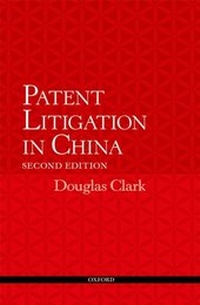
Patent Litigation in China 2e
1st Edition
Published on 6. August 2015
393 pages
978-0-19-103650-7 (ISBN)
Description

The rise of China's economy has led to a substantial increase in disputes involving intellectual property rights, including patents. Not only are foreign companies suing domestic companies and vice versa, but patent disputes between foreign companies are also being litigated in the Chinese courts. The first edition of Patent Litigation in China provided practitioners from outside China with an essential guide to litigating patents in China. This edition offers many of the same features, including a strategic commentary to enable those contemplating or involved in patent litigation in China to better comprehend the risks and challenges they face, sections on invalidation procedures, evidence gathering, litigation strategy and procedure and defences and remedies, and coverage ofthe tests for patentability requirements and grounds for invalidating patents. In addition, this edition has been updated to take into account the enactment of the new civil procedure law, a number of new judicial interpretations, and significant developments in case law. New features of the work include an additional chapter on the conflict between competition law and patent law, a new chapter on employee remuneration litigation, and case studies of leading cases being inserted into the body of the text. Appendices include Chinese to English translations of the PatentLaw of the People's Republic of China, Implementing Regulations of the Patent Law, and a Judicial Interpretation in relation to patent cases issued by the Supreme People's Court.
More details
Other editions
Additional editions
Douglas Clark
Patent Litigation in China 2e
Book
08/2015
2nd Edition
Oxford University Press
€232.50
Shipment within 15-20 days
Content
- Cover
- Patent Litigation in China
- Copyright
- Dedication
- Contents
- Table of Cases
- Table of Legislation
- A note on translations
- 1 Introduction
- 1.1 Intellectual Property Rights in China
- 1.2 The Scope of this Book
- 1.3 History of Patent Law in China
- 1.4 Modern Patent Law
- 1.5 Patents in China
- 1.6 Weaknesses in the Chinese Patent System
- 2 Sources of Patent Law
- 2.1 Principal Legal Provisions Covering Patent Law
- 2.2 Other Relevant Legislation
- 2.3 Amendments to the Patent Law
- 2.4 Renumbering of Articles after Amendment
- 2.5 Transitional Provisions Applying to the Most Recent Amendments
- 2.6 Case Law
- 2.7 Supreme Court Judicial Interpretations and Opinions
- 2.8 Interpretations and Opinions of the Lower Courts
- 3 Introduction to China's Administrative and Judicial Patent Systems
- 3.1 Introduction
- 3.2 Administrative System
- 3.3 Judicial System
- 3.4 State Intellectual Property Office
- 3.5 Patent Re-examination Board
- 3.6 Structure of the Chinese Judicial System
- 3.7 Intellectual Property Chambers
- 3.8 Courts that Handle Patent Cases
- 3.9 Appeals
- 3.10 The Judiciary
- 3.11 Adjudication Committees
- 4 Administrative Enforcement
- 4.1 Administrative Enforcement
- 4.2 The Procedure for SIPO Administrative Actions
- 4.3 Mediation by SIPO
- 4.4 General Administration for Customs
- 5 Patents
- 5.1 Introduction
- 5.2 Types of Patent
- 5.3 Filing Requirements
- 5.4 Term of Protection
- 5.5 Grace Periods
- 5.6 Patent Examination Guidelines
- 5.7 Preliminary Examination
- 5.8 Substantive Examination
- 5.9 Rejection
- 5.10 Re-examination
- 5.11 Appeal of Re-examination Decisions to the Court
- 6 Grounds for Invalidating a Patent
- 6.1 Introduction
- 6.2 Statutory Grounds
- 6.3 Definitions of Invention and Utility Model
- 6.4 Confidentiality Examination
- 6.5 Novelty
- 6.6 Inventiveness
- 6.7 Practical Applicability
- 6.8 Sufficiency of Disclosure
- 6.9 Claims Must be Supported by the Description
- 6.10 Amendments
- 6.11 Claims Must Contain the Essential Technical Features
- 6.12 Divisional Applications Must Not Go Beyond Scope of Original Application
- 6.13 Law, Morality, or Public Interest
- 6.14 Breach of Law or Regulations Relating to Genetic Resources
- 6.15 Prohibited Inventions
- 6.16 Earlier Application
- 7 Patent Revocation Proceedings
- 7.1 Introduction
- 7.2 Application for Revocation
- 7.3 Invalidation Procedures
- 7.4 Grounds for Invalidation
- 7.5 Evidence
- 7.6 Oral Hearing
- 7.7 Appeal of PRB's Invalidation Decision
- 7.8 Effect of a Final Invalidation Decision
- 8 Civil Litigation in China
- 8.1 Introduction
- 8.2 Summary of Civil Proceedings
- 8.3 Judging Panel
- 8.4 Filing Fees
- 8.5 The Complaint
- 8.6 Acceptance of the Complaint
- 8.7 Service of the Complaint
- 8.8 Defence
- 8.9 Proceedings in the Absence of a Party
- 8.10 Mediation
- 8.11 Evidence Collection and Admissibility
- 8.12 Evidence Exchange
- 8.13 Trial
- 8.14 Judgment
- 8.15 Appeals
- 8.16 Effect of an Appeal
- 8.17 New Evidence on Appeal
- 8.18 Review of the Decision by the Supreme Court or Procuratorate
- 9 Preliminary and Interlocutory Issues
- 9.1 Introduction
- 9.2 Powers of Attorney
- 9.3 Limitation Periods
- 9.4 Jurisdiction
- 9.5 Search Reports for Utility Model and Design Cases
- 9.6 Pre-trial or Interim Injunctions
- 9.7 Asset-freezing Orders
- 9.8 Declaration of Non-infringement
- 9.9 Stay of Infringement Proceedings
- 10 Evidence
- 10.1 The Importance of Evidence
- 10.2 Permitted Evidence
- 10.3 Best Evidence Rule
- 10.4 Notarized Evidence
- 10.5 Foreign Evidence: Notarization and Legalization
- 10.6 Foreign Language Evidence
- 10.7 Expert Evidence
- 10.8 Evidence Preservation Orders
- 10.9 Evidence Collection by the Court
- 10.10 The Burden of Proof does not Shift if the Other Party does not Comply with an Evidence Request
- 10.11 Penalties for Destroying Evidence
- 10.12 Investigations by the Parties
- 10.13 Inadmissibility of Illegally Obtained Evidence
- 10.14 Admissibility of Pretext or Trap Purchases
- 11 Patent Infringement Litigation-Invention Patents and Utility Models
- 11.1 Introduction
- 11.2 The Rights of Patentees and Related Injured Parties to Bring Action
- 11.3 Acts of Infringement
- 11.4 Indirect Infringement
- 11.5 Joint Infringement
- 11.6 Reverse Burden of Proof if the Patent Relates to a Method of Making a New Product
- 11.7 Claim Interpretation
- 11.8 Doctrine of Equivalents
- 11.9 File Wrapper Estoppel
- 11.10 Interpretation of Claims to Rectify Mistakes
- 11.11 Proving Infringement
- 12 Defences
- 12.1 Types of Defence
- 12.2 Invalidity
- 12.3 Non-infringement
- 12.4 Prior Art Defence
- 12.5 Exhaustion of Rights
- 12.6 Prior Use Defence
- 12.7 Temporary Entry into China
- 12.8 Research and Development
- 12.9 Clinical Trials
- 12.10 Innocence
- 12.11 Limitation Defence
- 13 Design Patents
- 13.1 Introduction
- 13.2 Stay of Infringement Proceedings
- 13.3 Grounds for Invalidating Design Patent
- 13.4 Definition of Design
- 13.5 Design Rights shall not Belong to an Existing Design
- 13.6 Identical or Not Substantially Different Designs
- 13.7 Conflict with Prior Legal Rights
- 13.8 Two-dimensional Designs that Mainly Serve as Indicators
- 13.9 The Design Drawing should Clearly Identify the Design
- 13.10 Amendments Beyond the Scope of the Initial Application
- 13.11 Contrary to Law or Social Morality, or Detrimental to the Public Interest
- 13.12 Identical Invention-Creation
- 13.13 Infringement of Design Patents
- 13.14 Designs Incorporated into Other Products
- 13.15 Designs that Need to be Assembled or have Variable States
- 13.16 Defences
- 13.17 Prior Art Defence
- 13.18 Damages
- 14 Remedies
- 14.1 Remedies Available in China
- 14.2 Injunctions
- 14.3 Circumstances in which an Injunction will not be Granted
- 14.4 Reasonable Fee for Pre-grant Use
- 14.5 Damages for Post-Grant Infringement
- 14.6 Eliminating Ill Effects
- 14.7 Apology
- 14.8 The Enforcement of Damages Awards
- 14.9 The Enforcement of Injunctions
- 15 Anti-Monopoly Law
- 15.1 Introduction
- 15.2 Introduction to the AML
- 15.3 Bodies that May Enforce the AML
- 15.4 Anti-Monopoly Provision relating to IP and Patents
- 15.5 Major Patent-related Cases under the AML
- 16 Patent Law and Standards
- 16.1 Introduction
- 16.2 Standard-Setting
- 16.3 Anti-Monopoly Law and Standard-Setting
- 16.4 Patent Infringement Claims based on Standards
- 17 Remuneration for Employee Inventions
- 17.1 Introduction
- 17.2 Rules Governing Employee Inventions
- 17.3 Employment Agreements or Company Regulations
- 17.4 Right to Bring Action if Remuneration Not Paid
- 18 Patent Litigation in Hong Kong
- 18.1 Introduction
- 18.2 The Hong Kong Legal System
- 18.3 The Hong Kong Patent System
- 18.4 Obtaining Patent Protection in Hong Kong
- 18.5 Proposed Changes in the Law
- 18.6 Issues with Re-registrations of Chinese Patents
- 18.7 Amendment to Patent Post-Grant
- 18.8 Court with Jurisdiction
- 18.9 Infringement Proceedings
- 18.10 Relief for Infringement
- 18.11 Split Trial on Liability and Damages
- 18.12 Grounds of Defence
- 18.13 Challenging Validity of a Patent
- 18.14 Actions Related to PRC
- 18.15 Conclusion
- 19 Concluding Remarks
- Appendix 1 Patent Law of the People's Republic of China
- Appendix 2 Implementing Regulations of the Patent Law of the People's Republic of China
- Appendix 3 Interpretation by the Supreme People's Court on Several Issues Regarding Legal Application in the Adjudication of Patent Infringement Cases
- Appendix 4 Interpretation by the Supreme People's Court on Several Issues Regarding Legal Application in the Adjudication of Patent Infringement Cases (II) (2014) (Draft)
- Appendix 5 Several Provisions of the Supreme People's Court on Issues Relating to Application of Law to Adjudication of Cases of Patent Disputes
- Appendix 6 Several Provisions of the Supreme People's Court for the Application of Law to Pre-trial Cessation of Infringement of Patent Right
- Appendix 7 List of Courts with Jurisdiction to Handle Patent Cases
- Index
