

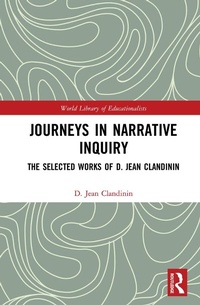
Journeys in Narrative Inquiry
The Selected Works of D. Jean Clandinin
1st Edition
Published on 20. September 2019
342 pages
978-1-000-69041-5 (ISBN)
Description

Organized around a metaphor of an academic journey, D. Jean Clandinin offers published tracings of an unfolding journey over 40 years that, at its outset, appeared to focus only on questions of epistemology. However, the book illuminates how that apparent beginning focus shape-shifted to questions of methodology, ethics, ontology, and subsequently, political concerns.
Clandinin shows that, even at the outset, her research wonders were grounded in relational understandings of experience, understandings that were simultaneously ontological, methodological, epistemological and ethical. Jean's work is collaborative, an engagement alongside others and within the contexts in which they and she lived and worked, including those who were participants in the research. She continues to acknowledge that narrative inquiry changes people's ways of being in the world, and those changes have ethical significance. While what she and her colleagues now call relational ethics has always been central, recently her sense of ethics has become more explicitly political. She shows the development of ideas over time, beginning as she entered doctoral work and continuing through 2019 and onward.
Jean's work, centered on relational understandings of experience, highlights ethical dimensions, and has come to define narrative understandings for generations of researchers. This book will be an invaluable resource for researchers and graduate students, and professional researchers in both educational and healthcare settings.
.
Clandinin shows that, even at the outset, her research wonders were grounded in relational understandings of experience, understandings that were simultaneously ontological, methodological, epistemological and ethical. Jean's work is collaborative, an engagement alongside others and within the contexts in which they and she lived and worked, including those who were participants in the research. She continues to acknowledge that narrative inquiry changes people's ways of being in the world, and those changes have ethical significance. While what she and her colleagues now call relational ethics has always been central, recently her sense of ethics has become more explicitly political. She shows the development of ideas over time, beginning as she entered doctoral work and continuing through 2019 and onward.
Jean's work, centered on relational understandings of experience, highlights ethical dimensions, and has come to define narrative understandings for generations of researchers. This book will be an invaluable resource for researchers and graduate students, and professional researchers in both educational and healthcare settings.
.
More details
Series
Edition
1. Auflage
Language
English
Place of publication
London
United Kingdom
Publishing group
Taylor & Francis Ltd
Target group
College/higher education
Professional and scholarly
ISBN-13
978-1-000-69041-5 (9781000690415)
Copyright in bibliographic data and cover images is held by Nielsen Book Services Limited or by the publishers or by their respective licensors: all rights reserved.
Schweitzer Classification
Other editions
Additional editions
Book
09/2019
1st Edition
Routledge
€207.10
Shipment within 15-20 days
Person
D. Jean Clandinin is Professor Emeritus and Founding Director of the Centre for Research for Teacher Education and Development at the University of Alberta. A former teacher, counsellor, and psychologist, she is author or co-author of 17 books and many articles and book chapters. She is affiliated with Griffith University and Royal Roads University, and has worked at the Universities of Alberta, Calgary and Toronto.
Content
Acknowledgements
Introduction
Selected Writings
SECTION I: BEGINNING IN THE MIDST: OF TEACHER KNOWLEDGE AS A MATTER OF EPISTEMOLOGY
Chapter 1. Studying Personal Practical Knowledge
Chapter 2. Personal Practical Knowledge: A Study of Teachers' Classroom Images
Chapter 3. Developing Rhythm in Teaching: The Narrative Study of a Beginning Teacher's Personal Practical Knowledge of Classrooms
SECTION II: JOURNEYING WITH NARRATIVE IDEAS OF TEACHER KNOWLEDGE INTO TEACHER EDUCATION AND PROFESSIONAL EDUCATION
Chapter 4. Teacher Education as Narrative Inquiry
Chapter 5. Narrative and Story in Teacher Education
Chapter 6. Creating Pedagogical Spaces for Developing Doctor Professional Identity
Chapter 7. Shifting from Stories to Live by To Stories to Leave By: Early Career Teacher Attrition
Chapter 8. Narrative Inquiry as Reflective Practice: Tensions and Possibilities
SECTION III: JOURNEYING WITH NARRATIVE IDEAS OF CURRICULUM MAKING: COMING ALONGSIDE TEACHERS, CHILDREN AND FAMILIES
Chapter 9. Narrative Understandings of Lives in School
Chapter 10. The Interwoven Stories of Teachers, Families and Children in Curriculum Making
Chapter 11. A Narrative Inquiry into Familial and School Curriculum Making: Attending to Multiple Worlds of Aboriginal Youth and Families
Chapter 12. Curriculum and Teacher Development
SECTION IV: JOURNEYING WITH NARRATIVE IDEAS: CONSIDERATIONS OF THE ONTOLOGICAL, METHODOLOGICAL, ETHICAL, AND POLITICAL
Chapter 13. Living, Telling and Retelling: Processes of Narrative Inquiry
Chapter 14. Mapping A Landscape of Narrative Inquiry: Borderland Spaces and Tensions
Chapter 15. A Return to Methodological Commitment: Reflections on Narrative Inquiry
Chapter 16. Reverberations of Narrative Inquiry: How Resonant Echoes of An Inquiry with Early School Leavers Shaped Further Inquiries
Chapter 17. Living Relational Ethics.
Chapter 18. Lingering Departures: Reverberations Through, And In, Narrative Inquiry Response Communities
Chapter 19. Exploring Neglected Narratives: Understanding Vulnerability in Narrative Inquiry
Introduction
Selected Writings
SECTION I: BEGINNING IN THE MIDST: OF TEACHER KNOWLEDGE AS A MATTER OF EPISTEMOLOGY
Chapter 1. Studying Personal Practical Knowledge
Chapter 2. Personal Practical Knowledge: A Study of Teachers' Classroom Images
Chapter 3. Developing Rhythm in Teaching: The Narrative Study of a Beginning Teacher's Personal Practical Knowledge of Classrooms
SECTION II: JOURNEYING WITH NARRATIVE IDEAS OF TEACHER KNOWLEDGE INTO TEACHER EDUCATION AND PROFESSIONAL EDUCATION
Chapter 4. Teacher Education as Narrative Inquiry
Chapter 5. Narrative and Story in Teacher Education
Chapter 6. Creating Pedagogical Spaces for Developing Doctor Professional Identity
Chapter 7. Shifting from Stories to Live by To Stories to Leave By: Early Career Teacher Attrition
Chapter 8. Narrative Inquiry as Reflective Practice: Tensions and Possibilities
SECTION III: JOURNEYING WITH NARRATIVE IDEAS OF CURRICULUM MAKING: COMING ALONGSIDE TEACHERS, CHILDREN AND FAMILIES
Chapter 9. Narrative Understandings of Lives in School
Chapter 10. The Interwoven Stories of Teachers, Families and Children in Curriculum Making
Chapter 11. A Narrative Inquiry into Familial and School Curriculum Making: Attending to Multiple Worlds of Aboriginal Youth and Families
Chapter 12. Curriculum and Teacher Development
SECTION IV: JOURNEYING WITH NARRATIVE IDEAS: CONSIDERATIONS OF THE ONTOLOGICAL, METHODOLOGICAL, ETHICAL, AND POLITICAL
Chapter 13. Living, Telling and Retelling: Processes of Narrative Inquiry
Chapter 14. Mapping A Landscape of Narrative Inquiry: Borderland Spaces and Tensions
Chapter 15. A Return to Methodological Commitment: Reflections on Narrative Inquiry
Chapter 16. Reverberations of Narrative Inquiry: How Resonant Echoes of An Inquiry with Early School Leavers Shaped Further Inquiries
Chapter 17. Living Relational Ethics.
Chapter 18. Lingering Departures: Reverberations Through, And In, Narrative Inquiry Response Communities
Chapter 19. Exploring Neglected Narratives: Understanding Vulnerability in Narrative Inquiry
