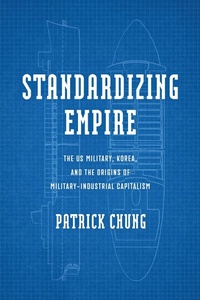
Standardizing Empire
Description

How the US military origins of global capitalism facilitated both South Korea's "economic miracle" and the decline of US industrial might
The US military has become a ubiquitous part of modern economic life. The Cold War prompted the first permanent overseas deployment of US troops and the creation of a global network of US military bases. Today, US military facilities can be found in every US state and overseas territory, as well as in dozens of foreign countries. The creation of this empire of bases cost billions of dollars and required the cooperation of states, corporations, and workers from around the world. It also remade the US military into the world's most significant economic force.
In Standardizing Empire, Patrick Chung examines the historical processes that led to the creation of the US military's astounding global footprint and reckons with the wide-ranging consequences of its globalization. Focusing on the Korean War and the subsequent militarization of South Korea, Chung traces how US military contracts came to influence the production of countless everyday items, such as cast-iron pipes and clothing, as well as a range of essential services, including transportation and construction. He deploys the term "military-industrial capitalism" to describe the new economic system centered on US military consumption.
To illustrate the pervasive impact of military-industrial capitalism, Standardizing Empire charts the histories of three of the leading South Korean multinational corporations today: shipping company Hanjin, steelmaker POSCO, and car manufacturer Hyundai. These case studies depict the companies' early ties to the US military and explain how they came to produce, sell, and employ workers worldwide, including in the United States. Standardizing Empire explains not only how today's US-led capitalist world economy originated but also how the emergence of military-industrial capitalism facilitated both South Korea's "economic miracle" and the decline of US industrial might.
More details
Other editions
Additional editions