

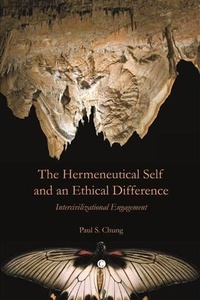
The Hermeneutical Self and an Ethical Difference
Intercivilizational Engagement
Published on 1. November 2012
286 pages
978-0-227-90101-4 (ISBN)
Description

Incorporating a tour of the past and a proposition for the future, Chung presents a fascinating study of inter civilizational hermeneutics that embraces our modern times and suggests the liberative potential of hermeneutical study. Adopting a subtle approach that stays clear of trying to impose upon the reader a simplistic understanding of hermeneutical discourses, Chung instead draws on a host of classical and modern scholars in search of a new and refreshing global hermeneutical theory.
Reviews / Votes
'Chung's book is an important contribution to interreligious solidarity towards compassionate justice within the context of imperial capitalism creating a dangerous crisis for human life and earth. He creatively awakens the wisdom of Confucianism and Daoism in postcolonial perspective in order to reread history from below, giving the victims of western civilization a voice and designing a new epistemology transcending the dominating reductionist rationalism. This is liberation theology at its best.'Prof. Ulrich Duchrow, University of Heidelberg
'With breadth of historical comprehension, intercivilizational insight, and synthetic judgment, Paul Chung immerses the reader in his quest to construct a usable hermeneutics for this second 'axial age' (Jaspers). We are challenged to engage in an archeological reframing of the colonial era that leads to the dismantling of the iron cage of capitalism and the privileging of subaltern perspectives toward the emergence of a postcolonial, irregular, life-enhancing ethic. Retrieving the wisdom of Confucian thought from Western stereotypes and drawing upon Western voices from Aristotle to Levinas, Aquinas to Bonhoeffer, Chung casts an imaginative vision of the theological task in our times.'
Craig L. Nessan, Wartburg Theological Seminary, Dubuque, IA
'Chung is to be applauded for his development of the similarities in the hermeneutical traditions of both and his desire to put them in dialogue. [...] ...there is much to like in Chung's text... [...] ...for those wrestling with the interreligious dialogue between Christianity and Confucianism, it will be a necessary read.'
Nathan Crawford, Reviews in Religion and Theology, Volume 20, Issue 3, July 2013
'This book will appeal to a wide range of scholarly interests and provide food for thought among those interested in hermeneutics, ethics, political theology, liberation theology, and postcolonial critiques of the Western traditions of philosophy and theology.'
Brodie McGregor, School of Divinity, University of Edinburgh, The Expository Times, Volume 125, Number 1, October 2013
'Chung's book is commendable and could be a helpful addition to university and seminary libraries across the world.'
James E. Taneti, Interpretation: A Journal of Bible and Theology, 67(4), October 2013
'Paul S. Chung's all-encompassing hermeneutical project is relevant for the historical inquiry into hermeneutics, and for the comparing of different hermeneutical approaches, coming from the Western as well as from the Eastern traditions. [...] it is a plea for a global hermeneutics as a consequence of and need for intercivilizational engagement.'
Dana Tabrea, Hermeneia, No. 13, 2013
'In this book, Paul Chung sets forth an insightful conversation between Western hermeneutical theory and ethics, on the one hand, and Confucian teaching on interpretation and the moral self, on the other. Chung's perceptive discussion of a wide range of classical and contemporary thinkers in both traditions lays the groundworkfor developing a post-colonial theory of interpretation and ethics that both critically evaluates globalization even as it recognizes the deep benefits of recognizingand engaging the plurality of civilizations that surround us.'
Lois Malcolm, Professor of Systematic Theology at Luther Seminary, St.Paul
"Few theologians are positioned to provide as engaging a conversation between Eastern and Western hermeneutics as is Chung in this book. [...] this book provides a helpful counterbalance and critical engagement with an alternate point of view for how hermeneutics can be used for an understanding of the moral self."
Timothy Shaun Price, University of Aberdeen, in Theological Book Review (tbr), Vol. 25, No.2, 2013
Paul Chung states that the purpose of his book ... is "to investigate the relationship between hermeneutical theory and ethics in a global-critical, inter-civilizational and postcolonial framework". He draws on the work of scholars from Aristotle to the modern age.
Church Times, 29th May 2015
More details
Language
English
Place of publication
Cambridge
United Kingdom
File size
1,45 MB
ISBN-13
978-0-227-90101-4 (9780227901014)
Copyright in bibliographic data and cover images is held by Nielsen Book Services Limited or by the publishers or by their respective licensors: all rights reserved.
Schweitzer Classification
Other editions
Additional editions
Book
07/2012
James Clarke & Co Ltd
€58.44
Shipment within 10-20 days
Person
Paul S. Chung is an Associate Professor of Mission and World Christianity at Luther Seminary. His books related to constructive theology and missiological hermeneutic include Martin Luther and Buddhism (2007) and The Cave and The Butterfly.
Content
Acknowledgements
Preface
Foreword
Introduction
PART I. Hermeneutical Theory and Human
PART II. Intercivilizational Encounters:
PART III. Aftermath of Modernity:
PART IV. Intercivilizational Reconstruction
in the Aftermath of Colonialism
Epilogue: Interpretive Reason and Postcolonial Irregularity
Bibliography
Index
Preface
Foreword
Introduction
PART I. Hermeneutical Theory and Human
PART II. Intercivilizational Encounters:
PART III. Aftermath of Modernity:
PART IV. Intercivilizational Reconstruction
in the Aftermath of Colonialism
Epilogue: Interpretive Reason and Postcolonial Irregularity
Bibliography
Index
