

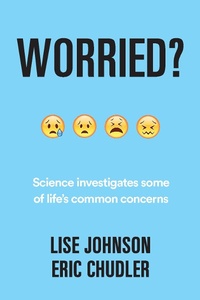
Worried?
Description

How scientific reasoning explains our most common daily fears—from germs to natural disasters and everything in between.
Quick--what do you worry about most? Your cell phone giving you cancer? The public bathroom you're using being dirty? GMOs in your food? An asteroid strike? Something else?
In this witty and evidenced-based book, Lise Johnson and Eric Chudler get to the root of our worries, all the while using science to help tame the anxiety beast.
News media, social media, and every mom blog in the world are continuously flagging new things for you to worry about. From obsessing over Lyme disease-infested ticks to worrying about amusement park safety, no-one is immune to the pervasive effects of anxiety brought on by normal, everyday activity. Each topic in this wide-ranging book is subjected to scientific scrutiny, and assigned a place on the "worry index,” with the authors concluding the only things worth worrying about are those those that can cause significant harm, are likely to happen, and are (somewhat) preventable.
Whether you are a constant worrier or a stick-your-head-in-the-sand-and-hope-for-the best sort of person, you'll find something to love in this witty and informative book.
More details
Other editions
Additional editions
Persons
Content
- Intro
- Title
- Contents
- Introduction
- How to Interpret the Worry Index
- Food
- 1. Caffeine
- 2. Dietary Supplements
- 3. Food Additives
- 4. Fair Trade
- 5. Gluten
- 6. Genetically Modified Organisms (GMOs)
- 7. Organic Produce
- 8. Pasteurized Milk
- 9. Salt
- 10. Sugar
- 11. Teflon
- 12. Alcohol
- 13. Meat
- 14. Food Safety
- 15. Fat
- 16. Antibiotics in Food Animals
- Medicine
- 17. Oral Contraception
- 18. Giving Birth in a Hospital
- 19. Ebola
- 20. Brain-Eating Amoeba
- 21. Medical Errors
- 22. Acetaminophen
- 23. General Anesthesia
- 24. Medical Imaging
- 25. Flesh-Eating Infection
- 26. Health Care-Associated Infections
- Environment
- 27. Mobile Phones
- 28. Mold
- 29. Microwave Ovens
- 30. Asbestos
- Chemicals
- 31. Aluminum
- 32. Flame Retardants
- 33. Fluoride
- 34. Formaldehyde
- 35. Lead
- 36. Mercury
- 37. BPA
- 38. DEET
- Animals
- 39. Snakes
- 40. Cats
- 41. Bears
- 42. Bees
- 43. Dogs
- 44. Shark Attack
- 45. Spiders
- 46. Ticks
- 47. Mosquitoes
- Travel
- 48. Elevators
- 49. Public Restrooms
- 50. Public Transportation
- 51. Public Swimming Pools
- 52. Airport Body Scanners
- 53. Bedbugs
- 54. Cruise Ships
- 55. Amusement Park Rides
- Miscellaneous
- 56. Pirates
- 57. Toys Made in China
- 58. Asteroid Strike
- Conclusion
- Appendix A Do-It-Yourself
- Appendix B Reading a Scientific Paper
- Appendix C First Aid Kit
- Index
- About the Authors
- Copyright
