

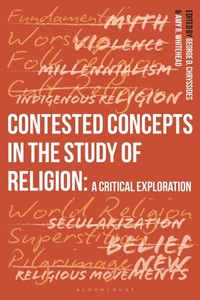
Contested Concepts in the Study of Religion
A Critical Exploration
1st Edition
Published on 11. August 2022
200 pages
978-1-350-24383-5 (ISBN)
Description

This book offers a clear, concise introduction to the meaning of problematic terms, and the ways in which they should legitimately be used. Each entry considers the following:
- Why is this concept problematic?
- What are the origins of the concept?
- How is it used or misused, and by whom?
- Is it still a legitimate concept in the study of religion and, if so, what are its legitimate uses?
- Are there other concepts that are preferable when writing on religion?
Concepts covered include:
- Belief
- Religion
- Magic
- Secularisation
- Violence
This is a jargon-free indispensable resource for students and scholars that encourages the critical use of terms in the study of religion.
- Why is this concept problematic?
- What are the origins of the concept?
- How is it used or misused, and by whom?
- Is it still a legitimate concept in the study of religion and, if so, what are its legitimate uses?
- Are there other concepts that are preferable when writing on religion?
Concepts covered include:
- Belief
- Religion
- Magic
- Secularisation
- Violence
This is a jargon-free indispensable resource for students and scholars that encourages the critical use of terms in the study of religion.
More details
Edition
1. Auflage
Language
English
Place of publication
London
United Kingdom
Publishing group
Bloomsbury Publishing PLC
Target group
College/higher education
ISBN-13
978-1-350-24383-5 (9781350243835)
Copyright in bibliographic data and cover images is held by Nielsen Book Services Limited or by the publishers or by their respective licensors: all rights reserved.
Schweitzer Classification
Other editions
Additional editions
George D. Chryssides | Amy R. Whitehead
Contested Concepts in the Study of Religion
A Critical Exploration
Book
09/2022
Bloomsbury Academic
€33.50
Shipment within 15-20 days
Persons
George D. Chryssides is Research Fellow in the Department of Theology and Religious Studies at York St John University, UK. His publications include The Study of Religion (Bloomsbury, 2014) and The Bloomsbury Companion to Studying Christians (Bloomsbury, 2020).
Amy Whitehead is Senior Lecturer in Social Anthropology at Massey University, New Zealand. Her publications include Religious Statues and Personhood: Testing the Role of Materiality (Bloomsbury, 2013) and she is the managing editor for Bloomsbury Studies in Material Religion.
Amy Whitehead is Senior Lecturer in Social Anthropology at Massey University, New Zealand. Her publications include Religious Statues and Personhood: Testing the Role of Materiality (Bloomsbury, 2013) and she is the managing editor for Bloomsbury Studies in Material Religion.
Content
Notes on Contributors
Acknowledgements
Table of Acronyms
1. Belief, Nicholas Campion (University of Wales, Trinity Saint David, UK)
2. Charisma, Edward Irons (Hong Kong Institute for Commerce, Culture and Religion)
3. Conversion, David G. Bromley (Virginia Commonwealth University, USA)
4. Cult, Benjamin E. Zeller (Lake Forest College, USA)
5. Diaspora, Kim Knott (University of Lancaster, UK)
6. Folk Religion, Marion Bowman (Open University, UK)
7. Fundamentalism, Camille Kaminski Lewis (Furman University, USA)
8. Guru, Stephen Jacobs (University of Wolverhampton, UK)
9. Indigenous Religions, Graham Harvey (Open University, UK)
10. Magic, Angela Puca (Leeds Trinity University, UK)
11. Millennialism, Catherine Wessinger (Loyola University New Orleans, USA)
12. Myth, Gregory W. Dawes (University of Otago, New Zealand)
13. New Age, Shai Feraro (University of Haifa, Israel)
14. New Religious Movement, George D. Chryssides (York St John University, UK)
15. Pilgrimage, Carole Cusack (University of Sydney, Australia)
16. Prophecy, George D. Chryssides (York St John University, UK)
17. Religion, David Morgan (Duke University, USA)
18. Secularization, Titus Hjelm (University of Helsinki, Finland)
19. Spirituality, Steven Sutcliffe (University of Edinburgh, UK)
20. Superstition, Amy R. Whitehead (Massey University, New Zealand)
21. Syncretism, Bettina Schmidt (University of Wales, Trinity Saint David, UK)
22. Violence, Negar Partow (Massey University, New Zealand)
23. World Religion, Teemu Taira (University of Helsinki, Finland)
24. Worship, Christina Welch (University of Winchester, UK)
25. Case Study, (York St John University, UK) and Amy R. Whitehead (Massey University, New Zealand)
Bibliography
Index
Acknowledgements
Table of Acronyms
1. Belief, Nicholas Campion (University of Wales, Trinity Saint David, UK)
2. Charisma, Edward Irons (Hong Kong Institute for Commerce, Culture and Religion)
3. Conversion, David G. Bromley (Virginia Commonwealth University, USA)
4. Cult, Benjamin E. Zeller (Lake Forest College, USA)
5. Diaspora, Kim Knott (University of Lancaster, UK)
6. Folk Religion, Marion Bowman (Open University, UK)
7. Fundamentalism, Camille Kaminski Lewis (Furman University, USA)
8. Guru, Stephen Jacobs (University of Wolverhampton, UK)
9. Indigenous Religions, Graham Harvey (Open University, UK)
10. Magic, Angela Puca (Leeds Trinity University, UK)
11. Millennialism, Catherine Wessinger (Loyola University New Orleans, USA)
12. Myth, Gregory W. Dawes (University of Otago, New Zealand)
13. New Age, Shai Feraro (University of Haifa, Israel)
14. New Religious Movement, George D. Chryssides (York St John University, UK)
15. Pilgrimage, Carole Cusack (University of Sydney, Australia)
16. Prophecy, George D. Chryssides (York St John University, UK)
17. Religion, David Morgan (Duke University, USA)
18. Secularization, Titus Hjelm (University of Helsinki, Finland)
19. Spirituality, Steven Sutcliffe (University of Edinburgh, UK)
20. Superstition, Amy R. Whitehead (Massey University, New Zealand)
21. Syncretism, Bettina Schmidt (University of Wales, Trinity Saint David, UK)
22. Violence, Negar Partow (Massey University, New Zealand)
23. World Religion, Teemu Taira (University of Helsinki, Finland)
24. Worship, Christina Welch (University of Winchester, UK)
25. Case Study, (York St John University, UK) and Amy R. Whitehead (Massey University, New Zealand)
Bibliography
Index
