

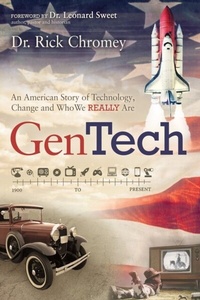
GenTech
Description

A social historian examines the use of technology in modern U.S. history and offers a different way to group American generations.
The G.I. Generation. Silents. Baby Boomers. Gen Xers. Millenials. Generation Z. Every generation has its label and box. But the real question is: Why?
Enter GenTech. It's a whole new way to look at American generations. Instead of the conventional fixed and linear dates for generational cohorts, Dr. Rick Chromey proposes a fresh understanding that's fluid and more of a loop, rooted to the technology each generation experiences in their "coming of age" years.
Since 1900, there has been more technological change than in all of previous combined history. The airplane. The automobile. Radio. Television. Nuclear energy. Rockets. Internet. Cellphones. Robots. Furthermore, there's a massive cultural shifting unlike anything witnessed since the Dark Ages gave way to the Renaissance, Reformation, Enlightenment, Scientific, and Industrial Ages. Consequently, postmodern generations (born since 1960) have grown up in a new, cyber, wireless, and visual high-tech culture that's forever changed how we do business, learn, socialize, broadcast, entertain, and worship.
It's technology that shapes us, gives every generation its personality, and seeds who we'll become tomorrow. GenTech opens a whole new perspective on how to view the world and understand why every generation matters.
Praise for GenTech
"Whether you're a technology nerd or wizard, this intriguing book will help you connect the digital dots. You'll see how technology is profoundly shaping our culture-and you, like it or not. Plus, you'll discover how technology affects each generation differently, for better or worse."-Thom Schultz, co-author of Don't Just Teach...Reach!All prices
More details
Other editions
Additional editions
Person
Content
- Intro
- Title
- Copyright
- Dedication
- Table of Contents
- Foreword
- Introduction: What in the World Happened?
- Chapter One: Generations
- Chapter Two: Waves
- Chapter Three: Tipping Points
- Chapter Four: Transportation-Telephone
- Chapter Five: Motion Pictures
- Chapter Six: Radio
- Chapter Seven: Vinyl
- Chapter Eight: Television
- Chapter Nine: Space
- Chapter Ten: Gamer
- Chapter Eleven: Cable Television
- Chapter Twelve: Personal Computer-Cell Phone
- Chapter Thirteen: Internet
- Chapter Fourteen: iTech
- Chapter Fifteen: Robotics
- A Final Word
- Acknowledgements
- About the Author
- Endnotes
