

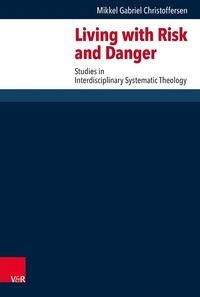
Living with Risk and Danger
Studies in Interdisciplinary Systematic Theology
1st Edition
Published on 17. June 2019
267 pages
978-3-647-57138-6 (ISBN)
Description

The contemporary world is marked by a sense of vulnerability not seen since the end of the Cold War. Climate change, migration, and political instability make people feel the inherent vulnerability of human life. Concepts of 'risk' and 'danger' are as relevant now as ever before for illuminating contemporary life. Yet, what changes in human lives if one interprets existence with 'risk' and 'danger' from the perspective of Christian faith? Does the Christian symbol system offer orientation for human lives in a time of crisis? Exploring the work of leading contemporary thinkers, Danish theologian Mikkel Gabriel Christoffersen develops a rich and varied account of Christian doctrine that enables human beings to live with risk and danger, in all vulnerability, with gratitude, courage and care for others. Christoffersen develops an interdisciplinary approach that allows him to draw upon sociological and anthropological reflections on life lived whilst facing risks and dangers. He brings these findings into conversation with Scandinavian, Anglo-American, and German theologians of risk. The result of his endeavor is a Trinitarian theology of risk that explores the extent to which one can consider the cross of Christ a risk of the incarnation rather than its very purpose. Focusing on vital existential questions makes Christoffersen's considerations vibrant and relevant to scholars and lay-people with an open-minded, intellectual interest in contemporary Christian theology.
Mikkel Gabriel Christoffersen is Pastor of Our Saviour's Church in Copenhagen and Visiting Researcher of Contemporary Theology at the University of Copenhagen.
Mikkel Gabriel Christoffersen is Pastor of Our Saviour's Church in Copenhagen and Visiting Researcher of Contemporary Theology at the University of Copenhagen.
More details
Other editions
Additional editions
Mikkel Gabriel Christoffersen
Living with Risk and Danger
Studies in Interdisciplinary Systematic Theology
Book
06/2019
1st Edition
Vandenhoeck & Ruprecht
€95.00
Shipment within 7-9 days
Person
Mikkel Gabriel Christoffersen is Pastor of Our Saviour's Church in Copenhagen and Visiting Researcher of Contemporary Theology at the University of Copenhagen.
Content
- Intro
- Title Page
- Copyright
- Table of Contents
- Body
- Acknowledgments
- Part I: Introductions to Risk and Danger
- 1. Introductory Observations: Risk and Danger
- 1.1 An Unacknowledged Testimony to the Experience of Risk and Danger
- 1.2 Contemporary Christian Systematic Theology
- 1.3 Risk Calculus
- 1.4 Research Question, Thesis Statement, and Outline
- 2. Research Field: Theologies of Risk
- 2.1 Risk and the Kenotic Creation: William Vanstone
- 2.2 Risk in the Divine Providence: John Sanders
- 2.3 Between Risk Sociology and Trinitarian Theology: Niels Henrik Gregersen
- 2.4 The Cross as Risk: Günter Thomas
- 2.5 A Theological Social Justice-Approach to Risk: Sharon Welch
- 2.6 Christology of Risk: Karen Baker-Fletcher
- 2.7 Completing the Overview: Three Additional Voices
- 2.8 Conclusion: The Need for A Comprehensive Theology
- 3. Methodology: Interdisciplinary Systematic Theology
- 3.1 An Interdisciplinary Conversation
- 3.2 Analyses of the Human Situation
- 3.3 Reconstructive Interpretations of Christian Symbols
- 3.3.1 Contemporary Systematic Theological Expositions
- 3.3.2 Biblical Texts
- 3.4 Conclusion: An Interdisciplinary Approach
- Part II: Living with Risk and Danger
- 4. Limits of Modernity: Risk and Vulnerability
- 4.1 Disaster Vulnerability
- 4.2 Insurance and Vulnerability
- 4.3 Personal Risk and Vulnerability
- 4.4 Conclusion: Domains of Vulnerability
- 5. Danger and Trust: Contributing to the Relational Theory of Risk
- 5.1 The Relational Theory of Risk
- 5.2 Relationships of Danger
- 5.2.1 Familiarity with the World
- 5.2.2 Vague Risk Objects
- 5.2.3 No Options
- 5.2.4 From Danger to Risk, and Back
- 5.3 Risk Relationships and Trust
- 5.4 Risk Objects and Danger Objects
- 5.5 The Relational Theory of Risk and Danger
- 6. Trust, Endangerment and Divine Vulnerability: An Interdisciplinary Dialogue
- 6.1 Method and Outline
- 6.2 Trust as a Gift of Spontaneity
- 6.2.1 Trust as Grace and Danger
- 6.2.2 The Normativity of Trust
- 6.3 Distrust and the Social Institutions
- 6.3.1 Luhmann on Interpersonal Trust and System Trust
- 6.3.2 Back to Spontaneous Trust
- 6.4 The Demands of Being Trusted
- 6.4.1 Løgstrup and the Ethical Demand
- 6.4.2 Luhmann and the Transformation of Expectations
- 6.5 Trust and the Incarnation
- 6.5.1 Crisis of Trust between Human Beings and Systems
- 6.5.2 Crisis of Trust between the Persons of the Trinity
- 7. Conclusions: Living with Risk and Danger
- Part III: Towards a Theology of Risk and Danger
- 8. A Theological Perspective: David Kelsey's Eccentric Existence
- 8.1 Three Divine Works: Creation, Consummation, and Reconciliation
- 8.1.1 Three Divine Works of the Trinity
- 8.1.2 Three Distinct Works
- 8.1.3 The Internal Logic between the Three Works
- 8.2 For this Project
- 9. Creation: Gift and Loss
- 9.1 Proximate Contexts
- 9.1.1 Creation and the Proximate Context
- 9.1.2 Loss and Ending
- 9.2 Being and Having Bodies
- 9.2.1 Being a Body
- 9.2.2 Having a Body
- 9.3 Conclusion: Risk and Value
- 10. Incarnation: Vulnerability and Anxiety
- 10.1 Relating to Vulnerability through Divine Sharing of Vulnerability
- 10.1.1 Pitfalls in Relating to Vulnerability
- 10.1.2 Incarnation as Sharing Human Vulnerability
- 10.1.3 Sharing Vulnerability with God
- 10.2 Valuation of Creational Value and the Divine Incarnation
- 10.2.1 The Goodness of Creation in Itself
- 10.2.2 The Goodness of Creation in Light of the Incarnation
- 10.3 The Cross as Lamentation
- 10.3.1 The Crucifixion and the Space for Lamentation
- 10.3.2 Lamentation and Human Vulnerability
- 10.4 Conclusion: Risk and Vulnerability
- 11. Consummation: Risk and the Future
- 11.1 The Scope and Content of the Promise to Consummate
- 11.1.1 The Universality of the Consummation and the Outpouring of the Spirit
- 11.1.2 The Content of the Divine Promise
- 11.1.3 The New Creation and Unnecessary Suffering
- 11.1.4 Creation and Consummation
- 11.2 Life in Bondage
- 11.2.1 The Bondage of Human Beings to Sinful Proximate Contexts
- 11.2.2 Christology and the Kingdom of God
- 11.2.3 The Crucifixion
- 11.2.4 Universal Human Responsibility
- 11.3 Consummation as Liberation from Bondage
- 11.3.1 Individual Liberation
- 11.3.2 Societal Liberation
- 11.4 Transformation, Judgment, and Final Freedom
- 11.5 Conclusion: Risk and the Future
- 12. Reconciliation: Risk, Guilt, and Divine Forgiveness
- 12.1 Guilt and Sin
- 12.1.1 Guilt and Responsibility
- 12.1.2 Legitimate Attribution of Responsibility
- 12.2 Divine Forgiveness
- 12.2.1 A Phenomenology and Social Theory of Forgiveness
- 12.2.2 Guilt and Forgiveness in Christian Doctrines of Atonement
- 12.2.3 Incarnation as Divine Forgiveness
- 12.3 Discussing Objections and Providing Nuances
- 12.3.1 Repentance as Reception rather than Condition of Forgiveness
- 12.3.2 The Cross as Sermon rather than Condition of Forgiveness
- 12.3.3 Forgiveness entails Vulnerability rather than Suffering
- 12.3.4 Divine Legitimacy in Forgiving Sinners
- 12.4 Conclusion: Risk and Guilt
- 13. Concluding Perspectives: A Theology of Risk and Danger
- 13.1 The Orientation Value of the Christian Symbol System
- 13.1.1 Qualifications
- 13.1.2 Creative Responses
- 13.1.3 Transformations
- 13.2 Risk Theology and Eccentric Existence
- 13.2.1 Tensions in the Divine Economy
- 13.2.2 A Trifold View of Divine Love
- Bibliography
- Index
