

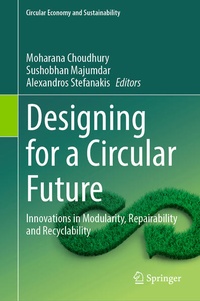
Designing for a Circular Future
Description

The book serves as a comprehensive guide to the key principles, strategies, and innovations that will define the future of sustainable product design in a circular economy. This book explores how modularity, repairability, and recyclability transform industries, creating opportunities for longer-lasting products, reducing waste, and improving resource efficiency. By integrating these principles, businesses and designers can craft products that support a regenerative, sustainable system of production and consumption. The book presents a roadmap for incorporating these principles into product design through a series of chapters, offering real-world case studies, technological innovations, and best practices.
The book begins with an introduction to the foundational concepts of the circular economy, emphasizing the critical need for sustainable design. It further explain the shift from traditional linear models to circular approaches prioritizing resource conservation, waste minimization, and product lifecycle extension. Readers will understand how modularity, repairability, and recyclability form the cornerstone of this shift, enabling products to be designed for longevity and reuse rather than disposal
More details
Other editions
Additional editions
Content
Section I: Foundations of Circular Design: Principles, Frameworks, and Methodologies.- Foundations of the Circular Economy: Principles and the Need for Sustainable Design.- Core Concepts for a Circular Future: Modularity, Repairability, and Recyclability.- Circular Design Frameworks: Tools, Strategies, and Methodologies for Implementation.- Section II: Modularity in Action: Pioneering Flexible and Adaptable Product Design.- Modular Pathways to Sustainability: Enhancing Product Lifecycle Management through Circular Design.- Modular Innovations in Action: Case Studies from Consumer Electronics, Automotive, and Furniture Industries.- The Future of Modularity: Emerging Trends, Smart Technologies, and Advanced Manufacturing.- Section III: Designing for Durability: The Power of Repairability and Longevity.- Repairability in the Circular Economy Extending Product Lifecycles for Environmental and Economic Gains.- Design for Repair and Upgrade: Strategies for Enhancing Product Longevity in a Circular Economy.- Building Repair Ecosystems: Business Models, Infrastructure, and Policies for a Sustainable Future.- Section IV: Closing the Loop: Recyclability and the Future of Sustainable Materials.- Designing for a Second Life: Principles of Recyclability and Material Recovery in Product Design.- Sustainable Materials and Manufacturing: Innovations Driving Circular Product Design.- Closing the Loop: Innovations in Circular Supply Chains and Recycling Technologies.
