

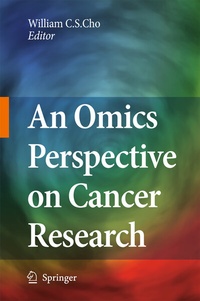
An Omics Perspective on Cancer Research
Description

Omics is an emerging and exciting area in the field of science and medicine. Numerous promising developments have been elucidated using omics (including genomics, transcriptomics, epigenomics, proteomics, metabolomics, interactomics, cytomics and bioinformatics) in cancer research. The development of high-throughput technologies that permit the solution of deciphering cancer from higher dimensionality will provide a knowledge base which changes the face of cancer understanding and therapeutics.
This is the first book to provide such a comprehensive coverage of a rapidly evolving area written by leading experts in the field of omics. It complies and details cutting-edge cancer research that covers the broad advances in the field and its application from cancer-associated gene discovery to drug target validation. It also highlights the potential of using integration approach for cancer research.
This unique and timely book provides a thorough overview of developing omics, which will appeal to anyone involved in cancer research. It will be a useful reference book for graduate students of different subjects (medicine, biology, engineering, etc) and senior scientists interested in the fascinating area of advanced technologies in cancer research.
Readership: This is a precious book for all types of readers - cancer researchers, oncologists, pathologists, biologists, clinical chemists, pharmacologists, pharmaceutical specialists, biostatisticians, and bioinformaticists who want to expand their knowledge in cancer research.
More details
Other editions
Additional editions
Content
Marta Sanchez-Carbayo
Abstract Protein–protein interactions, post-translational modifications, and interaction between protein and DNA or RNA can all shift the activity of a protein from what would have been predicted by its level of transcription. Functional proteomics studies the interaction of proteins within their cellular environment to determine how a given protein accomplishes its specific cellular task. Accordingly, the promise of functional proteomics is that by chronicling the function of aberrant or over-expressed proteins, it will be possible to characterize the mechanism of the disease-sustaining proteins. The further understanding of the disease networks will lead to targeted cancer therapy and specific biomarkers for diagnosis, prognosis or therapeutic response prediction based on disease specific proteins. In the context of other proteomic technologies, targeted antibody arrays are strongly contributing for functional proteomics analyses. This chapter describes how such strategies reported to date that may assist in the diagnosis, surveillance, prognosis, and potentially for predictive and therapeutic purposes for patients affected with solid and haematological neoplasias.
6.1 Functional Proteomics in Oncology: Concepts
Cancer can be described as a genetic disease, driven by the multistep accumulation of genetic and epigenetic factors. These molecular alterations result in uncontrolled cellular proliferation, cell cycle deregulation, decrease in cell death or apoptosis, blockage of differentiation, invasion, and metastatic spread.
The particular genetic and protein expression alterations that occur as part of the crosstalk between these pathways, will in great part determine the biological behavior of the tumor including its ability to grow, recur, progress and metastasize. The advent of high-throughput methods of molecular analysis can comprehensively survey the genetic and protein profiles characteristic of distinct tumor types and identify targets and pathways that may underlie a particular clinical behavior.
The driving force behind oncoproteomics is the belief that certain protein signatures or patterns are associated with a particular malignancy and clinical behavior. If so, the correlation of clinical parameters with defined protein expression patterns that reflect the mutated genetic program that caused or was involved in cancer progression, would allow tumor stratification, predict disease progression and even define improved tailored therapeutic modalities.
The technological challenges to achieve these goals are significant since the human proteome is not defined. One potential solution to finding cancer-associated protein signatures is functional proteomic antibody array-based techniques. While the amino acid sequence of a protein is uniquely determined by a nucleotide sequence, the genetic code of a protein is not a complete predictor of the function of a protein. Many in vivo factors can alter the activity level or function of a protein as cells are influenced by a complex system of communication with other cells and factors in their microenvironment.
Protein–protein interactions, posttranslational modifications, and interaction between protein and DNA or RNA can all shift the activity of a protein from what would have been predicted by its level of transcription. Functional proteomics studies the interaction of proteins within their cellular environment to determine how a given protein accomplishes its specific cellular task. Accordingly the promise of functional proteomics is that by chronicling the function of aberrant or over-expressed proteins, it will be possible to characterize the mechanism of the disease-sustaining proteins.
The further understanding of the disease networks will lead to targeted cancer therapy and specific biomarkers for diagnosis, prognosis or therapeutic response prediction based on disease specific proteins. In addition, the response of proteins to molecular targeted therapy could be monitored to determine the efficacy of the targeted therapy and potential viable future therapies involving the same protein pathway (Azad et al. 2006)."
