

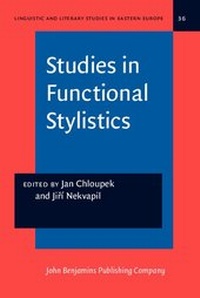
Studies in Functional Stylistics
1st Edition
Published on 23. December 1993
293 pages
978-90-272-7689-6 (ISBN)
Description

The 15 contributions in the present collection can be divided roughly into three groups:
(1) Papers directly following up functional stylistics and the theory of language culture, elaborated in the classical period of the Prague Linguistic School.
(2) Papers concerning the problems of style in a wider communicative arena. These contributions are closely related to contemporary text linguistics and also deal with problems involving psycholinguistics, sociolinguistics and semiotics.
(3) Papers having, at least in some part, a pronounced historiographic character. These contributions reflect the fact that contemporary Czech linguistic research is firmly anchored in the Prague linguistic tradition.
Although the authors' frame of reference is mainly Czech and the current language situation in the Czech Republic, the majority of contributions were intended to have a more general linguistic character and general linguistic validity.
(1) Papers directly following up functional stylistics and the theory of language culture, elaborated in the classical period of the Prague Linguistic School.
(2) Papers concerning the problems of style in a wider communicative arena. These contributions are closely related to contemporary text linguistics and also deal with problems involving psycholinguistics, sociolinguistics and semiotics.
(3) Papers having, at least in some part, a pronounced historiographic character. These contributions reflect the fact that contemporary Czech linguistic research is firmly anchored in the Prague linguistic tradition.
Although the authors' frame of reference is mainly Czech and the current language situation in the Czech Republic, the majority of contributions were intended to have a more general linguistic character and general linguistic validity.
More details
Other editions
Additional editions
Jan Chloupek | Jiri Nekvapil
Studies in Functional Stylistics
Book
12/1993
John Benjamins Publishing Co
€116.60
Shipment within 10-15 days
Persons
Content
- STUDIES IN FUNCTIONAL STYLISTICS
- Editorial page
- Title page
- Copyright page
- Table of contents
- Opening Remarks
- Prologue: Ferdinand de Saussureand the Prague Linguistic Circle
- Notes
- The Position of Style in Verbal Communication
- Notes
- References
- Language Varieties and Styles in Communication
- Notes
- References
- On the Beginnings of Modern Standard Czech
- Notes
- References
- Slang and Some Related Problems in Czech Linguistics
- 1. Historical facts
- 2. The unused alternative solution
- 3. Explanation: Differential as opposed to complex analysis of text
- 4. Addendum: Differentiation of the national language
- Notes
- References
- Publicist Style
- 1. The position of publicist style amongst functional styles
- 2. THE MEANS OF EXPRESSION OF PUBLICIST STYLE
- 3. A metalinguistic evaluation of expression in publicist style
- Notes
- References
- Semantic Contexts in a Poetical Work
- Notes
- References
- On the Stylistic Aspect of Coreferential Naming Chains
- 1. Coreferential naming chains
- 2. The involvement of coreferential NUs in co-text and context and its stylistic values
- 3. One specific variety of CNCs: the "austere" chains of modern literary prose
- Notes
- References
- The Position of Verbless Clauses in the System of Means of Czech Functional Styles
- References
- On the Asymmetry between Syntactic and Elementary Textual Units
- 1. Compounded formations, base component, bound component
- 2. Grammatical sentence pattern and utterance
- 2.1. Petr selhal totálne. (Peter failed totally.)
- 2.2. Petr selhal. Totálne. (Peter failed. Totally.)
- 3. Definition of compounded formations
- 4. Structure of compounded formations
- 5. Compounded formations and text
- 6. Functional sentence perspective of compounded formations
- 7. The syntactic processes of panellation and supplementation and their results: parcellated formations and supplemented formations
- 8. Notes on the concept of the syntactic whole
- 9. A tentative psycholinguistic interpretation of parcellation and supplementation
- 10. The recipient's point of view
- 10.1. Sentence delimitation
- 10.2. The gradual filling of positions of the grammatical sentence pattern with a right-valence potential element
- 11. Basic models of elementary textual development
- 12. The function of compounded formations
- 13. The stylistics of compounded formations
- Conclusion
- Notes
- References
- The Language and Style of Hasek's Novel "The Good Soldier Svejk" from the Viewpoint of Translation
- Notes
- References
- Conversion of "Key Words" of English Song Lyrics into Czech
- 1. The song as a specific semiotic heterogenous message
- 2. Sound and meaning of key words in intertextual relations
- 3. The reason for the imitation of sound of the original lyric
- 4. Conclusions
- Notes
- References
- On the Concept of Language Culture
- Notes
- References
- Rhetoric, Functional Stylistics and Theory of Language Culture
- References
- Epilogue: On the Way to a General Stylistics of Human Activity
- Notes
- References
- List of Contributors
- Index of Names
- Subject Index
