

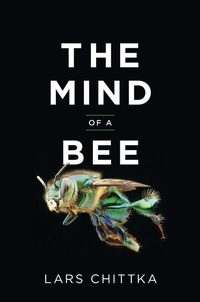
The Mind of a Bee
1st Edition
Published on 6. July 2022
272 pages
978-0-691-23624-7 (ISBN)
Description

A rich and surprising exploration of the intelligence of bees
Most of us are aware of the hive mind-the power of bees as an amazing collective. But do we know how uniquely intelligent bees are as individuals? In The Mind of a Bee, Lars Chittka draws from decades of research, including his own pioneering work, to argue that bees have remarkable cognitive abilities. He shows that they are profoundly smart, have distinct personalities, can recognize flowers and human faces, exhibit basic emotions, count, use simple tools, solve problems, and learn by observing others. They may even possess consciousness.
Taking readers deep into the sensory world of bees, Chittka illustrates how bee brains are unparalleled in the animal kingdom in terms of how much sophisticated material is packed into their tiny nervous systems. He looks at their innate behaviors and the ways their evolution as foragers may have contributed to their keen spatial memory. Chittka also examines the psychological differences between bees and the ethical dilemmas that arise in conservation and laboratory settings because bees feel and think. Throughout, he touches on the fascinating history behind the study of bee behavior.
Exploring an insect whose sensory experiences rival those of humans, The Mind of a Bee reveals the singular abilities of some of the world's most incredible creatures.
Most of us are aware of the hive mind-the power of bees as an amazing collective. But do we know how uniquely intelligent bees are as individuals? In The Mind of a Bee, Lars Chittka draws from decades of research, including his own pioneering work, to argue that bees have remarkable cognitive abilities. He shows that they are profoundly smart, have distinct personalities, can recognize flowers and human faces, exhibit basic emotions, count, use simple tools, solve problems, and learn by observing others. They may even possess consciousness.
Taking readers deep into the sensory world of bees, Chittka illustrates how bee brains are unparalleled in the animal kingdom in terms of how much sophisticated material is packed into their tiny nervous systems. He looks at their innate behaviors and the ways their evolution as foragers may have contributed to their keen spatial memory. Chittka also examines the psychological differences between bees and the ethical dilemmas that arise in conservation and laboratory settings because bees feel and think. Throughout, he touches on the fascinating history behind the study of bee behavior.
Exploring an insect whose sensory experiences rival those of humans, The Mind of a Bee reveals the singular abilities of some of the world's most incredible creatures.
More details
Other editions
Additional editions
Lars Chittka
The Mind of a Bee
Book
07/2022
Princeton University Press
€43.33
Article exhausted; check different version
Person
Lars Chittka is professor of sensory and behavioral ecology at Queen Mary University of London. He is the coeditor of Cognitive Ecology of Pollination.
Content
- Cover
- Contents
- Chapter 1. Introduction
- Chapter 2. Seeing in Strange Colors
- Chapter 3. The Alien Sensory World of Bees
- Chapter 4. "It's Just Instinct"-or Is It?
- Chapter 5. The Roots of Bee Intelligence and Communication
- Chapter 6. Learning about Space
- Chapter 7. Learning about Flowers
- Chapter 8. From Social Learning to "Swarm Intelligence"
- Chapter 9. The Brains behind It All
- Chapter 10. Personality Differences between Bees
- Chapter 11. Do Bees Have Consciousness?
- Chapter 12. Afterword
- Acknowledgments
- Notes and Bibliography
- Illustration Credits
- Index
