

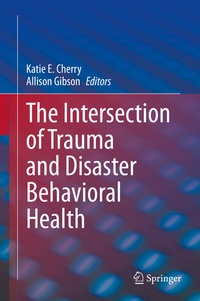
The Intersection of Trauma and Disaster Behavioral Health
Description

This contributed volume examines the intersection of trauma and disaster behavioral health from a lifespan perspective, filling a critical gap in the literature on disaster mental health research. In the chapters, the contributors evaluate behavioral data of adults exposed to various environmental events in both the United States (i.e., the 2017 Hurricanes Irma in Florida and Harvey in Houston) and abroad (i.e., missile fire in the 2014 Israel-Gaza conflict). Contributors also suggest future directions, practices, and policies for trauma and disaster response.
The three parts of the book provide an overview of disaster behavioral health across the lifespan, propose practical applications of research theories to psychosocial problems resulting from disasters and trauma, and evaluate disaster and trauma interventions from a macro-level perspective. Topics explored among the chapters include:
- Integrating Trauma-Informed Principles into Disaster Behavioral Health Targeting Older Adults
- Cultural Competence and Disaster Mental Health
- When Disasters Strike: Navigating the Challenges of "Sudden Science"
- Frameworks of Recovery: Health Caught at the Intersection of Housing, Education, and Employment Opportunities After Hurricane Katrina
- Substance Use Issues and Behavioral Health After a Disaster
- Psychosocial Recovery After Natural Disaster: International Advocacy, Policy, and Recommendations
The Intersection of Trauma and Disaster Behavioral Health
is a vital resource for researchers whose expertise covers the domains of trauma, health and wellness, and natural and technological disasters. The book also is a useful supplement to graduate courses in psychology, sociology, social work, disaster science, human ecology, and public health.
More details
Other editions
Additional editions
Persons
Allison Gibson, PhD, is an Assistant Professor in the University of Kentucky's College of Social Work in Lexington. Dr. Gibson's clinical and research focus is grounded in the biopsychological perspective for aging. As a social worker and researcher, Dr. Gibson's research focuses on the relationship between aging, health, crisis response, and social justice. Her research frequently examines individuals' social support, psychological well-being, and health outcomes in the context of disaster response and recovery. She is dedicated to improving the health and well-being of older adults. Dr. Gibson has advanced knowledge and translated empirical findings into interventions to support families confronting crises and challenging life events. She is a passionate advocate for social justice and gerontological social work education. She is a member of the Gerontological Society of America and the former co-convener of a special interest group on Disasters and Older Adults.
