

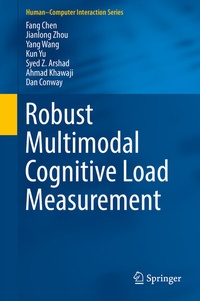
Robust Multimodal Cognitive Load Measurement
Description

This is the first book of its kind to systematically introduce various computational methods for automatic and real-time cognitive load measurement and by doing so moves the practical application of cognitive load measurement from the domain of the computerscientist and psychologist to more general end-users, ready for widespread implementation.
Robust Multimodal Cognitive Load Measurement is intended for researchers and practitioners involved with cognitive load studies and communities within the computer, cognitive, and social sciences. The book will especially benefit researchers in areas like behaviour analysis, social analytics, human-computer interaction (HCI), intelligent information processing, and decision support systems.
Reviews / Votes
"The content of this volume is a fair reference source for researchers and stakeholders interested in the investigation and application of the construct of cognitive load. . this is a good reference for those who are interested in the application of cognitive load and its measurement, with the aim of designing multimodal human-computer interactive systems better aligned with limited mental capacities of humans." (Luca Longo, Computing Reviews, March, 2017)More details
Other editions
Additional editions
Content
Preface.- Part I: Preliminaries.- Introduction.- The State-of-The-Art.- Theoretical Aspects of Multimodal Cognitive Load Measures.- Part II: Physiological Measurement.- Eye Based Measures. Galvanic Skin Response Based Measures.- Part III: Behavioural Measurement.- Linguistic Feature Based Measures.- Speech Signal Based Measures.- Pen Input Based Measures.- Mouse Based Measures.- Part IV: Multimodal Measures and Affecting Factors.- Multimodal Measures and Data Fusion.- Emotion and Cognitive Load.- Stress and Cognitive Load.- Trust and Cognitive Load.- Part V: Making Cognitive Load Measurement Accessible.- Dynamic Cognitive Load Adjustments in A Feedback Loop.- Real-Time Cognitive Load Measurement: Data Streaming Approach.- Applications of Cognitive Load Measurement.- Part VI: Conclusions.- Cognitive Load Measurement in Perspectives.
