

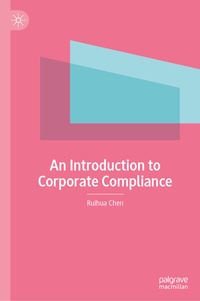
An Introduction to Corporate Compliance
Description

This book provides a systematic and comprehensive analysis of corporate compliance as a central mechanism of modern corporate governance and legal regulation. It explains how compliance programs prevent corporate misconduct, manage legal risk, and function within administrative and criminal enforcement frameworks.
The book begins by defining the nature, values, and principles of corporate compliance, and examines risk-based compliance management and institutional models for compliance systems. It then analyzes compliance risk assessment and methods for evaluating the effectiveness of compliance programs, drawing on comparative practices from the United States, the United Kingdom, Europe, and China. The later chapters explore administrative settlements, regulatory approaches to promoting compliance, and compliance-based incentives in criminal law, including deferred prosecution agreements and enterprise compliance reform in China. The book also discusses compliance incentives in international financial organizations and presents representative corporate compliance cases. This book is intended for scholars, legal practitioners, regulators, and students interested in corporate law, criminal law, and regulatory governance.
More details
Other editions
Additional editions
Persons
Ruihua Chen is Professor of Law and Chair of the Academic Committee at Peking University Law School. His research focuses on criminal procedure, evidence law, judicial institutions, theories of procedural justice, and the normative foundations of corporate compliance.
Content
Chapter 1: The Nature of Corporate Compliance.- Chapter 2: The Fundamental Values of Corporate Compliance.- Chapter 3: Principles of Corporate Compliance Management.- Chapter 4: Institutional Models for Corporate Compliance Systems.- Chapter 5: Corporate Compliance Risk Assessment.- Chapter 6: Evaluating the Effectiveness of Compliance Programs.- Chapter 7: Administrative Settlements and Compliance Oversight.- Chapter 8: Regulatory Approaches to Promoting Corporate Compliance.- Chapter 9: Criminal Compliance Incentives I: Models of Compliance-Based Exculpation.- Chapter 10: Criminal Compliance Incentives II: Compliance and Deferred Prosecution Agreements.- Chapter 11: Criminal Compliance Incentives III: The Chinese Experience in Enterprise Compliance Reform.- Chapter 12: Compliance Incentives in International Financial Organizations.
