

Research and Practice on the Theory of Inventive Problem Solving (TRIZ)
Description
Alles über E-Books | Antworten auf Fragen rund um E-Books, Kopierschutz und Dateiformate finden Sie in unserem Info- & Hilfebereich.
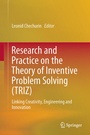
This book clarifies the common misconception that there are no systematic instruments to support ideation, heuristics and creativity. Using a collection of articles from professionals practicing the Theory of Inventive Problem Solving (TRIZ), this book presents an overview of current trends and enhancements within TRIZ in an international context, and shows its different roles in enhancing creativity for innovation in research and practice. Since its first introduction by Genrikh Saulovich Altshuller in 1956 in the USSR, the TRIZ method has been widely used by inventors, design engineers and has become a standard element of innovation support tools in many Fortune 500 companies. However, TRIZ has only recently entered the domain of scientific publications and discussion. This collection of articles is meant as a record of scientific discussion on TRIZ that reflects the most interesting talking points, research interests, results and expectations. Topics such as Creative and Inventive Design, Patent Mining, and Knowledge Harvesting are also covered in this book.
More details
Other editions
Additional editions

Person
Content
System requirements
File format: PDF
Copy protection: Watermark-DRM (Digital Rights Management)
System requirements:
- Computer (Windows; MacOS X; Linux): Use the free software Adobe Reader, Adobe Digital Editions, or any other PDF viewer of your choice (see eBook Help).
- Tablet/Smartphone (Android; iOS): Install the free app Adobe Digital Editions or another reading app for eBooks, e.g., PocketBook (see eBook Help).
- E-reader: Bookeen, Kobo, Pocketbook, Sony, Tolino and many more (only limited: Kindle).
The file format PDF always displays a book page identically on any hardware. This makes PDF suitable for complex layouts such as those used in textbooks and reference books (images, tables, columns, footnotes). Unfortunately, on the small screens of e-readers or smartphones, PDFs are rather annoying, requiring too much scrolling.
This eBook uses Watermark-DRM, a „soft” copy protection. This means that there are no technical restrictions to prevent illegal distribution. However, there is a personalised watermark embedded in the eBook that can be used to identify the purchaser of the eBook in the event of misuse and to provide evidence for legal purposes.
For more information, see our eBook Help page.