

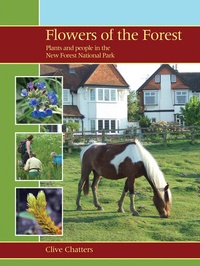
Flowers of the Forest
Plants and People in the New Forest National Park
1st Edition
Published on 10. January 2022
248 pages
978-0-691-23760-2 (ISBN)
Description

This book explores the botanical richness and cultural heritage of the New Forest National Park in Hampshire, England. The New Forest has become an exceptional area for wildflowers, many of which were once common throughout the lowlands of Britain.
The Forest enjoys strong populations of many special wildflowers because it retains a living tradition of free-ranging domestic animals grazing its coastland, extensive commons, and village greens. This book is an exploration of how the wildlife of the Forest is the natural expression of the lives and economy of the people of the Forest.
- An introduction to the New Forest and how its commoning economy works
- A description of the principal habitats of the Forest and how they relate to one another
- Accounts of the people who have explored the Forest for wildflowers from the early 17th century to the present
- Descriptions of more than 100 species of the rarer flowering plants and ferns currently known from the National Park, many of which are nationally or internationally rare, scarce, or threatened
- An account of Forest conservation issues by someone who has participated in the life of the Forest for more than 20 years
The Forest enjoys strong populations of many special wildflowers because it retains a living tradition of free-ranging domestic animals grazing its coastland, extensive commons, and village greens. This book is an exploration of how the wildlife of the Forest is the natural expression of the lives and economy of the people of the Forest.
- An introduction to the New Forest and how its commoning economy works
- A description of the principal habitats of the Forest and how they relate to one another
- Accounts of the people who have explored the Forest for wildflowers from the early 17th century to the present
- Descriptions of more than 100 species of the rarer flowering plants and ferns currently known from the National Park, many of which are nationally or internationally rare, scarce, or threatened
- An account of Forest conservation issues by someone who has participated in the life of the Forest for more than 20 years
More details
Other editions
Additional editions
Clive Chatters
Flowers of the Forest - Plants and People in the New Forest National Park
Plants and People in the New Forest National Park
Book
11/2009
WILDGuides
€50.50
Shipment within 3-4 weeks
Person
Clive Chatters is chair of the New Forest National Park Authority and has been an active campaigner for the conservation of the area's wildlife, unique culture, and rural economy.
Content
- Cover Page
- Title Page
- Copyrights Page
- Dedication Page
- Contents
- Foreword
- Intentions and definitions
- An Introduction to the New Forest National Park
- How the Open Forest works
- Geology
- A botanical overview
- See for yourself
- For the record
- Lower plants
- The Open Forest
- The woods of the Open Forest
- The Christmas Green Oaks
- Woodland management
- Ancient trees
- Woodland wildflowers
- Butcher's-broom
- John Goodyer and Narrow-leaved Lungwort
- Narrow-leaved Lungwort
- Goodyer's Elm
- Ivy-leaved Bellflower - plant profile
- Ivy-leaved Bellflower
- Bastard Balm
- Bastard Balm - plant profile
- Scrub
- Brambles
- Roses
- Ferns
- Heaths and Bogs
- Drainage
- Management
- After the burn
- The marl heaths
- The sandy heaths
- Northern species of the Open Forest
- Disturbance and upheavals on the heaths
- Peaty paths
- Life in a rut
- Eyebrights and concrete
- Summer Lady's-tresses: a national extinction
- Hatch Thoke
- Cottongrasses and Beavers
- Dwarf shrubs
- Finding Early Gentians: X marks the spot
- In amongst the Bracken
- Angular Solomon's-seal
- - plant profile
- The Wild Gladiolus
- - plant profile
- Grasslands
- Lawns
- Village greens
- Chamomile
- The Small Fleabane
- Boom and bust
- Streamside lawns
- Woodland lawns
- Bowman's Horsetail
- The Re-seeds
- Open Forest Ponds and Rivers
- The rivers
- The many names of the Lymington River
- Cut-grass
- Forest ponds
- Adder's-tongue Spearwort
- Floating Water-plantain
- Forest ponds and the Avon Valley
- Hampshire-purslane - plant profile
- Hampshire-purslane and Coral-necklace
- Coral-necklace - plant profile
- The Coastal Open Forest
- Tanners Lane and the Boldre foreshore
- The Coast
- The Coast: an introduction
- Below the tide
- The wooded marsh
- Saltmarsh and strandline
- A life in gravel
- Little-Robin
- Hurst Spit: Ray and Parkinson
- Sea Campion and a lost Island
- Calshot and vegetables
- Tom Tiddler's Ground
- Mulberrys, sauce and spider-orchids
- Cultivation and cliffs
- Grazing marshes
- The Enclosed Countryside
- Within the hedges
- Summer Snowflake
- Summer Snowflake - plant profile
- Sowley Pond
- Suburban life
- The Avon Valley
- Arable losses
- Looking forward
- Appendix 1: Find out more
- New Forest organisations
- References
- Appendix 2: A list of the rare, scarce and Red List vascular plants currently found within the New Forest National Park
- Appendix 3: Some of the more frequently found plants in selected habitats around the New Forest
- Appendix 4: Gazetteer of place names referred to in the text
- Appendix 5: New Forest National Park: Facts and Figures
- Appendix 6: Forest Code
- Acknowledgements
- Photographic and artwork credits
- Index of English and Scientific Names
- Index of People's Names
