

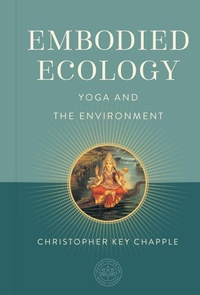
Embodied Ecology
Yoga and the Environment
Published on 6. May 2025
320 pages
979-8-88762-116-6 (ISBN)
Description

In this book, scholar of Indic religions Christopher Key Chapple explores how resources from the Hindu and Yoga traditions can inform contemporary conversations about the problems of environmental degradation, both in India and globally.
The world finds itself in an existential crisis. Climate chaos abounds. Pollution vitiates soil, water, and food. Anxiety and depression press upon human psyches, young and old. Embodied Ecology explores how core ideas and practices of Hinduism and Yoga might help provide hope and help in these troubled times.
The Vedas and early Upanisads signal the centrality of Earth-awareness in early India. The ethics of Yoga provide guidelines for developing a healthy relationship with the modern ills of over-consumption. Meditation practices as described in the Yoga-vasistha help develop a sense of intimacy with one's body, with other persons, and with the larger ecosphere. In the modern period, Mahatma Gandhi initiated a thoroughgoing economic critique that helped inspire India's many contemporary eco-activists including Vandana Shiva, M.C. Mehta, the late Anil Agarwal, and Sunderlal Bahuguna as well as communities including Govardhan Ecovillage and Bija Vidyapeeth.
Traversing these topics, Embodied Ecology seeks to discern how Hindu and Yoga ideals can address the pressing problems of global consumerism, the proliferation of plastic waste, species extinctions, and global climate change. It points toward the ways these rich traditions offer resources for fostering much-needed healing, inner and outer.
The world finds itself in an existential crisis. Climate chaos abounds. Pollution vitiates soil, water, and food. Anxiety and depression press upon human psyches, young and old. Embodied Ecology explores how core ideas and practices of Hinduism and Yoga might help provide hope and help in these troubled times.
The Vedas and early Upanisads signal the centrality of Earth-awareness in early India. The ethics of Yoga provide guidelines for developing a healthy relationship with the modern ills of over-consumption. Meditation practices as described in the Yoga-vasistha help develop a sense of intimacy with one's body, with other persons, and with the larger ecosphere. In the modern period, Mahatma Gandhi initiated a thoroughgoing economic critique that helped inspire India's many contemporary eco-activists including Vandana Shiva, M.C. Mehta, the late Anil Agarwal, and Sunderlal Bahuguna as well as communities including Govardhan Ecovillage and Bija Vidyapeeth.
Traversing these topics, Embodied Ecology seeks to discern how Hindu and Yoga ideals can address the pressing problems of global consumerism, the proliferation of plastic waste, species extinctions, and global climate change. It points toward the ways these rich traditions offer resources for fostering much-needed healing, inner and outer.
More details
Other editions
Additional editions
Christopher Key Chapple | The Oxford Centre for Hindu Studies
Embodied Ecology
Yoga and the Environment
Book
06/2025
Mandala Publishing Group
€28.50
Shipment within 10-20 days
Persons
Christopher Key Chapple is Doshi Professor of Indic and Comparative Theology and founding director of the Master of Arts in Yoga Studies at Loyola Marymount University. He has published more than twenty books, including Karma and Creativity; Nonviolence to Animals, Earth, and Self in Asian Traditions; Yoga and the Luminous; and Living Landscapes: Meditations on the Elements in Hindu, Buddhist, and Jain Yogas. Chapple serves on the advisory boards for the Forum on Religion and Ecology (Yale), the Jaina Studies Centre (SOAS, London), the Dharma Academy of North America (Berkeley), the South Asian Studies Association (Los Angeles), and the International School for Jain Studies (Pune).
The Oxford Centre for Hindu Studies is an academy for the study of Hindu cultures, societies, philosophies, religions, and languages. The Oxford Centre for Hindu Studies Mandala Publishing Series offers authoritative yet accessible introductions to a wide range of subjects in Hindu Studies. Each book in the series aims to present its subject matter in a form that is engaging and readily comprehensible to persons of all backgrounds - academic or otherwise - without compromising scholarly rigour. The series thus bridges the divide between academic and popular writing by preserving and utilising the best elements of both.
General Editor: Lucian Wong
Editorial Board: John Brockington, Avni Chag, James Madaio, and Valters Negribs
For information on Continuing Education Courses at the Oxford Centre for Hindu Studies, visit www.ochsonline.org
The Oxford Centre for Hindu Studies is an academy for the study of Hindu cultures, societies, philosophies, religions, and languages. The Oxford Centre for Hindu Studies Mandala Publishing Series offers authoritative yet accessible introductions to a wide range of subjects in Hindu Studies. Each book in the series aims to present its subject matter in a form that is engaging and readily comprehensible to persons of all backgrounds - academic or otherwise - without compromising scholarly rigour. The series thus bridges the divide between academic and popular writing by preserving and utilising the best elements of both.
General Editor: Lucian Wong
Editorial Board: John Brockington, Avni Chag, James Madaio, and Valters Negribs
For information on Continuing Education Courses at the Oxford Centre for Hindu Studies, visit www.ochsonline.org
