

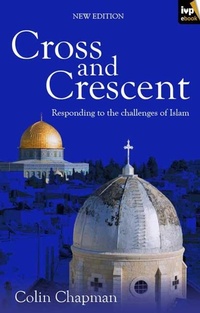
Cross and Crescent
Responding To The Challenges Of Islam
Published on 17. December 2012
421 pages
978-1-84474-679-8 (ISBN)
Description

Islam presents new challenges and new questions to Christians and to the West in a post-9/11 context.
However, in many situations in the world, where Christians and Muslims live peacefully side-by-side as neighbours, political considerations are not uppermost. Challenging us to examine our own attitudes, Colin Chapman considers the issues involved in Christian engagement with Muslims and Islam. He explores, ultimately, how Christians can effectively bear witness to Jesus.
This revised and updated edition incorporates brand new material on 'Islamic Terrorism', 'What is Islam?', 'The Qur'anic View of Christians' and 'Explaining Christian Beliefs About Jesus'. It will equip Christians to better understand Muslims and Islam in a rapidly changing world.
However, in many situations in the world, where Christians and Muslims live peacefully side-by-side as neighbours, political considerations are not uppermost. Challenging us to examine our own attitudes, Colin Chapman considers the issues involved in Christian engagement with Muslims and Islam. He explores, ultimately, how Christians can effectively bear witness to Jesus.
This revised and updated edition incorporates brand new material on 'Islamic Terrorism', 'What is Islam?', 'The Qur'anic View of Christians' and 'Explaining Christian Beliefs About Jesus'. It will equip Christians to better understand Muslims and Islam in a rapidly changing world.
More details
Language
English
Place of publication
Nottingham
United Kingdom
Product notice
Reflowable
ISBN-13
978-1-84474-679-8 (9781844746798)
Copyright in bibliographic data and cover images is held by Nielsen Book Services Limited or by the publishers or by their respective licensors: all rights reserved.
Schweitzer Classification
Other editions
Additional editions
Book
09/2007
Inter-Varsity Press
€41.07
Article not available at the moment
Person
Colin Chapman is former Lecturer in Islamic Studies at the Near East School of Theology, Beirut, Lebanon. He is the author of Christianity on Trial and The Case for Christianity (both Lion) and Islam and the West: Conflict, Co-existence or Conversion (Paternoster).
Content
- Intro
- Cross and Crescent
- Contents
- Part One: Relating To Our Muslim Neighbours
- Part Two: Understanding Islam
- Part Three: Entering Into Discussion And Dialogue
- Part Four: Facing Fundamental Issues
- Part Five: Bearing Witness To Jesus
- Acknowledgments
- Preface to the Second Edition
- Introduction
- How are the challenges of Islam perceived?
- What is involved in Christian responses to Islam?
- Part One Relating to Our Muslim Neighbours
- 1. Meeting face to face
- Starting where we are
- The secret of real dialogue
- Greetings
- Visiting
- Visiting a mosque
- What should you do before going?
- What can you see at the mosque?
- What should you do after the visit?
- Where will all this lead?
- 2. Appreciating Islamic culture
- How can we begin to appreciate Muslim culture?
- Festivals
- Marriage and family life
- Diet
- Dress
- Social manners
- Comments on this description of Muslim culture
- What is special about Islamic culture?
- Some controversial aspects of Islamic culture
- The veil (hijab)
- Honour killings
- Female circumcision
- What do Muslims think about Western culture?
- Some basic dos and don'ts
- 3. Examining our attitudes
- 'Look at the way they persecute Christians!'
- 'Islam seems to be a religion of violence'
- 'Islam wants to rule the world!'
- 'If Christianity is true, then Islam is false'
- 'It's impossible to convert Muslims, and we shouldn't try anyway'
- 'Muslims seem to be very prejudiced and have closed minds'
- By his example
- By his teaching
- By his sending of the Holy Spirit
- Part Two Understanding Islam
- 4. What is Islam?
- The different faces of Islam
- Traditionalist, orthodox Islam
- Folk Islam or popular Islam
- Modernist/liberal Islam or Islamic modernism
- Islamism, Islamic fundamentalism, radical or revivalist Islam
- Sufism
- 5. Basic Muslim beliefs and practices
- Basic beliefs
- Basic practices
- 6. Muslims at prayer
- The call to prayer
- The ablutions
- The compulsory prayers (sala or salat)
- The Fatiha &- the opening sura of the Qur'an
- Other kinds of prayer
- 7. The life of Muhammad
- Arabia before the time of Muhammad
- The life of Muhammad
- The successors of Muhammad
- Christianity at the time of Muhammad and Muhammad's relations with Christians
- The significance of the life of Muhammad for Muslims and Islam today
- The Jahiliyya
- The Meccan period
- The Hijra and the Medinan period
- Meccan and Medinan suras
- Mecca, Medina and Jerusalem
- Territoriality
- Muhammad's relationships with Jews
- Muhammad as an example
- Attacks on Muhammad
- 8. The Qur'an
- The origins and interpretation of the Qur'an
- How was the Qur'an first written down and collected?
- How reliable is the present text of the Qur'an?
- What is the Muslim doctrine of scripture?
- Can the Qur'an be translated?
- What is the place of the Qur'an in the experience of Muslims?
- How do Muslims interpret the Qur'an?
- Are Muslims able to study and analyse the Qur'an as Christians study the Bible?
- Translations of the Qur'an
- Reading the Qur'an
- The shortest and earliest suras
- Some well-known passages
- Typical passages
- Laws
- Using the index
- Complete suras
- Important verses in the Qur'an
- About the Qur'an itself
- About the Bible
- About Christians
- Passages about Jesus
- 9. Tradition (hadith and sunna)
- Collections of hadith
- Further questions about tradition
- How were hadith and sunna recorded?
- How reliable is hadith?
- How is hadith used?
- Examples of hadith
- 10. Law (shari'a) and theology (kalam)
- Law
- The basis of law
- Examples of Islamic law
- Theology
- The question of succession
- The definition of 'Muslim'
- The challenge of rationalism
- The definition of orthodoxy
- The question of development and reinterpretation
- The status of shari'a law
- Some examples of Islamic theology
- 11. Sufism
- The origins of Sufism
- Basic practices and emphases in Sufism
- 'Recollecting' or 'remembering' the name of God in prayer (dhikr)
- Belonging to a group
- Sufi guides
- Walking the mystic 'way' (tariqa)
- The questioning of selfhood and the quest for union with God
- Missionary zeal
- Jesus as a model
- Sufism and orthodox Islam
- Examples of Sufi writing
- 12. Folk Islam or popular Islam
- Examples of folk or popular Islam
- The world view of folk Islam
- A text illustrating aspects of folk Islam
- 13. The spread and development of Islam
- The first Islamic conquests
- The spread of Islam in Africa and Asia
- Relationships between Islam and Europe
- Islamic empires and dynasties
- European imperialism
- Movements of revival and reform
- 14. Branches and movements within Islam
- The break between Sunnis and Shi'ites
- Distinctive beliefs of Shi'ites
- Modern movements within Islam today
- The Deobandis
- Tablighi Jama'at (The Faith Movement)
- Barelwis
- Jama'at-i-Islami (The Islamic Party)
- Ahl-i-Hadith (The People of Tradition)
- The Salafi movement
- Muslim Council of Britain (MCB)
- Hizb ut-Tahrir (The Party of Liberation)
- The Taliban
- Ahmadiyya
- 15. Issues facing Muslims today
- 1. Islam and the nation state: What does it mean for a state to be Islamic?
- 2. Pluralism and Muslim minorities: Can Muslims accept pluralism, and how should Muslims justify their existence as minorities in non-Islamic countries?
- 3. Unity: How should the unity of the Muslim world be expressed?
- 4. Economics: Is there a uniquely Islamic approach to questions of wealth and poverty?
- 5. Questions about truth and scripture: How does Islam respond to questions about the truth of its scriptures?
- 6. Israel: Can Islam tolerate the Zionist state?
- 7. Human rights: Can Muslims accept concepts of human rights as widely understood today?
- 8. Democracy: Is Islam compatible with democracy?
- 9. The struggle between fundamentalists and modernists: Which side will win?
- 16. Women in islam
- The teaching of the Qur'an about women and marriage
- The teaching and example of Muhammad
- Islamic law concerning women
- The role of women in the history of Islam
- Law reform in the twentieth century
- The feminist movement in Islam
- Islamization and the demand to return to the shari'a
- The wearing of the veil
- Some observations and conclusions
- 17. 'Islamic terrorism'
- Antecedents in Islamic history
- Key ideologues in the twentieth century
- Significant dates
- Major grievances of Islamists
- 'Islamic terrorism'
- Responses of Muslims to terrorism carried out by Muslims
- 'These were genuinely Islamic actions carried out against the enemies of Islam in accordance with Islamic teaching'
- 'These actions cannot possibly be justified in terms of Islamic teaching'
- 'We sympathize with their motives, but can neither support nor condemn their actions'
- Crucial theological questions for Muslims
- What are the different meanings of jihad?
- Is jihad only defensive, or can it sometimes be offensive?
- Can suicide in jihad be regarded as martyrdom?
- Part Three Entering into discussion and dialogue
- 18. Questions and objections concerning Christian practice
- 'Why do you eat pork, which is unclean?'
- 'Why do you drink alcohol?
- 'Do you drink wine in church?'
- 'Christianity makes impossible and unrealistic moral demands, such as "turning the other cheek". Islam doesn't demand more than is reasonable, or expect an unnatural degree of self-denial.'
- 'Islam has no priesthood, no special caste of people who are set aside to perform priestly functions which no one else can perform.'
- 19. Social and political issues
- 'Children don't obey their parents in the West as they do in Muslim countries.'
- 'Look at how degenerate the West has become! If this is what Christianity has done for the West, it isn't a very good advertisement for Christianity.'
- 'Why do Christians tend to support the state of Israel without question?'
- 'Why do you not allow us to practise Islamic law within our own Islamic communities in the West?'
- 'Why do Christians object to the introduction of Islamic law in countries with large Muslim communities?'
- 20. Questions and objections concerning Christian beliefs
- 'Do you believe in the Trinity? Do you believe in three gods?'
- 'Why do you say that Jesus is the "Son of God"?'
- 'Why do you believe that Jesus was crucified?'
- 'Your Scriptures have been corrupted.'
- 'Your Scriptures are full of mistakes and contradictions.'
- 'We recognize Jesus as a prophet. Why don't you recognize Muhammad as a prophet?'
- 'Why do you not recognize that the Bible foretells the coming of Muhammad?'
- 'All religions are basically the same. Why worry about the differences?'
- 21. Guidelines in discussion with Muslims
- 1. Be prepared to speak about anything!
- 2. Do not start an argument if you can possibly help it.
- 3. Resist the temptation to criticize Islam.
- 4. Do all you can to remove misunderstandings (e.g. about Christians worshipping three gods, about Jesus being 'Son of God' in a physical sense, about the West being Christian, etc.).
- 5. Try to distinguish between what is important and what is less important.
- 6. Be prepared to admit the mistakes and crimes of Christians in the past and present.
- 7. Do not be too impatient with discussion about political and social issues.
- 8. Do not underestimate the power of personal testimony.
- 9. Be content to explain one small aspect of the gospel at a time.
- 10. Be yourself, be honest and vulnerable, and open to learn.
- 22. A deeper look at the main Muslim objections
- 'The Bible has been corrupted.'
- 1. None of these verses suggests that the text of the Bible has been corrupted.
- 2. The accusation about the corruption of the text of the Bible was developed by later Muslim apologists.
- 3. In answering Muslims who say that our Scriptures have been corrupted, we can politely but firmly ask in reply, 'When do you believe they were corrupted and by whom?'
- 4. Muslims speak of God as the protector of his Word.
- 5. Many Muslims claim that the Gospel of Barnabas is the original Injil revealed to Jesus.
- 6. Underlying the charge of corruption is the Muslim understanding of revelation and inspiration of Scripture, which is different from the Christian understanding.
- 7. At some stage it may be necessary to discuss questions concerning biblical criticism.
- 8. Even if we convince Muslims with these arguments, we have not solved the problem for them!
- 'Jesus was not the Son of God.'
- 1. The original background to these denials of the divine sonship of Jesus seems to have been Muhammad's denunciation of the gods and goddesses in Mecca who were thought to have sons and daughters.
- 2. There are good reasons for believing that the 'Trinity' rejected by Muhammad was not the Trinity of the Father, Son and Holy Spirit, as we understand it.
- 3. There is no need to make too much of the title 'Son of God' in discussion with Muslims, and there is good biblical precedent for avoiding names and titles that cause offence and create misunderstandings.
- 4. Our belief in Jesus as the Son of God is based on the words and actions of Jesus himself, and not only on the teaching of John, Paul and the other apostles.
- 5. The sonship of Jesus is not a purely theological issue
- it has profound implications for our understanding of who we are and the kind of relationship God wants to have with those who trust in him.
- 6. The Qur'an uses 'son of' language metaphorically.
- 'Jesus was not crucified.'
- 1. The Qur'an does not actually deny the crucifixion
- all it denies is that it was the Jews who carried out the crucifixion.
- 2. The crucial text of 4:156-159 leaves open the possibility that Jesus died on the cross and emphasizes what God did to vindicate Jesus in the eyes of the Jews by raising him to heaven.
- 3. We start with the traditional assumption of most Muslims that God could not have allowed the crucifixion to happen, and attempt to explain how it is conceivable that God could have allowed it.
- 23. Learning from the controversies of the past
- Muhammad and the Christians of Najran (c. 632 CE)
- John of Damascus (675-753)
- Al-Tabari (died 855)
- The correspondence of al-Hashimi and al-Kindi (c. 820)
- Ibn Hazm (994-1064)
- Raymond Lull (1234-1315)
- Henry Martyn (1781-1812)
- Karl Gottlieb Pfander (1803-65)
- Temple Gairdner (1873-1928)
- Ahmad Deedat (1918-2005)
- Jay Smith (born 1953)
- 24. Exploring dialogue
- Who are we?
- 1. Who are we?
- 2. What are our basic human needs and how are these met within our own faith?
- What about the past?
- What are we up against?
- Can we find new ways of bearing witness to our faith?1
- God creates
- God is one
- God reveals
- God loves
- God judges
- God forgives
- God rules
- Part Four Facing fundamental issues
- 25. Theological questions
- Is the God of Islam the same as the God of Christianity?
- 1. Analysing the question itself
- 2. The meaning of 'Allah'
- 3. An analogy
- 4. The example of Paul
- 5. The testimony of converts and enquirers
- Is there any revelation in Islam? Should Christians think of Muhammad as a prophet? Is the Qur'an in any sense the Word of God?
- 1. Are we speaking about general revelation or special revelation?
- 2. How did the religion of Islam compare with the religion of Arabia?
- 3. How are we to understand the development in the experience of Muhammad?
- 4. How are we to understand the Qur'an's rejection of Christianity?
- 5. How are we to understand the psychological processes of the 'revelations' which came to Muhammad?
- Is Islam inspired by the devil?
- 26. The Islamic view of Jesus
- Jesus in the Qur'an
- Jesus is seen as one in the line of prophets sent by God who all taught the same message
- Jesus was born of a virgin
- his birth was announced to Mary by an angel
- He performed many miracles
- It is blasphemy to elevate Jesus to the level of God
- While Jesus is not divine in any sense, he is unique among the prophets of God and is given titles such as 'Word' and 'Spirit' which are not given to any other human beings
- Jesus is to be thought of as similar to Adam in that they were both created by the word of God
- Jesus was not crucified
- Jesus predicts the coming of Muhammad
- Jesus and Mary
- Jesus in later Islamic tradition
- 1. His miraculous powers
- 2. His asceticism
- 3. His saintliness
- 4. His role at the end of history when he comes to vindicate Islam
- Christian responses
- 27. The Qur'anic view of Christians
- 'They (Christians) have nothing to fear.'
- 'They are closest to the Muslims in affection.'
- 'Let's agree on a formula about God that Muslims, Jews and Christians can all accept.'
- 'We Muslims believe the same as what was revealed to Jesus. We worship the same God as you.'
- 'Christians should not make exaggerated claims for Jesus.'
- 'Use wise exhortation to convince Christians to accept Islam.'
- 'Don't make friends with Christians.'
- 'Exalting Christ to the level of God is blasphemy.'
- 'Fight against them until they submit.'
- Principles of interpretation
- 28. Crucial differences: the parting of the ways
- 1. Revelation: Can God be known?
- 2. Inspiration: In what sense is Scripture 'the Word of God'?
- 3. Human nature: What is the true diagnosis of the human condition?
- 4. God's provision for humankind: What has God done to deal with human sin?
- 5. Forgiveness and salvation: How does divine forgiveness work? What is the meaning of salvation?
- 6. Politics and the state: What is the place of the state in the kingdom of God?
- 29. Thinking biblically about Islam
- 'False prophets' and 'the Antichrist'
- 'Allah' - the God of Islam?
- Gideon
- Judaism and Islam
- 30. Counting the cost of conversion
- Apostasy in the Qur'an and hadith
- Apostasy in shari'a
- Apostasy as understood by Muslims today
- Apostasy and human rights today
- Arguments against the traditional Islamic teaching about apostasy
- In their original context in the Qur'an, none of the verses about apostasy is concerned with Muslims becoming Christians.
- Killing an apostate goes against the verses supporting freedom of religion.
- There are several qur'anic verses which are frequently quoted to provide a basis for pluralism and co-existence.
- The death penalty for apostasy probably became established in Islamic tradition soon after the death of the Prophet as a result of the Wars of Apostasy.
- Issues facing Muslims who want to follow Christ
- 1. Is open confession essential?
- 2. What about relationships with the family and the community?
- 3. Do they have to change their culture?
- 4. How should they relate to Christians and to the church?
- 5. What if there is no church or fellowship for them to join?
- 6. Is baptism essential?
- 7. Is suffering inevitable?
- 31. Facing the political challenge of Islam
- The example of Muhammad
- The constitution of Medina
- Christians and Jews as dhimmis under Islam
- The Code, Ordinance or Pact of 'Umar
- The concept of Islamic rule in Islamic law and theology
- A variety of Islamic views about political power today
- Christian responses
- 1. Accurate information and responsible publicity
- 2. United local protest
- 3. Protest from governments and international bodies
- 4. Turning the other cheek
- 5. Appealing to Islamic principles
- 6. A Christian appreciation of power and an acceptance of suffering in the name of Christ
- Part Five Bearing witness to Jesus
- 32. Natural openings in everyday life
- A typical situation
- Christian responses to folk Islam
- 33. Using the Bible
- The prodigal son (or the two lost sons)
- 1. It is a story told by Jesus himself
- 2. It presents the message of Jesus in the form of a story
- 3. The parable teaches the essence of the good news proclaimed by Jesus
- 4. The parable comes out of a culture that is similar to the culture of much of the Muslim world
- 5. The teaching of the parable is especially appropriate for Muslim readers
- The Gospel according to Luke
- 1. The Christology of Luke may be a little easier for Muslims to appreciate than that of the other Gospels
- 2. The fuller birth narratives may be of special interest to Muslims, showing that there is some common ground between the Qur'an and the New Testament
- 3. It makes a great deal of sense for Muslim readers to go on to read Acts after the Gospel, if, as is likely, Luke was the author of the Acts of the Apostles as well as his Gospel
- The Message of the Tawrat, the Zabur and the Injil
- The title
- The introduction
- We need to avoid controversy as much as possible
- We start on common ground
- The most important theological assumption made in the studies is that we can present the gospel in the way that is unfolded in Paul's letter to the Romans
- The passages are grouped under ten themes, with each one on a separate paper
- 34. Starting from the Qur'an
- God and his prophets
- God and his prophets in Islam
- A study in the life of Jeremiah
- God and his Word
- Jesus as 'Word' in the Qur'an
- Christian responses
- Jesus as the Word in the Gospel of John
- The nature miracles
- The healing miracles
- Words of forgiveness
- God and his mercy
- God and his mercy in the Qur'an
- God and his mercy in the teaching of Jesus
- 35. Explaining Christian beliefs about Jesus
- The starting point: a Jewish understanding of the oneness of God
- The miracles and teaching of Jesus
- He claims to be able to forgive sins
- He claims to teach with authority
- He claims that he will one day judge the world
- His favourite title for referring to himself is 'Son of Man'
- Jesus speaks of himself as 'the Son' who knows God as 'the Father'
- Jesus identifies himself with the figure of 'the Servant of the Lord (Yahweh)'
- In addition to these titles used by Jesus himself, he is described by the disciples as 'the Messiah' (the Christ)
- Implications of the resurrection and Pentecost
- Later reflection on Jesus as 'the Word of God'
- A summary of the gradual development in the understanding of Jesus
- Answering Muslim objections
- 'It was Paul who elevated Jesus and put him on a level with God. This was a later development and Paul was largely responsible.'
- 'Christians were influenced by pagan ideas about many gods. In Greek and Roman religion there are plenty of gods and goddesses who get together to produce sons and daughters. So "Son of God" is a pagan idea that is incorporated into Christianity.'
- 'It was the church which elevated Jesus several centuries later in its creeds. The Emperor Constantine made Jesus divine at the Council of Nicaea in 325.'
- 36. Some issues facing Christians today
- Should Christians support 'faith schools' in the UK?
- Suggested advantages of Muslim schools
- Suggested disadvantages of Muslim schools
- Is it appropriate for a secular government in France to ban the wearing of the veil?
- What happens when there is a conflict between freedom of speech and the obligation of respect?
- How should Christians respond to the reintroduction of shari'a law in Nigeria?
- How should Christians respond to Islamization in Malaysia?
- What are the limits of contextualization?
- Is it ever appropriate for Christians to engage in polemics?
- Arguments in favour of polemics
- Arguments against polemics
- How can Christians respond to the occult in an Islamic context?
- Conclusion
- Notes
- Part One title page
- Chapter 1: Meeting face to face
- Chapter 2: Appreciating Islamic culture
- Chapter 3: Examining our attitudes
- Part Two title page
- Chapter 4: What is Islam?
- Chapter 6: Muslims at prayer
- Chapter 7: The life of Muhammad
- Chapter 8: The Qur'an
- Chapter 9: Tradition (hadith and sunna)
- Chapter 10: Law (shari'a) and theology (kalam)
- Chapter 11: Sufism
- Chapter 12: Folk Islam or popular Islam
- Chapter 13: The spread and development of Islam
- Chapter 14: Branches and movements within Islam
- Chapter 15: Issues facing Muslims today
- Chapter 16: Women in Islam
- Chapter 17: 'Islamic terrorism'
- Part Three title page
- Chapter 19: Social and political issues
- Chapter 22: A deeper look at the main Muslim objections
- Chapter 23: Learning from the controversies of the past
- Chapter 24: Exploring dialogue
- Part Four title page
- Chapter 25: Theological questions
- Chapter 26: The Islamic view of Jesus
- Chapter 27: The qur'anic view of Christians
- Chapter 28: Crucial differences: the parting of the ways
- Chapter 29: Thinking biblically about Islam
- Chapter 30: Counting the cost of conversion
- Chapter 31: Facing the political challenge of Islam
- Part Five title page
- Chapter 32: Natural openings in everyday life
- Chapter 33: Using the Bible
- Chapter 34: Starting from the Qur'an
