

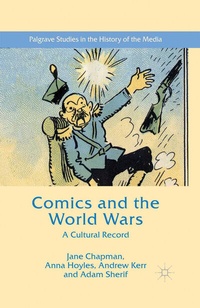
Comics and the World Wars
Description

Reviews / Votes
"Mining comics and cartoons as historical sources, this is an innovative, theoretically sophisticated study that crosses national and geographical boundaries. It makes a pioneering contribution to print, labour, gender and new cultural history, and the expanding field of humour studies, through a captivating series of case studies from both World Wars." - Bridget Griffen-Foley, Macquarie University, Australia
"This study's focus on homefront and front-line comics from the two world wars brings welcome attention to texts generally ignored by scholars of history and comic art alike. Its argument for the significance of these largely overlooked comics as valuable source material opens the doors for further studies in these two fields and beyond." - Gene Kannenberg, Jr., Northwestern University, USA
"This book establishes the significance of comics as a cultural record, with lesser-known and forgotten titles giving important insights into everyday lives and mentalities across the English-speaking world in times of war. Comics are an exciting addition to the repertoire of sources that inform commemorative activities in the 21st century as well as historical studies of the period." - Sarah Lloyd, Director of Everyday Lives in War, an AHRC-funded First World War Engagement Centre, UK
"I found particular value in the close readings of comics of William Haselden, more obscure artists from the left wing press in America and Australia, and soldier artists from the trench papers. The authors tackle issues of gender representation and certainly Kathleen O'Brien's 'Wanda the War Girl' comic warrants closer attention." - Ian Gordon, National University of Singapore, Singapore
More details
Other editions
Additional editions
Persons
Anna Hoyles is Research Assistant at the University of Lincoln, UK where she is also currently writing her PhD on the literary journalism of the Swedish writer and labour activist Moa Martinson.
Andrew Kerr is Research Assistant at the University of Lincoln, UK attached to the Every Day Lives In War AHRC funded World War One Engagement Centre.
Adam Sherif is Researcher at the University of Lincoln, UK and is also co-authoring Comics, the Holocaust and Hiroshima with Jane Chapman and Dan Ellin.
Content
Foreword; Kent Worcester
1. Introduction
2. A Proposed Theory and Method for the Incorporation of Comic Books as Primary Sources
3. Haselden as Pioneer: Reflecting or Constructing Home Front Opinion?
4. Proto Comics as Trench Record: Anti-Heroism, Disparagement Humour and Citizens' Journalism
5. The Rise and Fall of the World War One Gullible Worker as a Counter Culture
6. Adjusting to Total War: US Propaganda, Commerce and Audience
7. The Cultural Construction of Women: Pin-Ups, Proactive Women and Representation in Combat
8. Collective Culture as Dynamic Record: The Daily Worker 1940-43
9. Conclusion
