

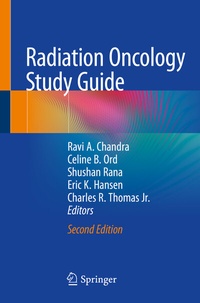
Radiation Oncology Study Guide
Description

Now in its second edition, this popular text remains a comprehensive study and review aid for the radiation oncology trainee and practicing radiation oncologist. The updated Radiation Oncology Study Guide, 2e maintains its robust Q&A format, and has been comprehensively updated to include the latest staging information and treatment methods. Answer rationales have been modified to a more readable, high yield bulleted format.
Each chapter covers a major disease site and is divided into two main parts: Questions & Answers and Rationale. Questions review the scope of clinical practice, spanning from initial presentation to complications of treatment. General content and work-up questions emphasize "pearls" of epidemiology, anatomy, pathology, clinical presentation, and staging. Treatment content questions not only review evidence-based data guiding treatment recommendations, but also practical aspects of radiation treatment planning, pertinent radiobiology and physics, and complications of treatment.
This book is an ideal resource for physicians-in-training to prepare for initial written and oral exams and physicians in practice to maintain their skills and prepare for maintenance of certification longitudinal and written exams.
More details
Other editions
Additional editions
Persons
Ravi A. Chandra, MD, PhD is an Assistant Professor in the Department of Radiation Medicine at Oregon Health and Science University. He is actively involved in medical education and has edited several texts.
Shushan Rana, MD is a radiation oncologist at PeaceHealth Southwest Medical Center in Vancouver, WA.
Celine Bicquart Ord, MD is a radiation oncologist at Carson Tahoe Radiation Oncology Associates in Carson City, NV. She was volume editor of the first edition of Radiation Oncology Study Guide.
Charles R. Thomas, Jr., MD is Professor and Chair of the Department of Radiation Medicine at Oregon Health and Science University in Portland, Oregon. He is volume editor of Oncologic Emergency Medicine .
Content
Central Nervous System Tumors.- Skin Cancer.- Head and Neck Cancer.- Lung Cancer.- Tumors of the Mediastinum.- Breast Cancer.- Upper Gastrointestinal Cancers.- Lower Gastrointestinal Cancers.- Cancers of the Urinary System.- Male Genitourinary Cancers.- Gynecological Cancers.- Lymphomas.- Leukemia.- Soft Tissue Sarcomas and Bone Tumors.- Pediatric Non-CNS Tumors.- Clinical Physics and Radiobiology.- Palliation.
