

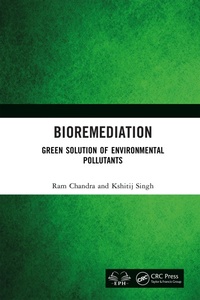
Bioremediation
Green Solution of Environmental Pollutants
Published on 26. May 2026
252 pages
978-1-040-94984-9 (ISBN)
Description

This book offers a comprehensive study examining bioremediation principles covering in-situ and ex-situ processes for environmental pollutant treatment. It covers heavy metal toxicity effects and corresponding bioremediation strategies, xenobiotic compound biodegradation including plastics and hydrocarbons, and nanobioremediation technologies and further includes:
Comprehensive examination of bioremediation principles and concepts covering both in-situ and ex-situ treatment processes for environmental pollutant management
Detailed analysis of biodegradation mechanisms including bacterial growth kinetics, acclimation processes, and step-by-step bioremediation methodologies
Investigation of phytoremediation concepts and mechanisms for heavy metal detoxification with emphasis on plant-based environmental restoration techniques
Study of lignocellulosic waste degradation through enzymatic processes and bacterial degradation studies for environmental safety applications
Analysis of heavy metal toxicity effects on plants, aquatic environments, and human health with corresponding bioremediation strategies and biomining applications
This title has been co-published with Elite Publishing House. T&F does not sell or distribute the print versions in India.
Comprehensive examination of bioremediation principles and concepts covering both in-situ and ex-situ treatment processes for environmental pollutant management
Detailed analysis of biodegradation mechanisms including bacterial growth kinetics, acclimation processes, and step-by-step bioremediation methodologies
Investigation of phytoremediation concepts and mechanisms for heavy metal detoxification with emphasis on plant-based environmental restoration techniques
Study of lignocellulosic waste degradation through enzymatic processes and bacterial degradation studies for environmental safety applications
Analysis of heavy metal toxicity effects on plants, aquatic environments, and human health with corresponding bioremediation strategies and biomining applications
This title has been co-published with Elite Publishing House. T&F does not sell or distribute the print versions in India.
Reviews / Votes
"The book addresses one of the most pressing global challenges of our time: environmental pollution and the urgent need for sustainable, science-based solutions.The authors present bioremediation as a practical, environmentally sound, and economically viable approach for managing contaminants in soil, water, and air. The scientific explanations are clear, concise, and supported by relevant examples, making the subject accessible without compromising academic rigour.
In my considered opinion, "Bioremediation: Green Solution of Environmental Pollutants" is a timely, well-researched, and impactful contribution to environmental literature and is strongly recommended for inclusion in academic libraries, research institutions, and professional collections globally."
- Dr Sheetanshu Gupta, College of Food Technology Central Agricultural University Imphal, India
More details
Language
English
Place of publication
London
United Kingdom
Publishing group
Taylor & Francis Ltd
Target group
College/higher education
Professional and scholarly
Product notice
Reflowable
Illustrations
9 Tables, black and white
File size
0,98 MB
ISBN-13
978-1-040-94984-9 (9781040949849)
Copyright in bibliographic data and cover images is held by Nielsen Book Services Limited or by the publishers or by their respective licensors: all rights reserved.
Schweitzer Classification
Other editions
Additional editions
Book
05/2026
1st Edition
CRC Press
€119.50
Shipment within 15-20 days
Persons
Dr. Ram Chandra is currently Professor in the Department of Environmental Microbiology at Babasaheb Bhimrao Ambedkar University. He is among the senior professors of the university. He has completed his educational quali?cation from Banaras Hindu University (B.H.U.) and thereafter he joined as scientist B at CSIR-Indian Institute of Toxicology Research (IITR) in September, 1989. He has served at CSIR-IITR more than 23 years from Scientist (Sci. B) to Sr. Principal Scientist (Sci. F). Subsequently, he joined as Professor and Head in department of Environmental Microbiology at B. B. Ambedkar Central University in July 2011. His major contribution in area of Bioremediation of distillery and lignocellulosic waste generated from pulp paper industry which is a major threat to environment due to complex pollutants discharge from these industry. He has also praiseworthy leading work on bacterial assisted phyto-nanobioremediation of industries. He has published 240 research publication in peer reviewed journals and 07 books from CRC Press, U.S.A. His citation is: 10084, h-index: 58 and i10-index: 129. He is fellow of Biotech Research Society (BRSI), India and Association of Microbiologists of India (AMI), Fellow of Academy of Environmental Biology (AEB), Member of National Academy of Sciences, India (NASI).
He has visited Japan, Spain, Italy, & England, UK, for his scienti?c collaboration and invited talks based on his expertise. He has been honored with various awards also. He is also among the world's top 2% ranking scientists as per Stanford University Research, USA.
Dr. Kshitij Singh is currently a Guest Faculty member in the Department of Environmental Microbiology at Babasaheb Bhimrao Ambedkar University in Lucknow, where he also earned his doctorate in the subject of Environmental Microbiology. He completed his Master's degree in Plant Biotechnology at Banaras Hindu University in Varanasi. Additionally, he holds the position of Joint Secretary in the Microbiological Association for Science and Technology Development (MASTD), a society registered under the Society Registration Act XXVI, 1860, in Uttar Pradesh.
Dr. Singh has an impressive publication record, having authored several reviews and research articles in high-impact journals. He is also the holder of an international patent. Furthermore, he serves as a reviewer for several Springer and Elsevier journals.
He has visited Japan, Spain, Italy, & England, UK, for his scienti?c collaboration and invited talks based on his expertise. He has been honored with various awards also. He is also among the world's top 2% ranking scientists as per Stanford University Research, USA.
Dr. Kshitij Singh is currently a Guest Faculty member in the Department of Environmental Microbiology at Babasaheb Bhimrao Ambedkar University in Lucknow, where he also earned his doctorate in the subject of Environmental Microbiology. He completed his Master's degree in Plant Biotechnology at Banaras Hindu University in Varanasi. Additionally, he holds the position of Joint Secretary in the Microbiological Association for Science and Technology Development (MASTD), a society registered under the Society Registration Act XXVI, 1860, in Uttar Pradesh.
Dr. Singh has an impressive publication record, having authored several reviews and research articles in high-impact journals. He is also the holder of an international patent. Furthermore, he serves as a reviewer for several Springer and Elsevier journals.
Content
Preface
About the Authors
Concept and Principle of Bioremediation
Process of Biodegradation and Bioremediation
In-situ Bioremediation Process
Ex-situ Bioremediation Process
Concept and Mechanism of Phytoremediation
Degradation of Lignocellulosic Waste
Heavy Metal Toxicity in the Environment and its Bioremediation
Biodegradation of Xenobiotics Compound
Nanobioremediation
Factors Affecting Bioremediation of Environmental Pollutants
References
About the Authors
Concept and Principle of Bioremediation
Process of Biodegradation and Bioremediation
In-situ Bioremediation Process
Ex-situ Bioremediation Process
Concept and Mechanism of Phytoremediation
Degradation of Lignocellulosic Waste
Heavy Metal Toxicity in the Environment and its Bioremediation
Biodegradation of Xenobiotics Compound
Nanobioremediation
Factors Affecting Bioremediation of Environmental Pollutants
References
