

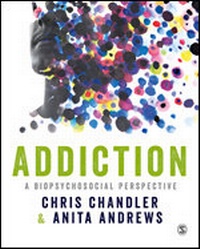
Addiction
A biopsychosocial perspective
1st Edition
Published on 29. October 2018
288 pages
978-1-5264-6547-4 (ISBN)
Description

Addiction: A biopsychosocial perspective provides students with an evidence-based approach to addiction whilst covering a broad range of topics, critical perspectives and influential theories in addiction. With chapters discussing key theories, psychological, biological and societal aspects of addiction, this is a highly accessible and essential resource for students and researchers that:
Offers an evidence-based discussion of addiction
Addresses the neuroscience and psychology of addiction
Provides a critical account of the science and research in addiction
Includes chapter overviews and summaries, learning aims and case studies to help students in their study
Offers an evidence-based discussion of addiction
Addresses the neuroscience and psychology of addiction
Provides a critical account of the science and research in addiction
Includes chapter overviews and summaries, learning aims and case studies to help students in their study
Reviews / Votes
The topic of addiction is multifaceted and complex, yet this new book is clear and refreshingly straightforward. It breathes new life and clarity into the subject from a wide range of interesting perspectives. The authors' mastery of the subject means we can feel safe in their hands as they navigate us through the area. Highly recommended to students and researchers alike! -- Angela Clow Addiction is a truly complex phenomenon, however, Chris Chandler and Anita Andrews have managed to produce a straight forward but refreshingly informative guide to help the reader understand both what it is, and what can be done about it.-- Robert Patton This is a fantastic book. Insightful, clearly written and thought provoking. It skilfully gives an overview of the current state of knowledge about addiction from multiple perspectives and provides helpful chapter summaries. Required reading for anyone interested in understanding addiction. -- Dr Maria Flynn This book provides an excellent complement to other books on addiction. Its authors have particular expertise in biochemistry and neuropsychology and this is reflected in the book's orientation. It covers the biological sciences in greatest detail, constantly posing questions for students and others about the challenges and limitations of present understanding. -- James Orford Chandler and Andrews have written a wonderfully clear text about one of psychology's most complex topics. Chapters are well structured and outlined, with excellent examples throughout; and unlike many texts in the field, the authors embed their extensive knowledge of addiction biopsychology within treatment and social contexts. -- John Turner, Director of Research A must-read for students and researchers wanting to explore psychological, biological and societal aspects of addiction. It provides an evidence and critical based approach to addiction, whilst combining useful and essential learning tools. The use of summaries, learning aims, and end of chapter questions further facilitates this accessible resource. -- Jenifer Coe
More details
Language
English
Place of publication
London
United Kingdom
Target group
College/higher education
ISBN-13
978-1-5264-6547-4 (9781526465474)
Copyright in bibliographic data and cover images is held by Nielsen Book Services Limited or by the publishers or by their respective licensors: all rights reserved.
Schweitzer Classification
Other editions
Additional editions
Book
11/2018
1st Edition
SAGE Publications Ltd
€167.60
Shipment within 15-20 days
Book
11/2018
1st Edition
SAGE Publications Ltd
€87.60
Shipment within 15-20 days
Content
Chapter 1: Addiction defined
Chapter 2: Psychopharmacology of addictive substances
Chapter 3: Biological Theories of addiction
Chapter 4: Genetics of addiction
Chapter 5: Psychological Theories of addiction
Chapter 6: Pharmacotherapy for addiction
Chapter 7: Psychological Treatments
Chapter 8: Non Substance addictions: Gambling
Chapter 9: Society, Policy, Law and Ethics
Chapter 2: Psychopharmacology of addictive substances
Chapter 3: Biological Theories of addiction
Chapter 4: Genetics of addiction
Chapter 5: Psychological Theories of addiction
Chapter 6: Pharmacotherapy for addiction
Chapter 7: Psychological Treatments
Chapter 8: Non Substance addictions: Gambling
Chapter 9: Society, Policy, Law and Ethics
