

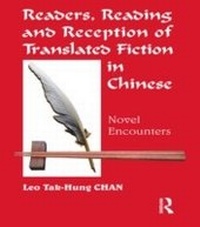
Readers, Reading and Reception of Translated Fiction in Chinese
Novel Encounters
1st Edition
Published on 8. April 2014
258 pages
978-1-317-64123-0 (ISBN)
Description

Translated fiction has largely been under-theorized, if not altogether ignored, in literary studies. Though widely consumed, translated novels are still considered secondary versions of foreign masterpieces. Readers, Reading and Reception of Translated Fiction in Chinese recognizes that translated novels are distinct from non-translated novels, just as they are distinct from the originals from which they are derived, but they are neither secondary nor inferior. They provide different models of reality; they are split apart by two languages, two cultures and two literary systems; and they are characterized by cultural hybridity, double voicing and multiple intertextualities.
With the continued popularity of translated fiction, questions related to its reading and reception take on increasing significance. Chan draws on insights from textual and narratological studies to unravel the processes through which readers interact with translated fiction. Moving from individual readings to collective reception, he considers how lay Chinese readers, as a community, 'received' translated British fiction at specific historical moments during the late twentieth and early twenty-first centuries. Case studies discussed include translations of stream-of-consciousness novels, fantasy fiction and postmodern works. In addition to lay readers, two further kinds of reader with bilingual facility are examined: the way critics and historians approach translated fiction is investigated from structuralist and poststrcuturalist perspectives. A range of novels by well-known British authors constitute the core of the study, including novels by Oscar Wilde, James Joyce, D.H. Lawrence, Virginia Woolf, John Fowles, Helen Fielding and J.K. Rowling.
With the continued popularity of translated fiction, questions related to its reading and reception take on increasing significance. Chan draws on insights from textual and narratological studies to unravel the processes through which readers interact with translated fiction. Moving from individual readings to collective reception, he considers how lay Chinese readers, as a community, 'received' translated British fiction at specific historical moments during the late twentieth and early twenty-first centuries. Case studies discussed include translations of stream-of-consciousness novels, fantasy fiction and postmodern works. In addition to lay readers, two further kinds of reader with bilingual facility are examined: the way critics and historians approach translated fiction is investigated from structuralist and poststrcuturalist perspectives. A range of novels by well-known British authors constitute the core of the study, including novels by Oscar Wilde, James Joyce, D.H. Lawrence, Virginia Woolf, John Fowles, Helen Fielding and J.K. Rowling.
More details
Language
English
Place of publication
London
United Kingdom
Publishing group
Taylor & Francis Ltd
Target group
College/higher education
File size
2,48 MB
ISBN-13
978-1-317-64123-0 (9781317641230)
Copyright in bibliographic data and cover images is held by Nielsen Book Services Limited or by the publishers or by their respective licensors: all rights reserved.
Schweitzer Classification
Other editions
Additional editions
Book
07/2017
1st Edition
Routledge
€133.91
Shipment within 10-20 days
Book
02/2014
1st Edition
St Jerome Publishing
€57.19
Shipment within 3-4 weeks
Person
Leo Tak-hung Chan is Professor and Head of the Department of Translation at Lingnan University, China.
Content
Introduction
Textualist and Narratological Studies
Response, Reception and Criticism
Readers in Their Many Guises
PART I:INTERACTNG WITH TEXTS: THE TARGET READER
1. The Reading of Difference in Translated Fiction: Virginia Woolf's To the Lighthouse
Difference: Self vs. Other
Pleasurable Texts and Reading Pleasure
Foreignness and Footnotes
"Lily Briscoe's Chinese Eyes"
Reading and Border-Crossing
2. Textual Hybridity and Textural Cohesion: Reading D. H. Lawrence in Chinese, with Special Reference to The Rainbow
Perspectives on Translational Hybridity
Buddhist Terms and Lawrence in Chinese Translation
Naturalization and Textual Impurity
Problems of Textural Cohesion
Issues of Acceptability
Examples of Hybrid Non-translated Fiction
3. Intertextuality and Interpretation or, How to Read Wang Dahong's Tradaptation of Dorian Gray
Theorizing the Adaptive Mode
Differences as Equivalences
Reading Du Liankui Queerly
Reading Intertextually
Coherence in a Tradaptation
PART II: HISTORIES OF RECEPTION: THE GENERAL READER
4. The Elusiveness of the General Reader and a History of Mediated Reception
Reception: Translator, Author, or Reader?
Four British Novelists
The "Galsworthy Model" and Official Ideology
Popularity and the Publishers
Academics and the Modernist Canon
A History of General Reader Reception
5. Reader Reception at the Turn of the Twenty-First Century: The "Popularity" of Youlixisi and the New Reader of the Harry Potter in Translation
Reader Responses to Translated Fiction in the 1980s
Ulysses: Untranslatability and the Commodification of a Classic
Harry Potter and the Emergence of the Reader-Critic
The Reader-Translator in the Internet Age
Old and New Readers
PART III: CRITICAL AND DESCRIPTIVIST READINGS: THE SPECIAL READER
6. Source-Based Critique of Translated Fiction (I)
The Narratological Approach
The Narrator in Omniscient Reporting
The Narrator in Free Indirect Discourse
The Narrator in First-Person Storytelling
The Reader and the Narrator
7. Source-Based Critique of Translated Fiction (II)
From Traditional to Post-Babelian Approaches
The Linguistic Approach: Looking for Mistakes
The Literary-Critical Approach: Reading Thematically
The Poststructuralist Approach in the Chinese Context
The Descriptive Approach and the Translation Critic
8. The Historian-Describer and Comparative Reading in Practice and Theory
Synchronic Readings: Regional Styles
Diachronic Readings: Period Styles
Retranslation Theory
Polysystems Theory
Translation Histories and Describers
Textualist and Narratological Studies
Response, Reception and Criticism
Readers in Their Many Guises
PART I:INTERACTNG WITH TEXTS: THE TARGET READER
1. The Reading of Difference in Translated Fiction: Virginia Woolf's To the Lighthouse
Difference: Self vs. Other
Pleasurable Texts and Reading Pleasure
Foreignness and Footnotes
"Lily Briscoe's Chinese Eyes"
Reading and Border-Crossing
2. Textual Hybridity and Textural Cohesion: Reading D. H. Lawrence in Chinese, with Special Reference to The Rainbow
Perspectives on Translational Hybridity
Buddhist Terms and Lawrence in Chinese Translation
Naturalization and Textual Impurity
Problems of Textural Cohesion
Issues of Acceptability
Examples of Hybrid Non-translated Fiction
3. Intertextuality and Interpretation or, How to Read Wang Dahong's Tradaptation of Dorian Gray
Theorizing the Adaptive Mode
Differences as Equivalences
Reading Du Liankui Queerly
Reading Intertextually
Coherence in a Tradaptation
PART II: HISTORIES OF RECEPTION: THE GENERAL READER
4. The Elusiveness of the General Reader and a History of Mediated Reception
Reception: Translator, Author, or Reader?
Four British Novelists
The "Galsworthy Model" and Official Ideology
Popularity and the Publishers
Academics and the Modernist Canon
A History of General Reader Reception
5. Reader Reception at the Turn of the Twenty-First Century: The "Popularity" of Youlixisi and the New Reader of the Harry Potter in Translation
Reader Responses to Translated Fiction in the 1980s
Ulysses: Untranslatability and the Commodification of a Classic
Harry Potter and the Emergence of the Reader-Critic
The Reader-Translator in the Internet Age
Old and New Readers
PART III: CRITICAL AND DESCRIPTIVIST READINGS: THE SPECIAL READER
6. Source-Based Critique of Translated Fiction (I)
The Narratological Approach
The Narrator in Omniscient Reporting
The Narrator in Free Indirect Discourse
The Narrator in First-Person Storytelling
The Reader and the Narrator
7. Source-Based Critique of Translated Fiction (II)
From Traditional to Post-Babelian Approaches
The Linguistic Approach: Looking for Mistakes
The Literary-Critical Approach: Reading Thematically
The Poststructuralist Approach in the Chinese Context
The Descriptive Approach and the Translation Critic
8. The Historian-Describer and Comparative Reading in Practice and Theory
Synchronic Readings: Regional Styles
Diachronic Readings: Period Styles
Retranslation Theory
Polysystems Theory
Translation Histories and Describers
