

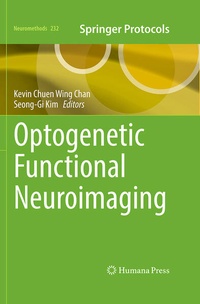
Optogenetic Functional Neuroimaging
Description

This volume provides an overview of the optogenetic functional neuroimaging methodologies and how these tools can be applied to the study of neural mechanisms from cells to circuits in intact and dysfunctional brains. The chapters in this book are organized into two parts: Part One details multi-modal imaging methodologies for optogenetic dissection of brain functions, and Part Two covers applications for multi-scale optogenetic functional assessments of neural mechanisms. In the
Neuromethods
series style, chapters include the kind of detail and key advice from the specialists needed to get successful results in the researchers' laboratories.
Authoritative and cutting-edge,
Optogenetic Functional Neuroimaging
is a valuable resource that helps researchers further their studies in this important and developing field.
More details
Other editions
Additional editions
Content
High-Resolution and Multi-Modal Optogenetic fMRI of Brain Dynamics.- Laminar fMRI Using Layer-Specific Optogenetic Stimulations.- High-Throughput, Brain-Wide Effective Connectivity Mapping by fMRI with Patterned Optogenetics.- Optogenetic fMRI in Awake Mice.- Shedding Light on Brain Activity: How to Fuse Optical Signals with BOLD fMRI.- Multimodal Neuroimaging with Optogenetic Functional Ultrasound and Functional Magnetic Resonance Imaging.- Methodological Considerations for fMRI with Optogenetics, Chemogenetics, and Fiber Photometry.- Hemogenetic Functional MRI: The Imaging Principle and Protocols.- Optogenetic Strategies to Dissect Neuronal Contributions to Neurovascular and Neurometabolic Responses.- Genetic Tools Meet Functional MRS: Probing Brain Function and Metabolism in Animal Models.- Optogenetic Functional MRI Interrogation of Brain-Wide Neural Oscillations and Behavioral Relevance.- Understanding Resting-State Functional Connectivity using Opto-fMRI.- Dissection of Brain-Wide Functional Neurosensory Circuits by fMRI with Optogenetic Silencing.- Understanding Brain-Wide Network by Combining Optogenetics with Genetic and Connectivity Atlases.- Characterization of Neural Networks in the Brain and Spinal Cord of Non-Human Primates by Integrating Optogenetics, fMRI, Electrophysiology, and Histology.- Leveraging Optogenetic fMRI for Understanding Disease Processes in Neurological Disorders.
