

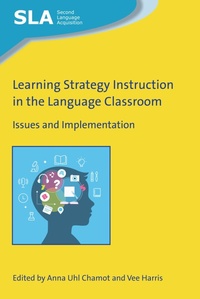
Learning Strategy Instruction in the Language Classroom
Issues and Implementation
Published on 10. May 2019
328 pages
978-1-78892-342-2 (ISBN)
Description

This comprehensive collection, comprising both theoretical and practical contributions, is unique in its focus on language learning strategy instruction (LLSI). The chapters, written by leading international experts, embrace both sociolinguistic and psycholinguistic perspectives. The issues presented include different models of strategy instruction and how they can be tailored according to context and the learners' age and attainment level. The collection will be an important resource for researchers in the field, both for its critical perspectives and its guidance on collaborating with teachers to design interventions to implement strategy instruction. It also identifies key areas for research, including the teaching of less studied groups of strategies such as grammar and affective strategies. The book will prove equally valuable to language teachers through the provision of detailed teaching materials and tasks. Those engaged in professional development, whether pre- or in-service teacher education, will find a wealth of concrete ideas for sessions, courses and assignments.
Reviews / Votes
This long-overdue edited collection explores a variety of topics regarding strategy instruction in relation to theory, research, and practice. Its implications for the learner and the teacher are enormous. I highly commend this book, which is undoubtedly a must-read for those interested in strategy instruction in the L2 classroom. * Osamu Takeuchi, Kansai University, Japan * Chamot and Harris should be applauded for the wonderful work presented in this fine collection. They are both champions of language learning strategy research and practice, and this book well represents their action and achievement. Through this work Chamot's legacy will also be strongly remembered. Such work will continue to benefit language learners around the world in the years to come. * Lawrence Zhang, University of Auckland, New Zealand * This book brings together a range of different perspectives on language learner strategies. The authors consider important issues related to strategy instruction design, including questions of theory as well as practical concerns, the role of the teacher, self-regulation and autonomy and feedback, making it valuable to a range of readers. * Suzanne Graham, University of Reading, UK * This book is suitable for anybody who is interested in research on LLS and LLSI. The "Questions" proposed at the end of each chapter could all become topics for future research by both expert scholars and novice researchers. Supported by the work in this volume, we anticipate the start of a new era of LLSI with interdisciplinary support. -- Lixiang Gao, Northeast Normal University, China * System, 2020 * It goes without saying that the edited collection will be of enormous value to practitioners, materials writers, and researchers alike, providing them with comprehensive information on multifarious up-to-date issues in the domain of LLS and LLSI, the decisions involved in undertaking strategy instruction as well as the areas in this respect that are worthy of exploration. -- Olga Trendak, University of Lodz, Poland * SSLLT 8 (4) * The book not only invigorates explicit and integrated teaching of language learning strategies but also is a timely contribution to the knowledge base on theoretical issues and key implications that will benefit both language teacher educators and researchers. -- Saeed Karimi-Aghdam, Nord University, Norway * The Journal of Applied Linguistics and Applied Literature, Volume 8, Issue 2 *More details
Series
Language
English
Place of publication
Bristol
United Kingdom
Target group
College/higher education
Product notice
Reflowable
File size
2,79 MB
ISBN-13
978-1-78892-342-2 (9781788923422)
Copyright in bibliographic data and cover images is held by Nielsen Book Services Limited or by the publishers or by their respective licensors: all rights reserved.
Schweitzer Classification
Other editions
Additional editions
Anna Uhl Chamot | Vee Harris
Learning Strategy Instruction in the Language Classroom
Issues and Implementation
Book
05/2019
Multilingual Matters
€56.50
Shipment within 3-4 weeks
Persons
Anna Uhl Chamot was Professor Emerita of the Department of Teacher Preparation at George Washington University, USA, as well as Co-Director of the National Capital Language Resource Center. An invited keynote speaker at more than 150 conferences from Singapore to Scotland, she also gave over 600 presentations at major conferences and lecture tours in Estonia, Latvia, Lithuania, Italy and Argentina. She was actively working in the field right up until her death in November 2017.
Vee Harris is Visiting Fellow at Goldsmiths College, University of London, UK where she taught the Modern Languages Teacher Education course. Committed to bridging the gap between theory and practice, she has written school textbooks as well as academic books drawing on classroom-based research projects that she has undertaken in collaboration with practising teachers. Her most recent book is Language Learner Strategies (Bloomsbury, 2017), written with her co-author, Professor Michael Grenfell.
Vee Harris is Visiting Fellow at Goldsmiths College, University of London, UK where she taught the Modern Languages Teacher Education course. Committed to bridging the gap between theory and practice, she has written school textbooks as well as academic books drawing on classroom-based research projects that she has undertaken in collaboration with practising teachers. Her most recent book is Language Learner Strategies (Bloomsbury, 2017), written with her co-author, Professor Michael Grenfell.
Content
Foreword. Cynthia White
Introduction. Anna U. Chamot and Vee Harris
Part 1. Issues: Models and Contexts
Chapter 1. Luke Plonsky: Language Learning Strategy Instruction: Recent Research and Future Directions
Chapter 2. Peter Yongqi Gu: Approaches to Learning Strategy Instruction
Chapter 3. Vee Harris: Diversity and Integration in Language Learning Strategy Instruction
Chapter 4. Do Coyle: Designing Strategic Classrooms: Self-assessment in Enabling Self-regulated Learning
Chapter 5. Ernesto Macaro: Language Learner Strategies and Individual Differences
Chapter 6. Marcella Menegale: Integrating Language Learning Strategy Instruction into Content and Language Integrated Learning Programs
Part 2. Issues: Less Studied and Less Taught Groups of Strategies
Chapter 7. Miroslaw Pawlak: Grammar Learning Strategies Instruction in the Foreign Language Classroom: The Case of Students in Degree Programs in English
Chapter 8. Anna Uhl Chamot and Vee Harris: Language Learning Strategy Instruction for Critical Cultural Awareness
Chapter 9. Andrew D. Cohen: Strategy Instruction for Learning and Performing Target-language Pragmatics
Part 3. Implications: The Learners
Chapter 10. Pamela Gunning, Joanna White, and Christine Busque: Designing Effective Strategy Instruction: Approaches and Materials for Young Language Learners
Chapter 11. Angeliki Psaltou-Joycey: Designing Materials and Guidelines for Language Learning Strategy Instruction
Chapter 12. Anna Uhl Chamot: Differentiation in Language Learning Strategy Instruction
Chapter 13. Jill Robbins: Teaching Language Learning Strategies with Technology
Part 4. Implications: The Teachers
Chapter 14. Christina Gkonou and Rebecca L. Oxford: Teachers' Formative Assessment, Reflection, and Affective Strategy Instruction in Language Learning Strategy Instruction Teacher Education
Chapter 15. Joan Rubin and Claudia Acero Rios: Empowering Teachers to Promote Learner Self-Management
Chapter 16. Anna Uhl Chamot, Vee Harris, Carol Griffiths, Pamela Gunning, Martha Nyikos and Birsen Tutueni?: Teacher Education for Language Learning Strategy Instruction: Approaches and Activities
Chapter 17. Christine Goh: What We Still Need to Learn About Language Learning Strategies Instruction: Research Directions and Designs
Afterword. Anna Uhl Chamot and Vee Harris
Introduction. Anna U. Chamot and Vee Harris
Part 1. Issues: Models and Contexts
Chapter 1. Luke Plonsky: Language Learning Strategy Instruction: Recent Research and Future Directions
Chapter 2. Peter Yongqi Gu: Approaches to Learning Strategy Instruction
Chapter 3. Vee Harris: Diversity and Integration in Language Learning Strategy Instruction
Chapter 4. Do Coyle: Designing Strategic Classrooms: Self-assessment in Enabling Self-regulated Learning
Chapter 5. Ernesto Macaro: Language Learner Strategies and Individual Differences
Chapter 6. Marcella Menegale: Integrating Language Learning Strategy Instruction into Content and Language Integrated Learning Programs
Part 2. Issues: Less Studied and Less Taught Groups of Strategies
Chapter 7. Miroslaw Pawlak: Grammar Learning Strategies Instruction in the Foreign Language Classroom: The Case of Students in Degree Programs in English
Chapter 8. Anna Uhl Chamot and Vee Harris: Language Learning Strategy Instruction for Critical Cultural Awareness
Chapter 9. Andrew D. Cohen: Strategy Instruction for Learning and Performing Target-language Pragmatics
Part 3. Implications: The Learners
Chapter 10. Pamela Gunning, Joanna White, and Christine Busque: Designing Effective Strategy Instruction: Approaches and Materials for Young Language Learners
Chapter 11. Angeliki Psaltou-Joycey: Designing Materials and Guidelines for Language Learning Strategy Instruction
Chapter 12. Anna Uhl Chamot: Differentiation in Language Learning Strategy Instruction
Chapter 13. Jill Robbins: Teaching Language Learning Strategies with Technology
Part 4. Implications: The Teachers
Chapter 14. Christina Gkonou and Rebecca L. Oxford: Teachers' Formative Assessment, Reflection, and Affective Strategy Instruction in Language Learning Strategy Instruction Teacher Education
Chapter 15. Joan Rubin and Claudia Acero Rios: Empowering Teachers to Promote Learner Self-Management
Chapter 16. Anna Uhl Chamot, Vee Harris, Carol Griffiths, Pamela Gunning, Martha Nyikos and Birsen Tutueni?: Teacher Education for Language Learning Strategy Instruction: Approaches and Activities
Chapter 17. Christine Goh: What We Still Need to Learn About Language Learning Strategies Instruction: Research Directions and Designs
Afterword. Anna Uhl Chamot and Vee Harris
