

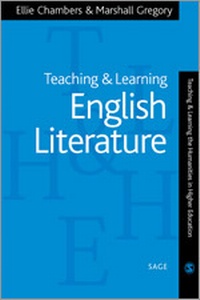
Teaching and Learning English Literature
1st Edition
Published on 14. March 2006
240 pages
978-1-84787-723-9 (ISBN)
Description

'It is scarcely possible to imagine a truly educated person who cannot read well. Yet it is not clear how or even if courses in literature actually work. How can teachers of English help students in their developmental journey toward becoming skillful readers and educated persons? This is the complex question that Chambers and Gregory address in Teaching and Learning English Literature.
The authors consider practical matters such as course design and student assessment but do not shirk larger historical and theoretical issues. In a lucid and non-polemical fashion - and occasionally with welcome humor - Chambers and Gregory describe the what, why, and how of "doing" literature, often demonstrating the techniques they advocate. Veteran teachers will find the book rejuvenating, a stimulus to examining purposes and methods; beginning teachers may well find it indispensable' - Professor William Monroe, University of Houston
'The transatlantic cooperation of Ellie Chambers and Marshall Gregory has produced an outstanding book that ought to be on the shelves of anyone involved in the teaching of English Literature, as well as anyone engaged in the scholarship of teaching and learning in general or in any discipline. As they say, "the teaching of English Literature plays a central role in human beings' search for meaning" although others in other disciplines may make this claim for theirs too. If so, they will still learn a great deal from this book; anyone looking for no more than a means of satisfying the demands of governments that look for simplistic quality measures and economic relevance, let them look elsewhere. This is a book for now and for all times' - Professor Lewis Elton, Visiting Professor, University of Manchester, Honorary Professor, University College London
This is the third in the series Teaching and Learning the Humanities in Higher Education. The book is for beginning and experienced teachers of literature in higher education. The authors present a comprehensive overview of teaching English literature, from setting teaching goals and syllabus-planning through to a range of student assessment strategies and methods of course or teacher evaluation and improvement. Particular attention is paid to different teaching methods, from the traditional classroom to newer collaborative work, distance education and uses of electronic technologies. All this is set in the context of present-day circumstances and agendas to help academics and those in training become more informed and better teachers of their subject.
The book includes:
- how literature as a discipline is currently understood and constituted
- what it means to study and learn the subject
- what 'good teaching' is, with fewer resources for teaching, larger student numbers, an emphasis on 'user-pay' principles and vocationalism.
This is an essential text for teachers of English Literature in universities and colleges worldwide.
The Teaching & Learning in the Humanities series, edited by Ellie Chambers and Jan Parker, is for beginning and experienced lecturers. It deals with all aspects of teaching individual arts and humanities subjects in higher education. Experienced teachers offer authoritative suggestions on how to become critically reflective about discipline-specific practices.
The authors consider practical matters such as course design and student assessment but do not shirk larger historical and theoretical issues. In a lucid and non-polemical fashion - and occasionally with welcome humor - Chambers and Gregory describe the what, why, and how of "doing" literature, often demonstrating the techniques they advocate. Veteran teachers will find the book rejuvenating, a stimulus to examining purposes and methods; beginning teachers may well find it indispensable' - Professor William Monroe, University of Houston
'The transatlantic cooperation of Ellie Chambers and Marshall Gregory has produced an outstanding book that ought to be on the shelves of anyone involved in the teaching of English Literature, as well as anyone engaged in the scholarship of teaching and learning in general or in any discipline. As they say, "the teaching of English Literature plays a central role in human beings' search for meaning" although others in other disciplines may make this claim for theirs too. If so, they will still learn a great deal from this book; anyone looking for no more than a means of satisfying the demands of governments that look for simplistic quality measures and economic relevance, let them look elsewhere. This is a book for now and for all times' - Professor Lewis Elton, Visiting Professor, University of Manchester, Honorary Professor, University College London
This is the third in the series Teaching and Learning the Humanities in Higher Education. The book is for beginning and experienced teachers of literature in higher education. The authors present a comprehensive overview of teaching English literature, from setting teaching goals and syllabus-planning through to a range of student assessment strategies and methods of course or teacher evaluation and improvement. Particular attention is paid to different teaching methods, from the traditional classroom to newer collaborative work, distance education and uses of electronic technologies. All this is set in the context of present-day circumstances and agendas to help academics and those in training become more informed and better teachers of their subject.
The book includes:
- how literature as a discipline is currently understood and constituted
- what it means to study and learn the subject
- what 'good teaching' is, with fewer resources for teaching, larger student numbers, an emphasis on 'user-pay' principles and vocationalism.
This is an essential text for teachers of English Literature in universities and colleges worldwide.
The Teaching & Learning in the Humanities series, edited by Ellie Chambers and Jan Parker, is for beginning and experienced lecturers. It deals with all aspects of teaching individual arts and humanities subjects in higher education. Experienced teachers offer authoritative suggestions on how to become critically reflective about discipline-specific practices.
Reviews / Votes
'It is scarcely possible to imagine a truly educated person who cannot read well. Yet it is not clear how or even if courses in literature actually work. How can teachers of English help students in their developmental journey toward becoming skillful readers and educated persons? This is the complex question that Chambers and Gregory address in Teaching and Learning English Literature.The authors consider practical matters such as course design and student assessment but do not shirk larger historical and theoretical issues. In a lucid and non-polemical fashion - and occasionally with welcome humor - Chambers and Gregory describe the what, why, and how of "doing" literature, often demonstrating the techniques they advocate. Veteran teachers will find the book rejuvenating, a stimulus to examining purposes and methods; beginning teachers may well find it indispensable' - Professor William Monroe, University of Houston
'The transatlantic cooperation of Ellie Chambers and Marshall Gregory has produced an outstanding book that ought to be on the shelves of anyone involved in the teaching of English Literature, as well as anyone engaged in the scholarship of teaching and learning in general or in any discipline. As they say, "the teaching of English Literature plays a central role in human beings' search for meaning" although others in other disciplines may make this claim for theirs too. If so, they will still learn a great deal from this book; anyone looking for no more than a means of satisfying the demands of governments that look for simplistic quality measures and economic relevance, let them look elsewhere. This is a book for now and for all times' - Professor Lewis Elton, Visiting Professor, University of Manchester, Honorary Professor, University College London
All prices
More details
Series
Language
English
Place of publication
London
United Kingdom
Target group
College/higher education
ISBN-13
978-1-84787-723-9 (9781847877239)
Copyright in bibliographic data and cover images is held by Nielsen Book Services Limited or by the publishers or by their respective licensors: all rights reserved.
Schweitzer Classification
Other editions
Additional editions
Ellie Chambers | Marshall Gregory
Teaching and Learning English Literature
Book
03/2006
1st Edition
SAGE Publications Inc
€85.61
Shipment within 15-20 days
Ellie Chambers | Marshall Gregory
Teaching and Learning English Literature
Book
03/2006
1st Edition
SAGE Publications Inc
€270.37
Shipment within 15-20 days
Persons
Content
The Discipline Today
What Is Good Teaching?
Teaching Literary Theory and Teaching Writing
Planning for Teaching
Curriculum and Course Design
Methods of Teaching
Student Assessment
Evaluating Teaching
Future Trends
What Is Good Teaching?
Teaching Literary Theory and Teaching Writing
Planning for Teaching
Curriculum and Course Design
Methods of Teaching
Student Assessment
Evaluating Teaching
Future Trends
