

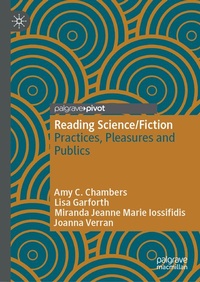
Reading Science/Fiction
Description

This book explores the relationship between reading science in fiction and engaging with science. Focusing on embodied readers and empirical approaches to fiction reading, the authors examine contemporary social, cultural, biographical and political contexts in which science fictions come to matter. Drawing together a distinctive set of research studies and conceptual resources, the book outlines theories, epistemologies and methodologies for understanding how and why we read science fictions and fictions about science.
More details
Other editions
Additional editions
Persons
Dr Amy C. Chambers, Manchester Metropolitan University, UK, is a science and screen media scholar focused on the intersection of entertainment media and the public understanding of science. Her research interrogates public and popular cultures of science; marginalised scientific expertise on screen; and women-created science fiction and horror. Her current research project, 'Women Make Science Fiction', constitutes the first comprehensive study of women (inclusive of trans and non-binary) creators of science fiction.
Dr Lisa Garforth, Newcastle University, UK, is a sociologist focusing on the relationship between speculative fiction and social futures. A substantial programme of research on Western post-war environmental imaginaries culminated in her monograph Green Utopias: Environmental Hope Before and After Nature (2017). She led the Newcastle part of the 3-year, 3-centre AHRC project 'Unsettling Scientific Stories investigating contemporary reading practices, speculative fiction and science.
Dr Miranda Iossifidis, Newcastle University, UK, is a sociologist interested the collective and creative negotiation of environmental futures in everyday urban culture, speculative fiction, and collective action. She is currently working on a project using creative methods to explore climate anxiety and speculative ecofascist present(s) and futures.
Joanna Verran is Professor of Microbiology (Emeritus) at Manchester Metropolitan University, UK. She is a Principal Fellow of the HEA and a National Teaching Fellow. Her laboratory research focuses on the interaction of microorganisms and inert surfaces, but she has also published widely on innovative practices in teaching and in public engagement with science. She set up the Bad Bugs Bookclub in 2009 with the aim of engaging scientists and non-scientists in discussion about novels of fiction that feature infectious disease or microorganisms.
Content
Chapter 1 Reading science/fiction: an introduction.- Chapter 2 Making science fiction readers.- Chapter 3 Reading together: remaking worlds with science fiction.- Chapter 4 Book Clubs: Bad Bugs and bioscience fictions.- Chapter 5 Research methods, meeting readers: concluding thoughts.
