

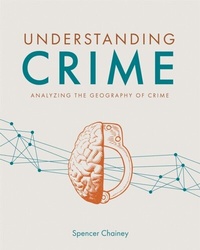
Understanding Crime
Description

The definitive guide to analysis techniques for examining the geography of crime
Understanding Crime: Analyzing the Geography of Crime delves into both theory and technique to explain the geographic analysis of crime. Intended as a comprehensive resource and textbook, this book breaks down old, new, and complex approaches to make crime analysis more accessible for readers wanting to improve their own understanding of crime.
Through detailed descriptions, explanations, and illustrations of geographic analysis techniques, Understanding Crime examines spatial and temporal patterns of crime, the use of spatial data in the analysis of crime, and methods for evaluating the impact of geographically targeted interventions. Every chapter begins with key learning points and ends with a summary and references. "Thought boxes" with useful information for understanding a theoretical principle or a technical matter are included throughout the book.
Written by world-renowned crime science expert Dr. Spencer Chainey and designed for both students and practitioners of all levels, Understanding Crime is a vital reference that will support you in your spatial analysis of crime and ultimately in making better recommendations for improving your community.
Dr Spencer Chainey is director of continuing professional development and the director of the Latin America and Caribbean unit at University College London's Jill Dando Institute of Security and Crime Science. He applies academic knowledge and police/public safety practice to research, supporting crime reduction, criminal investigation, citizen security, and countering organized crime; and furthering the education and professional development of current and future generations of practitioners and researchers. The author draws from his 25 years of international experience, which include working in Europe, North America, Latin America, the Caribbean, Australasia, the Middle East, and China.
All prices
More details
Other editions
Additional editions
Person
Dr Spencer Chainey is director of continuing professional development and the director of the Latin America and Caribbean unit at University College London's Jill Dando Institute of Security and Crime Science. He applies academic knowledge and police/public safety practice to research, supporting crime reduction, criminal investigation, citizen security, and countering organized crime; and furthering the education and professional development of current and future generations of practitioners and researchers. The author draws from his 25 years of international experience, which include working in Europe, North America, Latin America, the Caribbean, Australasia, the Middle East, and China.
Content
Preface
Acknowledgments
Chapter 1: The key theories that underpin the geographic analysis of crime
Chapter 2: Statistical measures for spatial patterns, and the journey to crime
Chapter 3: Hot spot analysis - examining spatial concentrations and clusters of crime
Chapter 4: The temporal analysis of crime
Chapter 5: Risky facilities, and repeat and near repeat victimization
Chapter 6: Persistent, emerging, and dispersed spatial patterns of crime
Chapter 7: Geographic profiling analysis: supporting criminal investigation
Chapter 8: Applying spatial regression analysis to crime data
Chapter 9: Mapping and analyzing crime risk
Chapter 10: Measuring performance and evaluating impact
Index
