

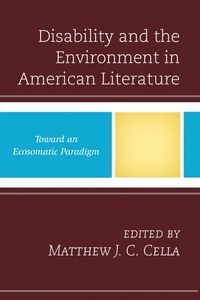
Disability and the Environment in American Literature
Toward an Ecosomatic Paradigm
1st Edition
Published on 12. October 2016
186 pages
978-1-4985-1398-2 (ISBN)
Description

This book includes a collection of essays that explore the relationship between Disability Studies and literary ecocriticism, particularly as this relationship plays out in American literature and culture. The contributors to this collection operate from the premise that there is much to be gained for both fields by putting them in conversation, and they do so in a variety of ways. In this manner, the collection contributes to what Joni Adamson and Scott Slovic have referred to as a "third wave of ecocriticism." Adamson and Slovic attribute the rise of this "third wave" to the richly diverse contributions to ecocriticism over the past decade by scholars intent on including postmodernism, ecofeminism, transnationalism, globalization, and postcolonialism into ecocritical discussions. The essays in Toward an Ecosomatic Paradigm extend this approach of this "third wave" by analyzing disability from an "environmental point of view" while simultaneously examining the environmental imagination from a disability studies perspective.
More specifically, the goal of the collection is to investigate the role that literary narratives play in fostering the "ecosomatic paradigm." As a theoretical framework, the ecosomatic paradigm underscores the dynamic and inter-relational process wherein human mind-bodies interact with the places, both built and wild, they inhabit. That is, the ecosomatic paradigm proceeds from the assumption that nature and culture are meshed in an ongoing and deep relationship that has implications for both the human subject and the natural world. An ecosomatic approach highlights the profound overlap between embodiment and emplacement, and is therefore enriched by both disability studies and ecocritical insight. By drawing on points of confluence between disability studies and ecological criticism, the various ecosomatic readings in this collection challenge normative (even ableist) constructions of the body-environment dyad by complicating and expanding our understanding of this relationship as it is represented in American literature and culture. Collectively, the essays in this book augment the American environmental imagination by highlighting the relationship between disability and the environment as reflected in American literary texts across multiple periods and genres.
More specifically, the goal of the collection is to investigate the role that literary narratives play in fostering the "ecosomatic paradigm." As a theoretical framework, the ecosomatic paradigm underscores the dynamic and inter-relational process wherein human mind-bodies interact with the places, both built and wild, they inhabit. That is, the ecosomatic paradigm proceeds from the assumption that nature and culture are meshed in an ongoing and deep relationship that has implications for both the human subject and the natural world. An ecosomatic approach highlights the profound overlap between embodiment and emplacement, and is therefore enriched by both disability studies and ecocritical insight. By drawing on points of confluence between disability studies and ecological criticism, the various ecosomatic readings in this collection challenge normative (even ableist) constructions of the body-environment dyad by complicating and expanding our understanding of this relationship as it is represented in American literature and culture. Collectively, the essays in this book augment the American environmental imagination by highlighting the relationship between disability and the environment as reflected in American literary texts across multiple periods and genres.
More details
Series
Edition
1. Auflage
Language
English
Place of publication
New York
United States
Publishing group
Bloomsbury Publishing Plc
Target group
Professional and scholarly
Illustrations
4 BW Photos
ISBN-13
978-1-4985-1398-2 (9781498513982)
Copyright in bibliographic data and cover images is held by Nielsen Book Services Limited or by the publishers or by their respective licensors: all rights reserved.
Schweitzer Classification
Other editions
Additional editions
Matthew J. C. Cella
Disability and the Environment in American Literature
Toward an Ecosomatic Paradigm
Book
10/2016
Lexington Books
€113.20
Shipment within 15-20 days
Persons
Matthew J.C. Cella is associate professor of English at Shippensburg University.
Content
Introduction: The Ecosomatic Paradigm in American Literature
Matthew J. C. Cella
Part I: Ecosomatic Approaches to Nineteenth and Twentieth-Century American Fiction
1. Claiming the Land: Fictions of Wholeness in Hope Leslie
Amanda Stuckey
2.Does Disability Have a Place in Utopia?: Cross-Cultural Possibilities Melville's Typee
Elizabeth S. Callaway
3.Willa Cather's Ambivalent Pastoralism Revisited: Disability and Environmental Ethics in O Pioneers!
Matthew J. C. Cella
Part II: Ecosomatic Approaches to American Popular Culture
4. Frank Miller's Daredevil: Blindness, the Urban Environment, and the Social Model of Disability
James J. Donahue
5. Contesting Boundaries of "Natural" Embodiment and Identity in Young Adult Literature
Phoebe Chen
6. The Metaphor of the Cattle Chute in Temple Grandin's Books
Katherine Lashley
Part III: Ecosomatic Readings of American Places
7. "The whole imprisoning wasteland beyond": Forces of Nature, Ableism, and Suburban Dis-ease in Midcentury Literature
Jill E. Anderson
8. A Disability Studies Analysis of Rust Belt Narratives
Barbara George
Matthew J. C. Cella
Part I: Ecosomatic Approaches to Nineteenth and Twentieth-Century American Fiction
1. Claiming the Land: Fictions of Wholeness in Hope Leslie
Amanda Stuckey
2.Does Disability Have a Place in Utopia?: Cross-Cultural Possibilities Melville's Typee
Elizabeth S. Callaway
3.Willa Cather's Ambivalent Pastoralism Revisited: Disability and Environmental Ethics in O Pioneers!
Matthew J. C. Cella
Part II: Ecosomatic Approaches to American Popular Culture
4. Frank Miller's Daredevil: Blindness, the Urban Environment, and the Social Model of Disability
James J. Donahue
5. Contesting Boundaries of "Natural" Embodiment and Identity in Young Adult Literature
Phoebe Chen
6. The Metaphor of the Cattle Chute in Temple Grandin's Books
Katherine Lashley
Part III: Ecosomatic Readings of American Places
7. "The whole imprisoning wasteland beyond": Forces of Nature, Ableism, and Suburban Dis-ease in Midcentury Literature
Jill E. Anderson
8. A Disability Studies Analysis of Rust Belt Narratives
Barbara George
