

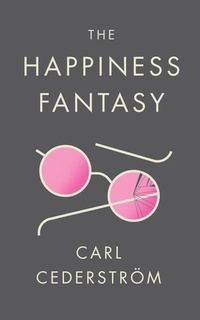
The Happiness Fantasy
Description

More details
Other editions
Additional editions
Content
Introduction
1 The Birth of the Happiness Fantasy: In Bed with Wilhelm Reich
2 Compulsory Narcissism: Happiness in an Age of Precariousness
3 Happiness Inc.: The Corporate Takeover of the Happiness Fantasy
4 Happiness Drugs: From Space-Age Mysticism to Productivity Enhancement
5 Pleasure: A Distinctly Male Fantasy
Conclusion: Happiness after Trump
Notes
Introduction
Judge: Just what is it that you want to do?
Heavenly Blues: Well, we wanna be free. We wanna be free to do what we wanna do.
The Wild Angels (1966)
The Happiness Fantasy - An Obituary
As an expression of what we desire and long for, the happiness fantasy is a shared fantasy of the good life. Like all fantasies, it brings together a set of moral values - functioning as a kind of road-map to the happy life. The nature of these fantasies changes over time and space. For the ancient Greeks, the ultimate happiness fantasy was a still and quiet life of contemplation. To get there was not easy. You had to rise above yourself, break out of the ordinary condition of being human, and cultivate a long list of virtuous faculties.
The happiness fantasy that will concern me in these pages is the fantasy that has dominated the rich West for almost a century. It is a fantasy of self-actualization, according to which there is only one way to become happy, and that is by reaching your full potential as a human being. It is to live in a spirit of authenticity, where you are called upon to live your life, as opposed to someone else's life. It is to pursue happiness in the form of pleasure, whereby the most rudimentary daily activities become moments of potential joy. And it is to submit yourself to the market, working hard to develop your brand and gain a competitive edge.
In short, it is a fantasy of realizing your true inner potential, both as a market resource and as a human being. This happiness fantasy emerged as an idea in the 1920s, reached its peak in the 1960s, and came to a definite end in the early hours of 9 November 2016.
Just before 3 a.m., in the Hilton Ballroom on Manhattan in New York City, Donald Trump slowly came down the stairs from the side of the stage to the soundtrack of Air Force One, giving a double-thumbs up, before addressing the cheering audience:
'Working together, we will begin the urgent task of rebuilding our nation and renewing the American Dream. I've spent my entire life in business, looking at the untapped potential in projects and in people.'
On my way to the university that morning I kept hearing those two words ringing in my head: untapped potential. They had been on my mind for a while. I had talked about the human potential movement in my previous lecture, showing clips from seminar trainings in the 1960s with people screaming and shouting as a technique for stripping away layers of their inauthentic selves to reach their true potential.
These scenes were taken from the Esalen Institute in California, which opened in 1962. Throughout the Sixties, Esalen was the go-to place for people who wished to explore their inner beings. Psychedelic drugs and Eastern mysticism were combined with modern psychology to test new routes to expand and extend the human self. The theme for the first season was 'human potentiality', an idea that had come to one of the organizers after attending a talk by Aldous Huxley a couple of years earlier in which he extolled the need to recognize the fact that that all people are different, and to find ways to actualize all people's potentialities.1
In contrast to Huxley, Trump has never been interested in human differences. His women look the same, as do his men. He does not share the anti-authoritarian ethos of the human potential movement, but talks and acts like an autocrat. In the year that has passed since he took office, Trump has tried to impose a travelling ban targeting people from mostly Muslim countries to enter the United States, cracked down on LGBT rights, and outspokenly supported white supremacists.
In my reading, the idea of human potentiality reflects not just a version of the American Dream but also a vision of happiness, a vision that has spread across the Western world over the last century, optimistically suggesting that everyone can take control over their lives and actualize their inner potential. I argue that this is a kind of fantasy, as I put it in the title of this book. But when I say fantasy, I am not suggesting that this version of happiness is unreal. On the contrary, it is a fantasy that is very real insofar as it has mobilized people's emotions and, by extension, the way they envision the good life.
The subject of this book is the happiness fantasy that became widely popular in the Sixties countercultures. It was a dream of a different world, pitted against a society based on conservative values, wealth accumulation, domination, and violence. Half a century down the line, this fantasy has taken on an entirely different form. It is no longer posed as an alternative to capitalism, but an integrated part of it. It is no longer standing in opposition to domination; it is part of domination.
'We really didn't see it coming, the new world of rabid individualism and the sanctity of profit,' Jenny Diski wrote in her book The Sixties.2 The Sixties was a time of 'striving for individuality and a nagging urge to rebel against the dead middle of the twentieth century'.3 And then, without Diski and her friends seeing it, came Margaret Thatcher and Ronald Reagan and stole their favourite words - liberty, permission, freedom - and twisted their meaning so they would fit their right-wing political agenda.
They were yet to realize exactly how different the sense of those words now was. Hearing Trump talk about human potentiality that morning, more than fifty years after this notion was first expressed by Huxley, I couldn't help thinking that this fantasy was now officially dead and buried.
In that sense, this book is an obituary.
Happiness - A Moral Fantasy
When we talk about happiness, we seem to be talking about fantasies, more specifically moralistic fantasies, which set out a template for the good life. This claim may appear strange when applied to conceptual statements about what happiness is or isn't. But it makes more sense when we look at happiness historically. It then becomes clear that whatever we consider to be a happy life today, in the rich West, is something altogether different from what it was thought to be in the past.
In his book Happiness: A History, the historian Darrin M. McMahon provides an account of how the notion was expressed and embraced over time, going back to the birth of Western civilization, as many such accounts do, in ancient Greece.4
For Aristotle, one of the first to pay significant attention to the topic, happiness consisted of being a good person. The happy life, what the Greeks called eudaemonia, was one lived ethically, guided by reason and dedicated to cultivating one's virtues. Soon after, the Epicureans would connect happiness to pleasure. They argued that a good life should be devoted to whatever brought pleasure. They were no hedonists, though, and preached a strict regulation of desire. To be happy, Epicurus himself said, he needed no more than a barley cake and some water.
The Stoics gave no elevated status to pleasure, arguing that a person had the capacity to be happy no matter how daunting and painful the circumstances of life might be. Much later, Christianity, as preached and practised throughout the Middle Ages, shunned pleasure altogether and regarded pain as the more useful path to, if not a happy life, then a sort of divine union in the afterlife. That desired state could not be attained in life on earth, but only as a gift from God, in heaven.
The Renaissance, though, brought happiness from heaven back to earth. It was not until the Enlightenment that it became a right - something that each and every person was able to pursue and attain. When Thomas Jefferson wrote in the Declaration of Independence that the pursuit of happiness was an unalienable right, he did not just intend to say that man should pursue pleasure, but that he should also have the right to acquire and possess property.
What we esteem today, in the rich West, has its own distinct flavour.
Contrary to the message of Christianity, according to which we abandon ourselves to achieve divine union, we are now asked to pursue union with ourselves. To be happy in a time when we prize authenticity and narcissism, we need to express our true inner self, get in touch with our deeper feelings, and follow the path set by ourselves.
We are also far from the ascetic Epicureans. In today's hedonistic consumer culture, we are impelled to desire more than barley cake and water. To be happy, we should optimize our enjoyment, whether through food, partying, relaxation, or sex.
And unlike the work-shy Greeks of antiquity, we are assumed to find happiness through work and by being productive. We are required to curate our market value, manage ourselves as corporations, and live according to an entrepreneurial ethos. When no sin is greater than being unemployed and no vice more despised than laziness, happiness comes only to those who work hard, have the right attitude, and struggle for self-improvement.
These are some of the moral values that seem to undergird happiness today: be real, enjoy yourself, be productive - and most important, don't rely on other people to achieve these goals, because your fate is, of course, in your own hands.
This is a popular message, and has been for some time. It is drummed into the unemployed and poor, who are led to believe that their misfortunes are symptoms of their inferior attitudes and inability to take...
