

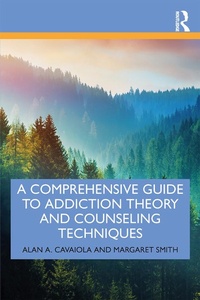
A Comprehensive Guide to Addiction Theory and Counseling Techniques
1st Edition
Published on 13. May 2020
224 pages
978-1-000-06874-0 (ISBN)
Description

A blend of theory and counseling techniques, this comprehensive text provides readers with an overview of several major counseling theories and their application to substance use disorders and addiction counseling, along with related techniques and interventions.
Chapters incorporate cutting edge evidenced-based research on neuroscience, psychological and sociocultural theories explaining the biopsychosocial influences of substance use disorders, and examine how substance use disorder risk factors can be utilized when assessing someone who may have a substance use disorder. The text additionally helps apply theory to practice, offering intervention techniques and using accessible case studies. Throughout the text, highlighted learning opportunities and key terms further help students to practice and apply the theories, interventions and techniques that the book discusses.
Mental health professionals, undergraduate and graduate students alike will benefit from this deft mix of prominent theory, innovative research and accessible case studies.
Chapters incorporate cutting edge evidenced-based research on neuroscience, psychological and sociocultural theories explaining the biopsychosocial influences of substance use disorders, and examine how substance use disorder risk factors can be utilized when assessing someone who may have a substance use disorder. The text additionally helps apply theory to practice, offering intervention techniques and using accessible case studies. Throughout the text, highlighted learning opportunities and key terms further help students to practice and apply the theories, interventions and techniques that the book discusses.
Mental health professionals, undergraduate and graduate students alike will benefit from this deft mix of prominent theory, innovative research and accessible case studies.
Reviews / Votes
Although there are many textbooks designed to teach counseling theories and techniques, most fail to apply these theories and techniques specifically to addiction treatment and recovery. When counselors understand how to correctly apply counseling theories and techniques to addiction treatment and recovery, they become extremely valuable tools in assisting individuals to develop and maintain effective recovery solutions. A Comprehensive Guide to Addiction Theory and Counseling Techniques was specifically designed and written by two of our nation's most outstanding addiction counselor educators. They understand how to teach future addiction professionals and how to apply counseling theories and techniques to addiction treatment and recovery. A Comprehensive Guide to Addiction Theory and Counseling Techniques is an extremely valuable tool for both addiction counseling students and professionals. I highly recommend it.Kirk Bowden PhD
Chair of the Rio Salado College Addiction and Substance Use Disorder Program
Professor-in-Charge of the Ottawa University Addiction Counseling Program
Past president of NAADAC, The Association of Addiction Professionals
Past president of the International Coalition for Addiction Studies Education
A Comprehensive Guide to Addiction Theory and Counseling Techniques provides a much-needed overview of major theoretical approaches in the counseling field and, specifically, how these theories may be applied practically to the field of addiction studies. Written in an engaging and accessible way, the book offers both Bachelor's and Master's level students a foundation from which to develop skills and critical thinking as they work through various examples and case studies. I would also consider this book for the Associate's level educator as an appropriate additional resource for students.
Joan E. Standora, PhD, Lic. Clinical & Drug Cnslr. (NJ); Lic.Alcohol & Drug Cnslr. (CT); CASAC-Adv. (NY); CADC (PA); MAC
The authors have written a comprehensive review of addiction theories and provided case conceptualization examples and student activity suggestions to facilitate better learning and understanding of the application of the theories. The case conceptualizations and activities are valuable in assisting students in gaining an understanding of the different theoretical perspectives and their impact on practitioner's approach to assessment and treatment of clients.
Vicki Michels, PhD, Minot State University. "Although there are many textbooks designed to teach counseling theories and techniques, most fail to apply these theories and techniques specifically to addiction treatment and recovery. When counselors understand how to correctly apply counseling theories and techniques to addiction treatment and recovery, they become extremely valuable tools in assisting individuals to develop and maintain effective recovery solutions. A Comprehensive Guide to Addiction Theory and Counseling Techniques was specifically designed and written by two of our nation's most outstanding addiction counselor educators. They understand how to teach future addiction professionals and how to apply counseling theories and techniques to addiction treatment and recovery. A Comprehensive Guide to Addiction Theory and Counseling Techniques is an extremely valuable tool for both addiction counseling students and professionals. I highly recommend it."
Kirk Bowden, PhD, Chair of the Rio Salado College Addiction and Substance Use Disorder Program; Professor-in-Charge of the Ottawa University Addiction Counseling Program; Past president of NAADAC, The Association of Addiction Professionals; Past president of the International Coalition for Addiction Studies Education
"A Comprehensive Guide to Addiction Theory and Counseling Techniques provides a much-needed overview of major theoretical approaches in the counseling field and, specifically, how these theories may be applied practically to the field of addiction studies. Written in an engaging and accessible way, the book offers both Bachelor's and Master's level students a foundation from which to develop skills and critical thinking as they work through various examples and case studies. I would also consider this book for the Associate's level educator as an appropriate additional resource for students."
Joan E. Standora, PhD, Lic. Clinical & Drug Cnslr. (NJ); Lic.Alcohol & Drug Cnslr. (CT); CASAC-Adv. (NY); CADC (PA); MAC
"The authors have written a comprehensive review of addiction theories and provided case conceptualization examples and student activity suggestions to facilitate better earning and understanding of the application of the theories. The case conceptualizations and activities are valuable in assisting students in gaining an understanding of the different theoretical perspectives and their impact on practitioners' approaches to assessment and treatment of clients."
Vicki Michels, PhD, Minot State University
More details
Edition
1. Auflage
Language
English
Place of publication
London
United Kingdom
Publishing group
Taylor & Francis Ltd
Target group
College/higher education
Professional and scholarly
Product notice
Reflowable
Illustrations
2 Tables, black and white; 2 Line drawings, black and white; 5 Illustrations, black and white
ISBN-13
978-1-000-06874-0 (9781000068740)
Copyright in bibliographic data and cover images is held by Nielsen Book Services Limited or by the publishers or by their respective licensors: all rights reserved.
Schweitzer Classification
Other editions
Additional editions
Alan A. Cavaiola | Margaret Smith
A Comprehensive Guide to Addiction Theory and Counseling Techniques
Book
06/2020
1st Edition
Routledge
€186.00
Shipment within 15-20 days
Alan A. Cavaiola | Margaret Smith
A Comprehensive Guide to Addiction Theory and Counseling Techniques
Book
06/2020
1st Edition
Routledge
€60.10
Shipment within 15-20 days
Persons
Alan A. Cavaiola, PhD, LPC, LCADC, is a full professor in the department of professional counseling at Monmouth University and currently serves as the director of the addiction studies program. He is the former clinical director of addiction treatment programs at Monmouth Medical Center.
Margaret Smith, EdD, MLADC, is a full professor in public health/addiction and pre-professional mental health at Keene State College. Her clinical experience includes alcohol and other drug counseling specializing in co-occurring disorders, elderly, women and LGBT populations. She also worked as the coordinator of alcohol and other drug education at Dartmouth College.
Margaret Smith, EdD, MLADC, is a full professor in public health/addiction and pre-professional mental health at Keene State College. Her clinical experience includes alcohol and other drug counseling specializing in co-occurring disorders, elderly, women and LGBT populations. She also worked as the coordinator of alcohol and other drug education at Dartmouth College.
Content
Chapter 1. Introduction to Addiction Theory
Chapter 2 Psychoanalytic Theory
Chapter 3. Behavioral and Learning Theory Model
Chapter 4. Family Systems Theory
Chapter 5 Biological Models of Addiction
Chapter 6 Sociocultural Model
Chapter 7. Solution-Focused Theory
Chapter 8 Existential Models
Chapter 9 The Transtheoretical Model, Stages of Change and Motivational Interviewing
Chapter 10. Developmental Theories of Recovery and Personality Theory
Chapter 11. Relapse Prevention
Chapter 12: The Diathesis-Stress Model
Chapter 2 Psychoanalytic Theory
Chapter 3. Behavioral and Learning Theory Model
Chapter 4. Family Systems Theory
Chapter 5 Biological Models of Addiction
Chapter 6 Sociocultural Model
Chapter 7. Solution-Focused Theory
Chapter 8 Existential Models
Chapter 9 The Transtheoretical Model, Stages of Change and Motivational Interviewing
Chapter 10. Developmental Theories of Recovery and Personality Theory
Chapter 11. Relapse Prevention
Chapter 12: The Diathesis-Stress Model
