

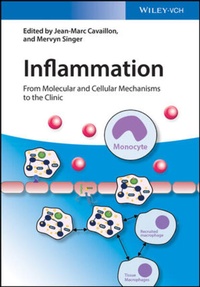
Inflammation
Description

The editors are among the most respected researchers in inflammation worldwide and here have put together a prestigious team of contributors. Starting with the molecular basis of inflammation, from cytokines via the innate immune system to the different kinds of inflammatory cells, they continue with the function of inflammation in infectious disease before devoting a large section to the relationship between inflammation and chronic diseases. The book concludes with wound and tissue healing and options for therapeutic interventions.
A must have for clinicians and biomedical researchers alike.
More details
Other editions
Additional editions

Persons
Jean-Marc Cavaillon has an extensive expertise in innate immunity, particularly on cytokines, inflammation, bacterial endotoxins and other Toll-like receptors agonists, endotoxin tolerance, activation of monocytes/macrophages and neutrophils, altered immune status in sepsis and SIRS patients. He is the co-author of a book "Sepsis and non-infectious inflammation: from biology to critical care" (Wiley VCH, 2009) and the author of a book in French on cytokines (Masson, 1993 & 1996) . Jean-Marc Cavaillon has published 145 scientific articles, 77 reviews and 45 chapters in books.
Mervyn Singer is Professor of Intensive Care Medicine at University College London. His primary research interests are sepsis and multi-organ failure, infection, shock and haemodynamic monitoring. Funding for these activities primarily comes from the Wellcome Trust, Medical Research Council and National Institute for Health Research. He developed an oesophageal Doppler haemodynamic monitor that is now in widespread use worldwide, the use of which has been shown in multiple studies to improve outcomes after major surgery and reduce length of stay. He has led on a number of important multi-centre trials in critical care. He has authored various papers and textbooks including the Oxford Handbook of Critical Care, now in its 3rd Edition, and is a Council member of the International Sepsis Forum. He was the first UK intensivist to be awarded Senior Investigator status by the National Institute for Health Research, and to be invited to give plenary lectures at the European and US Intensive Care Congresses.
Content
PART I: INDUCERS AND SENSORS OF INFLAMMATION
Pathogen-associated Molecular Patterns
Damage-associated Molecular Patterns
Bacterial Toxins
Venoms
Hypoxia as an Inducer of Inflammation
Vaccine Adjuvants
Pattern Recognition Receptors
PART II: INFLAMMATORY CELLS
Monocytes and Macrophages
Neutrophils
Mast Cells: Master Drivers of Immune Responses against Pathogens
Dendritic Cells in Inflammatory Disease
Roles for NK Cells and ILC1 in Inflammation and Infection
Group 2 and Group 3 Innate Lymphoid Cells: New Actors in Immunity and Inflammation
Th9 Cells: From the Bench to the Bedside and Back Again
Th17 Cells
Platelets
Epithelial Cells
Inflammation: The Role of Endothelial Cells
PART III: INFLAMMATORY MEDIATORS
IL-1 Superfamily and Inflammasome
TNF Superfamily
Interleukin-17 A-E
IL-6 Superfamily
Type I and II Cytokine Superfamilies in Inflammatory Responses
Chemokines and Chemotaxis
Lipid Mediators in Inflammation
Free Radicals in Inflammation
Proteases
Psychiatric Disorders and Inflammation
Complement System
Heat Shock Proteins
PART IV: INFLAMMATION AND HOST RESPONSE
Inflammation and Coagulation
Fever: Mediators and Mechanisms
Pain
Inflammation, Hormones and Metabolism
Microenvironmental Regulation of Innate Immune Cell Function
Epigenetics of Inflammation
PART V: INFLAMMATION AND DISEASES
Allergy and Inflammation
Sepsis
Autoimmunity and Inflammation
Psoriasis and Other Skin Inflammatory Diseases
Rheumatoid Arthritis and Other Inflammatory Articular Diseases
Missing Heritability of Crohn's Disease and Implications for Therapeutic Targeting and Improved Care
Inflammation and Transplantation
Inflammatory Mechanisms in Chronic Obstructive Pulmonary Disease
Obesity: A Complex Disease with Immune Components
Inflammation and Type 2 Diabetes
Inflammation-Mediated Neurodegeneration: Models, Mechanisms, and Therapeutic Interventions for Neurodegenerative Diseases
Inflammation in Atherosclerosis
Acute Kidney Injury
Ischemia-Reperfusion Syndrome
Single Nucleotide Polymorphisms and Inflammation
PART VI: RESOLUTION OF INFLAMMATION AND TISSUE REPAIR
Pentraxins in the Orchestration of Defence and Tissue Repair During the Acute Phase Response
Anti-inflammatory Cytokines, Soluble Receptors, and Natural Antagonists
Regulatory T Cells
Leukocyte Reprogramming
Roles of Specialized Proresolving Lipid Mediators in Inflammation-Resolution and Tissue Repair
Glucocorticoids
The Neuroimmune Communicatome in Inflammation
The Inflammatory Response in Tissue Repair
PART VII: DETECTION AND TREATMENTS
Biomarkers in Inflammation
In Vivo Imaging of Inflammation
Novel Targets for Drug Development
Inflammation, Microbiota and Gut Reconditioning
Natural Products as Source of Anti-Inflammatory Drugs
1
Inflammation through the Ages: A Historical Perspective
Jean-Marc Cavaillon
Institut Pasteur, Unit Cytokines & Inflammation, 28 rue Dr. Roux, 75015 Paris, France
1.1 Introduction
Inflammation is older than humanity itself and the earliest signs of inflammatory processes can be found on the bones of dinosaurs. Of course, inflammation has always been accompanying humans since they are on Earth as it can be seen on the bones of the first humanoids and of Homo sapiens. The first precise diagnoses of inflammatory disorders were made on Egyptian mummies by Sir Marc Armand Ruffer (1859-1917). Accompanying the first British Egyptologists, he gave birth to a new science: "paleopathology." He made a pioneer post-mortem diagnosis of arthritis and spondylitis, and by studying the mummy of Ramses II, he diagnosed that the pharaoh had suffered from atherosclerosis. In fact, long before inflammatory processes could be understood or even defined humans had proposed various therapeutic approaches to treat different types of inflammatory diseases.
1.2 The First Treatments
According to Chinese mythology, herbology or the use of plants to cure diseases was introduced by Emperor Shennong in 2800 BC, and the first ever book on medicinal plants was published in China in 300-200 BC. Other testimonies of interest on plants to cure diseases or at least to relieve pain and fever were provided by Edwin Smith and Georg Moritz Ebers, two Egyptologists who obtained fascinating papyruses. These papyruses (around 1520 BC) were copies of even older ones (3400 BC). Not only did they describe case reports of injuries but also listed different plants to be used against various types of injuries (crocodile bites, burns, fractures, bowel diseases, joint pains, etc). For example, infusion of dried myrtle was recommended for rheumatic pain. The interest to use plants to cure inflammatory diseases was perpetuated by the Greeks, and Hippocrates (450-370 BC) used extracts from willow bark to relieve pain and fever. The study of willow bark ended with the discovery of aspirin in the nineteenth century.
Hippocrates also advocated bloodletting as another therapeutic approach to cure most diseases, including inflammatory disorders. Its use was supported by other erudite Greeks such as Erasistratus, Asclepiades of Bithynia, or Galen of Pergamon and later by the Roman scholar Aulus Cornelius Celsus, the Persian medical doctor Avicenna (tenth century), or the Spanish Jewish doctor Moïse Maïmonide (twelfth century). All physicians of the kings of France were great supporters of bloodletting. Ambroise Paré (1509-1590), the physician of Charles IX, explained why he bled a young man 27 times in four days: "I liked to mention this event, so that the young surgeon will not be too shy to draw blood when confronted to large inflammation." Laurent Joubert (1529-1583), the physician of Henri III, claimed that it was a way to get rid of the "bad blood" while the best was retained. Charles Bouvard (1572-1658) had probably prescribed 47 bloodlettings during the last 10 years of Louis XIII who died of Crohn's disease at the age of 42 years. They used it even when their patients were still young. For instance, François Vaultier (1590-1652) bled the young Louis XIV at the age of 9 years when he had smallpox. Guy Patin (1601-1672), the dean of the School of Medicine in Paris for a brief period, declared: "There is no remedy in the world that does so many miracles. I have bled my wife twelve times for a pleurisy, twenty times my son for a continuous fever and myself seven times for a cold." [1] Even on the American continent, bloodletting was popular. Thus, on December 14, 1799, Georges Washington, probably suffering from pneumonia, died when 3.7 l of blood was drained out of his body in one single day. The first doctor to question the usefulness of bloodletting was Pierre Charles Alexandre Louis (1787-1872) who in 1835 considered this approach to have had very limited advantages. But pitted against him were leading doctors such as François Broussais (1772-1838) who was alleged to have had spilled more blood than Napoleon on all battlefields! If the lancet was commonly used to remove blood from patients, then the use of leeches was another method. According to an estimate, 35 million leeches were used in France in 1830 alone. This trend went unabated until François-Vincent Raspail (1794-1878) questioned the method in 1845 saying: "But why resort to violent and bloody means? Do you wish to calm fever? You will not succeed by bleeding [.] So leave your lancet there, it has made enough troubles since Hippocrates" [2]. In 1856, in Great Britain, John Hughes Bennet (1812-1875) also concluded that there was no proven therapeutic advantage of bloodletting.
The other method used to prevent a severe inflammation and infection after a wound was cauterization supported by doctors such as Giovanni da Vigo (1450-1525) in Italy and Paracelsus (1493-1541) in Switzerland until Ambroise Paré, comparing the relative advantages of cauterization and the use of antiseptics, concluded that the latter were the best. But the word "antiseptic" was coined only in 1750 by John Pringle (1707-1782), a Scottish physician, who studied numerous substances able to prevent putrefaction. In 1854, Florence Nightingale (1820-1910) advocated hygiene as a means to prevent infection during the Crimean war in order to limit the mortality of wounded soldiers. Of course, the main advocate of hygiene was Ignaz Semmelweis (1818-1865) who succeeded in 1847 to reduce mortality due to puerperal sepsis.
1.3 The Definitions
One of the very firsts to define the parameters of inflammation was Aulus Cornelius Celsus (25 BC-50 AD), a Roman encyclopedist to whom we owe the famous statement: "Notae vero inflammationis sunt quatuor: rubor et tumor cum calore and dolore" (The signs of inflammation are four: redness, swelling, fever and pain). A fifth element was later added "loss of organ function." Erroneously attributed to Galen of Pergamum, it could have been proposed by either Thomas Sydenham (1624-1689) or Rudolf Virchow (1821-1902). Of course, inflammation has for a long time been considered a morbid response of the host to any types of insults. However, John Hunter (1728-1793), a Scottish surgeon, appropriately defined inflammation in his book published one year after his death: "Inflammation in itself is not to be considered as a disease, but as a salutary operation, consequent either to some violence or some disease" [3]. Despite this appropriate definition, one could still read in 1865 in the French dictionary of medicine that "Inflammation is a complex morbid phenomenon, particularly associated with the function of blood circulation." In his lecture on inflammation, Elie Metchnikoff (1845-1916) stated in 1891 that phagocytes were the participant of the inflammatory process and that inflammation should no longer be seen as only being deleterious [4]. Since Metchnikoff, many mechanisms accompanying inflammation have been further deciphered and mediators have been characterized.
1.4 Fever
For a while it was believed that fever was consecutive to some obstructions within the blood vessels leading to an accelerated movement within the free vessels. At the beginning of the eighteenth century, a defender of this concept was the Italian physician Lorenzo Bellini (1643-1704). Herman Boerhaave (1668-1738), a Dutch physician, also thought that increased heartbeats were the source of the accelerated circulation and fever. In 1744, François Boissier de Sauvages de Lacroix (1706-1767), while translating in French the book on "haemastatic" written by Stephen Hales (1677-1761), added his personal view on fever, confirming the prevailing concept that inflammation was associated with increased blood flow. Thanks to scientists and doctors such as John Davy (1790-1868) in the United Kingdom who made the first sets of temperature measurements in different humans and in different environments (1816-1818), Antoine Becquerel (1852-1908) in France who invented the pyrometer to measure human temperature (1835), Thomas Clifford Allbutt (1836-1925) who invented the clinical thermometer (1866), and Reinhold August Wunderlich (1815-1877) of Germany who made more than one million measurements on more than 25 000 patients (1868), normal temperature and fever could be definitively and precisely defined. William H. Welch (1850-1934), the first dean of the Johns Hopkins School of Medicine, offered a wonderful definition of fever in his 1888 Cartwright lecture:
The real enemy in most fevers is the noxious substance which invades the body, and there is nothing to prevent us from believing that fever is a weapon employed by Nature to combat assaults of this enemy. According to this view, the fever-producing agents light the fire, which consumes them. It is not incompatible with this conception of fever to suppose that the fire may prove injurious also to the patients...
