

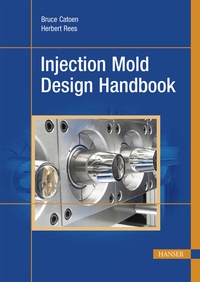
Injection Mold Design Handbook
1st Edition
Published on 11. October 2021
820 pages
978-1-56990-816-7 (ISBN)
Description

An injection mold is the heart of any plastics molding workcell. Understanding the principles of an injection mold design and its importance to a successful plastic part is fundamental to the success of the product. This book helps guide the designer, engineer, project manager, and production manager in making sure that the injection mold to be designed will work as intended.
This book takes the reader through the process of conceptualizing and designing an injection mold that will produce the desired plastic part. Since it all starts with the plastic part, the book first focuses on key features and details of the plastic part which are necessary for good mold design. The design of the main components of an injection mold are discussed and good design practices are shared. Finally the process of testing and gaining customer acceptance of the mold for production is detailed. A comprehensive appendix and detailed drawings provide the required detail for completing a mold design.
Additionally more than 40 detailed examples of mold designs are provided in the book to illustrate the principles and design rules discussed.
More details
Other editions
Additional editions

Bruce Catoen | Herbert Rees
Injection Mold Design Handbook
Book
10/2021
1st Edition
Hanser Publications
€279.99
Available immediately
Persons
Author
Bruce Catoen is the founder of OASIC, a technology, strategy, mergers and acquisitions consulting company. He has more than 30 years of experience in the plastics equipment business including marketing, manufacturing and product development. He served as the Chief Technology Officer and Senior Executive for companies such as Milacron, Mold Masters, and Husky Injection Molding Systems. He is the named inventor of more than 50 patents and is the coauthor of the book "Selecting Injection Molds".
ISNI:
ISNI:
Herbert Rees (d. 2010) was Vice President of R&D at Husky Injection Molding Systems. He is author of several books in the area of injection molds and molding, including "Mold Engineering", "Understanding Injection Mold Design", "Understanding Product Design for Injection Molding", and "Selecting Injection Molds".
Content
- Intro
- Preface
- Acknowledgments
- The Author
- Contents
- 1 Introduction
- 1.1 Benefits of Injection Molding
- 1.2 The Injection Mold
- 1.2.1 The Role of the Injection Mold
- 1.3 What Is an Injection Mold?
- 1.3.1 Elements of an Injection Mold
- 1.4 Classification of Molds
- 1.5 Continued Innovation in Molds and Hot Runners
- 1.6 The Injection Molding Machine
- 2 Overview of Plastics for Mold Design
- 2.1 What Is Plastic?
- 2.2 Plastics Terminology
- 2.3 Polymer Orientation
- 2.3.1 Shrinkage
- 2.3.2 Multiple Shrinkages
- 2.4 Additives
- 2.5 Mechanical Properties of Plastics
- 2.6 How Molten Plastics Behave
- 2.6.1 How Plastics Flow
- 2.6.2 Plastic Flow in Runners and Cavities
- 2.7 Degradation
- 2.8 Selection and Requirements for Plastic Materials
- 3 Plastic Part Design for Mold Designers
- 3.1 Plastic Part Drawing
- 3.2 Product Shape: How Can the Product Best Be Molded?
- 3.3 Parting Line (P/L)
- 3.4 Uniform Wall Thickness
- 3.5 L/t Ratio (Length of Flow Divided by Wall Thickness)
- 3.6 Drafts
- 3.7 Corners, Fillets, and Chamfers
- 3.8 Ribs and Bosses
- 3.9 Rim Designs
- 3.10 Stripped Undercuts
- 3.11 Sidewall Windows in the Part
- 3.12 Gate Location and Number of Gates
- 3.12.1 CAE Filling Analysis for Gate Location Optimization
- 3.12.2 Two or More Gates per Cavity - Large Products
- 3.12.3 Gate Dimple
- 3.12.4 Recessed Gate
- 3.12.5 Deep Undercuts and Mold Design Complexity
- 3.13 Re-Design of the Product to Avoid the Need for Side Cores
- 3.13.1 Selecting Other than the Conventional Parting Line
- 3.14 Shape of Threads and Undercuts
- 3.15 Need for Multi-Stage Ejection
- 3.16 Post-Molding Operations versus Mold Complexity
- 3.17 Plastic Part Tolerances and Effect on Mold Design
- 3.17.1 General and Specific Plastic Part Tolerances
- 3.17.2 Are Special Fits with Matching Products Required?
- 3.17.3 Tolerances for the Filling Volume
- 3.18 Stacking of Products and Free Dispensing
- 3.19 Deliberate Mismatches for Easy Mold Design
- 3.19.1 Mismatch at the Parting Line
- 3.19.2 Mismatch between Two Matching Pieces, such as Box and Lid
- 3.20 Surface Finish
- 3.20.1 Finish of Molding Surfaces
- 3.20.2 Texturing of Surfaces
- 3.21 Fitting Surfaces of Mold Parts
- 3.22 Engravings
- 3.22.1 Engravings versus Applied Labels
- 3.22.2 Two-Color and Two-Material Engraving
- 3.22.3 Depth of Engravings
- 3.22.4 Font Style and Size of Artwork
- 3.22.5 Polarity of Engraving
- 3.22.6 Are the Locations Selected for Engraving Practical?
- 3.22.7 Engravings in the Walls and Bottoms of Products
- 3.23 General Appearance of the Product
- 3.23.1 Flatness
- 3.23.2 Sinks and Voids
- 3.23.3 Witness Lines
- 3.23.4 Weld Lines
- 3.23.5 Surface Defects (Flow Marks, Splay, Record Grooves, Haze, Jetting, Hooks, and Ripples)
- 3.24 Identification of the Molded Piece
- 3.25 Product Strength Requirements
- 3.25.1 The Role of Gate Location in Increasing Product Strength
- 3.26 Special Features
- 3.26.1 Holes and Counter-Bores for Assembly Screws or Rivets
- 3.26.2 Hinges and Snaps
- 4 Specifying the Right Machine for the Mold
- 4.1 Required Clamp Size (Tonnage)
- 4.2 Required Opening Stroke and Shut-Height
- 4.3 Platen Mounting Pattern and Ejector Positions
- 4.4 Locating Ring Size and Machine Nozzle Size
- 4.5 Extruder Sizing and Specification
- 4.5.1 Extruder Shot Size Calculation
- 4.5.2 Requirements for Machine Plasticizing Capacity
- 4.5.3 Screw Selection
- 4.6 Machine Nozzle Selection
- 4.6.1 Open Nozzles
- 4.6.2 Shut-off Nozzles
- 4.7 Injection Unit Selection
- 4.7.1 Reciprocating Screw versus Two-Stage Injection Units
- 4.7.2 Injection Speed and Pressure Requirements
- 5 Factors Affecting the Design of an Injection Mold
- 5.1 Total Equipment Productivity (TEP) Objectives
- 5.2 Cycle Time
- 5.3 Projected Annual Requirements
- 5.4 Purpose of the Mold
- 5.4.1 Prototype Mold
- 5.4.2 Experimental Mold
- 5.4.3 Combination of Prototype and Experimental Mold
- 5.4.4 Production Mold
- 5.4.5 New Products
- 5.4.6 Existing Product, Large Quantities
- 5.4.7 Limited Quantities, Limited Product Lifecycle
- 5.4.8 Short Runs, Small Production Requirements
- 5.5 The Injection Molding Machine
- 5.6 The Plant Environment
- 5.6.1 Condition of Ambient (Shop) Air
- 5.7 Coolant Supply
- 5.7.1 Is the Cooling Water Clean?
- 5.7.2 Chiller Sizing Guidelines
- 5.8 Power Supply
- 6 Cycle Time Estimation
- 6.1 Factors Impacting Cycle Time
- 6.1.1 Type of Plastic
- 6.1.2 Wall Thickness of Product
- 6.1.3 Mold Materials
- 6.1.4 Efficiency of Cooling
- 6.1.5 Venting
- 6.1.6 Ejection
- 6.1.7 Molding Machine
- 6.1.8 Impact of Cold Runners versus Hot Runners on Cycle Time
- 6.2 Estimating Cycle Time
- 7 Product Cost Estimation
- 7.1 Machine Hour Cost per Unit Molded
- 7.2 Mold Cost per Unit Molded
- 7.3 Labor Costs
- 7.4 Estimating Product Cost
- 8 Mold Layout, Drawings, and Inspection
- 8.1 Steps to Designing the Mold
- 8.2 Information and Documentation
- 8.2.1 Machine Specifications
- 8.2.2 Productivity Features
- 8.2.3 Additional Requirements
- 8.3 Determining the Mold Cavitation
- 8.3.1 Minimum Number of Cavities
- 8.3.2 Preferred (Practical) Number of Cavities
- 8.4 Assembly and Detail Drawings
- 8.4.1 Drawings and Views
- 8.4.2 Arrangement of Views
- 8.4.3 Notes on Drawings
- 8.4.4 Additional Information on the Drawings
- 8.5 Mold Layout and Assembly Drawings
- 8.5.1 Machine Platen Layout
- 8.5.2 Symmetry of Layout, Balancing of Clamp
- 8.5.3 The Views
- 8.5.4 Completing the Assembly Drawing
- 8.5.5 Bill of Materials (BOM) and "Ballooning"
- 8.5.6 Finishing Touches
- 8.6 Inspection Features on Drawings
- 8.6.1 Rollers or Roller Balls
- 8.6.2 How to Inspect Tapers
- 8.7 Chamfers and Radii
- 8.7.1 General Information
- 8.7.2 Specifying Chamfers
- 8.7.3 Radii in Corners
- 9 Mold Shoe Design
- 9.1 Mold Plates
- 9.2 Mold Hardware
- 9.3 Location of Fittings, Hoses, and Cables
- 9.4 Forces Affecting Mold Shoes
- 9.4.1 Deflection of Mold Plates
- 9.4.2 Calculation of Plate Deflection and Stress
- 9.5 Selection of Materials for Mold Plates
- 9.6 Guiding of Moving Plates
- 9.6.1 Gibs
- 9.7 Mounting Holes and Clamp Slots
- 9.8 Locating Rings
- 9.9 Mold Handling - Lift Holes, Lift Bars, and Latches
- 9.9.1 Lift Bars
- 9.9.2 Latches
- 9.10 Mold Identification Nameplates
- 10 Cavity and Core Design Overview
- 10.1 Mold Cavity Space
- 10.2 Plastic versus Steel Part Drawing
- 10.3 The Preliminary Stack Layout
- 10.3.1 Where Should the Parting Line Be Located?
- 10.3.2 Will the Product Pull out of the Cavity and Stay on the Core?
- 10.3.3 Will the Product Eject Easily from the Core?
- 10.3.4 Is the Cavity Balanced?
- 10.4 Determining the Method of Cavity Construction
- 10.4.1 Cavity and/or Core Are Cut Right into the Mold Plate
- 10.4.2 Individual Cavities and Cores
- 10.5 Stack Sizing and Total Area of the Stack
- 10.6 Forces on the Cores and Cavities
- 10.6.1 Checking for Sufficient Steel Shut-off Area in Stack
- 10.6.2 Checking for Stack Compression due to Clamp Tonnage
- 10.6.3 Checking for Acceptable Hoop Stress in the Cavity
- 10.7 Core and Cavity Material Selection
- 10.8 Determining the Stack Construction
- 10.9 Venting
- 10.9.1 Parting Line (P/L) Venting
- 10.9.2 Vent Grooves and Channels
- 10.9.3 Vent Pins
- 10.9.4 Venting of Ribs
- 10.9.5 Venting the Bottom of a Cavity
- 10.9.6 Core Cap and Core Sidewall Venting
- 11 Ejection
- 11.1 Manual or Semi-Automatic Ejection
- 11.2 Automatic Ejection
- 11.3 Basic Requirements for Ejection
- 11.3.1 Machine Opening Stroke for Ejection
- 11.3.2 Venting for Ease of Ejection
- 11.3.3 Surface Finish Forces on Ejection
- 11.4 Force Required for Ejection
- 11.5 Where to Eject the Product
- 11.5.1 Ejection of Deep Cup-Shaped Parts
- 11.5.2 Ejection of Parts with Deep Ribs
- 11.5.3 Ejection of Bosses
- 11.5.4 Ejection of Shallow Parts
- 11.5.5 Ejection of Rim Shapes
- 11.5.6 Ejection of Cold Runners
- 11.6 Ejector Pins, Blade Ejectors, and Sleeves
- 11.6.1 Ejector Pin Clearance (Fit) and Length of Land
- 11.6.2 Blade Ejectors
- 11.6.3 Number, Size, and Location of Ejector Pins
- 11.6.4 Finish of Ejector Pins and Bores
- 11.6.5 Preventing Ejector Pins from Turning
- 11.7 Ejector and Ejector Retainer Plates
- 11.7.1 Ejection Forces
- 11.7.2 Injection Forces
- 11.7.3 Number and Location of Machine Ejectors to Be Used
- 11.7.4 Calculation of Ejector Plate Deflection
- 11.7.5 Ejector Pin Retainer Plate
- 11.7.6 Ejector Return Pins
- 11.7.7 Ejector Box
- 11.7.8 Returning the Ejector Plate
- 11.8 Stripper Ejection
- 11.8.1 General Rules for Stripper Ejection
- 11.8.2 Guiding the Stripper Plate
- 11.8.3 Stripper Rings
- 11.8.4 Stripper Bars
- 11.8.5 Stripper Ring Ejection of Lids
- 11.8.6 Stripping from the Injection (Cavity) Side
- 11.9 Air Ejection
- 11.9.1 Requirements and Timing for Air Ejection
- 11.9.2 Poppet Air Ejection
- 11.9.3 Core Air
- 11.9.4 Blow-off Jets
- 11.9.5 Blow-down Jets
- 11.9.6 Air Ejection from the Cavity Side
- 11.10 Ejection of Significant Undercuts
- 11.10.1 Cam Ejection (Internal and External) Using Neck Rings
- 11.10.2 Core Pull Ejection
- 11.10.3 Collapsible Cores
- 11.10.4 Lifter Ejection
- 11.10.5 Sliders
- 11.10.6 Unscrewing Ejection
- 11.10.7 Cam and Harmonic Linkage Ejection
- 11.11 Multiple Ejection Strokes
- 11.12 Multi-Stage Ejection
- 11.12.1 Why and When to Use Multi-Stage Ejection
- 11.12.2 Typical Two-Stage Ejection Actuations
- 11.12.3 Moving-Cavity Ejection Assist
- 12 Mold Cooling
- 12.1 Injection and Mold Temperatures for Common Plastics
- 12.2 Coolant Requirements for a Mold
- 12.3 What Affects Mold Cooling Performance?
- 12.3.1 Temperature of the Cooling Medium
- 12.3.2 Achieving Steady-State Temperature in the Mold
- 12.4 Principles of Heat Transfer and Thermodynamics
- 12.4.1 Heat Transfer Basics
- 12.4.2 Melting and Cooling Behavior of Plastics
- 12.4.3 Conduction and Thermal Conductivity
- 12.4.4 Convective Heat Transfer
- 12.5 Calculation of Cooling Requirements for a Mold
- 12.5.1 Heat Input Required to Condition the Plastic for Injection
- 12.5.2 Cooling Required to Remove the Inputted Heat
- 12.5.3 Temperature of Cooling Water
- 12.5.4 Quantity of Cooling Water Required
- 12.5.5 Efficiency of Cooling on Required Water Flow
- 12.6 General Cooling Design Rules
- 12.7 Cooling Channels in Plates
- 12.7.1 Series and Parallel Plate Cooling
- 12.7.2 Distance of Waterlines from Holes and Surfaces
- 12.7.3 Plugging of Cooling Channels
- 12.7.4 Plugs and Baffles in Plates
- 12.7.5 Cooling of Hot Runner Plates
- 12.8 Layout of Cooling Channels in Inserts
- 12.8.1 Shrinkage of Plastic and Cooling Layout
- 12.8.2 Preventing Water Leakage in the Mold
- 12.8.3 Cooling Channel Distances in Inserts
- 12.8.4 Distance to Pipe Threads and Fittings
- 12.8.5 Cooling Channels Split between Inserts
- 12.8.6 Design of Insert Cooling for Flat Products
- 12.8.7 Cooling Design for Cup-Shaped Products
- 12.8.8 Use of CAE Molding Simulation for Cooling Design and Warpage Analysis
- 12.9 Supplying Water to the Mold
- 12.10 Thermal Expansion
- 13 Mold and Stack Alignment
- 13.1 Leader Pin and Bushing Alignment
- 13.2 Taper or Straight Interlock Alignment between Plates
- 13.3 Taper Lock between Each Cavity and Core
- 13.3.1 Backing up a Taper
- 13.3.2 Core Lock and Cavity Lock Alignment
- 13.4 Preloads
- 13.4.1 Restoring Preload by Grinding of the Tapers
- 13.4.2 Preload Stresses
- 13.4.3 Mounting of Stacks to Mold Plates
- 13.5 Over-Constrained Alignment
- 14 Melt Distribution and Gate Design
- 14.1 Cold Runners
- 14.1.1 Cold Runner, Single-Cavity Molds
- 14.1.2 Cold Runner, Two-Plate Molds
- 14.1.3 Cold Runner, Three-Plate Molds
- 14.1.4 Cold Runner Gate Types and Configurations
- 14.1.5 Layout and Balancing of Cold Runner Melt Channels
- 14.1.6 Cold Runner Ejection
- 14.2 Insulated Runners
- 14.3 Hot Runners
- 14.3.1 Considerations for Specifying a Hot Runner
- 14.3.2 Overview of Hot Runner Design
- 14.3.3 Layout and Balancing of Hot Runner Melt Channels
- 14.3.4 Melt Channel Sizing
- 14.3.5 The Hot Runner Manifold
- 14.3.6 Heating of the Hot Runner
- 14.3.7 Hot Runner Nozzles
- 14.3.8 Nozzle Tips and Gating in Hot Runners
- 14.3.9 Hot Runner Temperature Controls
- 14.3.10 Hot Runner Gate Location
- 14.3.11 Hot Runner Gate Sizing
- 14.3.12 Gate Inserts (Gate Pads)
- 14.4 Hot and Cold Runner Molds in Combination
- 14.5 Selection of Hot Runner or Cold Runner System
- 15 Selection of Mold Materials
- 15.1 Forces on the Mold Affect Material Choices
- 15.1.1 Characteristics of Steels and Other Mold Materials
- 15.2 Steel Properties
- 15.2.1 Types of Steels
- 15.3 Quality of Materials
- 15.4 Manufacturing Considerations for Choosing Materials
- 15.4.1 EDM
- 15.4.2 Welding
- 15.5 Heat Treatment
- 15.6 Overview of Surface Treatments
- 15.7 Hardness of Mating Parts
- 16 Fasteners
- 16.1 How Screws Work
- 16.2 Rolled versus Cut Threads
- 16.3 Holding Action and Preload of Screws
- 16.4 Influence of Temperature on Screws
- 16.5 Effect of Cyclical Loads on Screws
- 16.6 Screw Standards and Properties
- 16.7 Length of Thread Engagement
- 16.8 Additional Recommendations Regarding Screws
- 16.8.1 Always Use Standard Available Screw Sizes and Lengths
- 16.8.2 Increase the Depth of the Counter-Bore
- 16.9 Use of Set Screws
- 16.10 Holding Screws in Place (if Needed)
- 16.10.1 Lock Washers
- 16.10.2 Screw-Securing Compounds
- 16.10.3 Screws Secured by Plastic Inserts (NylokT, etc.)
- 17 Dimensioning and Tolerancing
- 17.1 Conventional versus Geometric Tolerancing
- 17.2 Limitations of Conventional Dimensions and Tolerances
- 17.2.1 Origins of Measurement
- 17.2.2 Non-Repeatable Sizes and Centers
- 17.2.3 Orientation and Angles
- 17.2.4 Tolerance Accumulation
- 17.3 Geometric Dimensioning and Tolerancing
- 17.3.1 Three Core Steps for Applying or Inspecting GD&T
- 17.3.2 Geometric Tolerancing Benefits versus Conventional Tolerancing
- 17.4 Implementation of Geometric Tolerancing
- 17.4.1 Implementation of GD&T-Lite (not Recommended)
- 17.4.2 Implementation of GD&T Integration
- 17.4.3 Implementation of Model-Based Definition
- 17.5 Considerations for Tolerancing
- 17.5.1 CAD Modelling Practices
- 17.5.2 Materials, Manufacturing, and Inspection
- 17.5.3 Thermal Expansion and Tolerancing
- 17.6 Application of GD&T to Mold Components
- 17.6.1 GD&T Applied to an Injection Mold Core
- 17.6.2 GD&T Applied to an Injection Mold Lock Ring
- 17.6.3 GD&T Applied to an Injection Mold Core Plate
- 17.6.4 GD&T and Mold Engineering
- 18 Mold Design References
- 18.1 Plastic Housing (Using Shut-offs)
- 18.2 Facemask
- 18.3 Plastic Cutlery
- 18.4 Vial
- 18.5 Open-Ended Floss Spool Tube
- 18.6 Overcap Lid (Using Stripper Ring Ejection)
- 18.7 Plug Lid
- 18.8 Urine Tub Cap (Using Stripper Ring Ejection)
- 18.9 Deli or Yellow Fats Container (Using Air Ejection and with Cavity Lock Alignment)
- 18.10 Stadium Cup (Using Core Lock Alignment)
- 18.11 Polystyrene Tumbler (Using Stripper Ring Ejection)
- 18.12 False-Bottom Cup (Using Moving Cavity and Air Ejection)
- 18.13 Round Closure (Using Stripper Ring (Bump-off) Ejection)
- 18.14 Paint Pail with Handle Inserts
- 18.15 Rectangular Container with Tamper-Evident Skirt
- 18.16 Power Tool Housing
- 18.17 Rear Hatch Door
- 18.18 Crinkle Bag
- 18.19 Preform (Using Neck Ring Ejection)
- 18.20 Living Hinge Cap
- 18.21 Rectangular Box with Undercuts (Using Split-Cavity Mold)
- 18.22 Detergent Cap (Using Unscrewing Ejection)
- 18.23 Folding Crate
- 18.24 Automotive Panel Cover
- 18.25 Pallet
- 18.26 Automotive Covers
- 18.27 Double-Walled Threaded Cap (Using Collapsible-Core Mold)
- 18.28 Automotive Cover
- 18.29 Externally Threaded Cap Mold
- 18.30 Oxygen Mask (with Side Core Retraction)
- 18.31 Living-Hinge Case
- 18.32 Iron Housing (Using Split-Cavity Mold)
- 18.33 Oral Care Product (Using Split-Cavity Mold)
- 18.34 Actuator (Using Split Cavity with Multi-Stage Ejection)
- 19 Mold Testing, Approval, and Troubleshooting
- 19.1 Information to Be Supplied to the Mold Tester
- 19.2 Dry-Cycle Testing before Injecting Plastic
- 19.2.1 Bluing to Ensure Proper Shut-off, Venting, and Taper Fit
- 19.2.2 Procedure for Aligning Mold Halves in the Injection Molding Machine
- 19.2.3 Lead Test Procedure to Check Wall Thicknesses and Alignment
- 19.3 Initial Mold Start-up and First Shots
- 19.3.1 Mold Start-up Procedure
- 19.4 Changing Materials or Colors
- 19.4.1 General Color Change Procedure
- 19.5 Mold Test Information and Data to Be Collected
- 19.5.1 Core Shift Mapping
- 19.6 APQP and PPAP
- 19.7 Mold Test Troubleshooting Guide
- 20 Appendix
- Appendix 1: Mold Material Properties
- Appendix 2: Frequently Used Conversion Factors
- Appendix 3: Plastics and their Abbreviations
- Appendix 4: Mold Design Review Checklist
- Appendix 5: Contents of a Mold Manual
- Appendix 6: Mold Setup Guide Template
- Appendix 7: Order Confirmation Template
- Appendix 8: General Properties of Plastics
- Appendix 9: Thermal Properties of Plastics
- Appendix 10: Mechanical Properties of Plastics
- Appendix 11: Thermal and Processing Properties of Plastics
- Appendix 12: Mold Preventative Maintenance Checklist
- Appendix 13: Surface Finishes
- Index
