

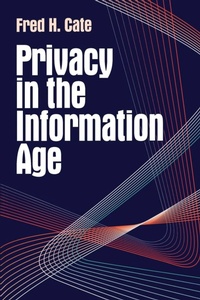
Privacy in the Information Age
1st Edition
Published on 26. July 2000
248 pages
978-0-8157-9134-8 (ISBN)
Description

Electronic information networks offer extraordinary advantages to business, government, and individuals in terms of power, capacity, speed, accessibility, and cost. But these same capabilities present substantial privacy issues. With an unprecedented amount of data available in digital format--which is easier and less expensive to access, manipulate, and store--others know more about you than ever before.
Consider this: data routinely collected about you includes your health, credit, marital, educational, and employment histories; the times and telephone numbers of every call you make and receive; the magazines you subscribe to and the books your borrow from the library; your cash withdrawals; your purchases by credit card or check; your electronic mail and telephone messages; where you go on the World Wide Web. The ramifications of such a readily accessible storehouse of information are astonishing.
Governments have responded to these new challenges to personal privacy in a wide variety of ways. At one extreme, the European Union in 1995 enacted sweeping regulation to protect personal information; at the other extreme, privacy law in the United States and many other countries is fragmented, inconsistent, and offers little protection for privacy on the internet and other electronic networks.
For all the passion that surrounds discussions about privacy, and the recent attention devoted to electronic privacy, surprisingly little consensus exists about what privacy means, what values are served--or compromised--by extending further legal protection to privacy, what values are affected by existing and proposed measures designed to protect privacy, and what principles should undergird a sensitive balancing of those values.
In this book, Fred Cate addresses these critical issues in the context of computerized information. He provides an overview of the technologies that are provoking the current privacy debate and discusses the range of legal issues that these technologies raise. He examines the central elements that make up the definition of privacy and the values served, and liabilities incurred, by each of those components. Separate chapters address the regulation of privacy in Europe and the United States. The final chapter identifies four sets of principles for protecting information privacy. The principles recognize the significance of individual and collective nongovernmental action, the limited role for privacy laws and government enforcement of those laws, and the ultimate goal of establishing multinational principles for protecting information privacy.
Privacy in the Information Age involves questions that cut across the fields of business, communications, economics, and law. Cate examines the debate in provocative, jargon-free, detail.
Consider this: data routinely collected about you includes your health, credit, marital, educational, and employment histories; the times and telephone numbers of every call you make and receive; the magazines you subscribe to and the books your borrow from the library; your cash withdrawals; your purchases by credit card or check; your electronic mail and telephone messages; where you go on the World Wide Web. The ramifications of such a readily accessible storehouse of information are astonishing.
Governments have responded to these new challenges to personal privacy in a wide variety of ways. At one extreme, the European Union in 1995 enacted sweeping regulation to protect personal information; at the other extreme, privacy law in the United States and many other countries is fragmented, inconsistent, and offers little protection for privacy on the internet and other electronic networks.
For all the passion that surrounds discussions about privacy, and the recent attention devoted to electronic privacy, surprisingly little consensus exists about what privacy means, what values are served--or compromised--by extending further legal protection to privacy, what values are affected by existing and proposed measures designed to protect privacy, and what principles should undergird a sensitive balancing of those values.
In this book, Fred Cate addresses these critical issues in the context of computerized information. He provides an overview of the technologies that are provoking the current privacy debate and discusses the range of legal issues that these technologies raise. He examines the central elements that make up the definition of privacy and the values served, and liabilities incurred, by each of those components. Separate chapters address the regulation of privacy in Europe and the United States. The final chapter identifies four sets of principles for protecting information privacy. The principles recognize the significance of individual and collective nongovernmental action, the limited role for privacy laws and government enforcement of those laws, and the ultimate goal of establishing multinational principles for protecting information privacy.
Privacy in the Information Age involves questions that cut across the fields of business, communications, economics, and law. Cate examines the debate in provocative, jargon-free, detail.
More details
Edition
1. Auflage
Language
English
Place of publication
New York
United States
Publishing group
Bloomsbury Publishing Plc
ISBN-13
978-0-8157-9134-8 (9780815791348)
Copyright in bibliographic data and cover images is held by Nielsen Book Services Limited or by the publishers or by their respective licensors: all rights reserved.
Schweitzer Classification
Other editions
Additional editions
Fred H. Cate
Privacy in the Information Age
Book
10/1997
Brookings Institution
€31.50
Shipment within 10-20 days
Person
Fred H. Cate is professor of law and Ira C. Batman Faculty Fellow at the Indiana University School of Law, Bloominton, and is a visiting scholar at the American Enterprise Institute.
Content
- Cover
- Contents
- 1. Introduction
- 2. Electronic Information Networks
- Information Technology Issues
- The Digital Data Explosion
- The Context for Current Issues
- 3. Privacy
- Values
- Costs
- The Privacy Balance
- 4. Privacy Regulation in Europe
- National Data Protection Laws
- Multinational Data Protection Measures
- Basic Protections
- European Privacy Concepts and Principles
- 5. Privacy Regulation in the United States: The Public Sector
- The U.S. Constitution and Privacy Protection
- State Constitutions
- Role of the First Amendment
- Role of the Fifth Amendment
- Statutes
- 6. Privacy Regulation in the United States: The Private Sector
- Federal Statutes
- State Statutes
- Tort Law
- U.S. Privacy Concepts and Principles
- 7. Electronic Privacy in the Twenty-First Century
- The Privacy Balance
- Principles for Privacy Protection
- Conclusion
- Appendixes
- A. The European Union Directive
- B. The Privacy Principles of the Information Infrastructure Task Force
- C. General Discussion
- Bibliography
- Notes
- Index
- A
- B
- C
- D
- E
- F
- G
- H
- I
- J
- K
- L
- M
- N
- O
- P
- Q
- R
- S
- T
- U
- V
- W
- Z
