


Story Mode
The Creative Writer's Guide to Narrative Video Game Design
1st Edition
Published on 25. January 2024
256 pages
978-1-350-30138-2 (ISBN)
Description

A 2024 Choice Outstanding Academic Title
Against the backdrop of a hyper-competitive AAA industry and the perception that it is a world reserved for top programmers and hard-core 'gamers', Story Mode offers an accessible entry-point for all into writing and designing complex and emotionally affecting narrative video games. The first textbook to combine game design with creative writing techniques, this much-needed resource makes the skills necessary to consume and create digital and multi-modal stories attainable and fun. Appealing to the growing calls for greater inclusivity and access to this important contemporary apparatus of expression, this book offers low-cost, accessible tools and instruction that bridge the knowledge gap for creative writers, showing them how they can merge their skill-set with the fundamentals of game creation and empowering them to produce their own games which push stories beyond the page and the written word.
Broken down into 4 sections to best orientate writers from any technological background to the strategies of game production, this book offers:
- Contextual and introductory chapters exploring the history and variety of various game genres.
- Discussions of how traditional creative writing approaches to character, plot, world-building and dialogue can be utilised in game writing.
- An in-depth overview of game studies concepts such as game construction, interactivity, audience engagement, empathy, real-world change and representation that orientate writers to approach games from the perspective of a designer.
- A whole section on the practical elements of work-shopping, tools, collaborative writing as well as extended exercises guiding readers through long-term, collaborative, game-centred projects using suites and tools like Twine, Audacity, Bitsy, and GameMaker.
Featuring detailed craft lessons, hands-on exercises and case studies, this is the ultimate guide for creative writers wanting to diversify into writing for interactive, digital and contemporary modes of storytelling. Designed not to lay out a roadmap to a successful career in the games industry but to empower writers to experiment in a medium previously regarded as exclusive, this book demystifies the process behind creating video games, orienting readers to a wide range of new possible forms and inspiring them to challenge mainstream notions of what video games can be and become.
Against the backdrop of a hyper-competitive AAA industry and the perception that it is a world reserved for top programmers and hard-core 'gamers', Story Mode offers an accessible entry-point for all into writing and designing complex and emotionally affecting narrative video games. The first textbook to combine game design with creative writing techniques, this much-needed resource makes the skills necessary to consume and create digital and multi-modal stories attainable and fun. Appealing to the growing calls for greater inclusivity and access to this important contemporary apparatus of expression, this book offers low-cost, accessible tools and instruction that bridge the knowledge gap for creative writers, showing them how they can merge their skill-set with the fundamentals of game creation and empowering them to produce their own games which push stories beyond the page and the written word.
Broken down into 4 sections to best orientate writers from any technological background to the strategies of game production, this book offers:
- Contextual and introductory chapters exploring the history and variety of various game genres.
- Discussions of how traditional creative writing approaches to character, plot, world-building and dialogue can be utilised in game writing.
- An in-depth overview of game studies concepts such as game construction, interactivity, audience engagement, empathy, real-world change and representation that orientate writers to approach games from the perspective of a designer.
- A whole section on the practical elements of work-shopping, tools, collaborative writing as well as extended exercises guiding readers through long-term, collaborative, game-centred projects using suites and tools like Twine, Audacity, Bitsy, and GameMaker.
Featuring detailed craft lessons, hands-on exercises and case studies, this is the ultimate guide for creative writers wanting to diversify into writing for interactive, digital and contemporary modes of storytelling. Designed not to lay out a roadmap to a successful career in the games industry but to empower writers to experiment in a medium previously regarded as exclusive, this book demystifies the process behind creating video games, orienting readers to a wide range of new possible forms and inspiring them to challenge mainstream notions of what video games can be and become.
More details
Edition
1. Auflage
Language
English
Place of publication
London
United Kingdom
Publishing group
Bloomsbury Publishing PLC
Illustrations
17 bw illus
ISBN-13
978-1-350-30138-2 (9781350301382)
Copyright in bibliographic data and cover images is held by Nielsen Book Services Limited or by the publishers or by their respective licensors: all rights reserved.
Schweitzer Classification
Other editions
Additional editions
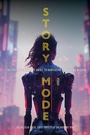
Julialicia Case | Eric Freeze | Salvatore Pane
Story Mode
The Creative Writer's Guide to Narrative Video Game Design
Book
02/2024
Bloomsbury Academic
€25.00
Shipment within 15-20 days
Persons
Julialicia Case is Assistant Professor and Co-director of the Center for Games and Interactive Media at the University of Wisconsin - Green Bay, USA. She teaches courses in fiction, game writing, and digital storytelling. Her creative work has appeared in The Gettysburg Review, Crazyhorse, Witness, Blackbird, and other journals.
Eric Freeze is Associate Professor of Creative Writing at Wabash College, USA, where he developed the Wabash Gaming Lab. He has published four books, including the award-winning Hemingway on a Bike and French Dive. He lives in Crawfordsville, Indiana and Nice, France.
Salvatore Pane is Associate Professor of Creative Writing and New Media at the University of St. Thomas, USA. He is the author of two novels and a book of nonfiction about video games. He's written video games available on Nintendo Switch, Xbox, and PlayStation.
Eric Freeze is Associate Professor of Creative Writing at Wabash College, USA, where he developed the Wabash Gaming Lab. He has published four books, including the award-winning Hemingway on a Bike and French Dive. He lives in Crawfordsville, Indiana and Nice, France.
Salvatore Pane is Associate Professor of Creative Writing and New Media at the University of St. Thomas, USA. He is the author of two novels and a book of nonfiction about video games. He's written video games available on Nintendo Switch, Xbox, and PlayStation.
Content
Chapter I: Game Writing is for Everyone: A Manifesto
Chapter II: Context and Foundations
Part I: Creative Writing for Games
Chapter III: Character and Conflict
Chapter IV: Story, Plot, and Interactivity
Chapter V: Setting and Worldbuilding
Chapter VI: Dialogue
Part II: Game Design for Creative Writing
Chapter VII: Demystifying Genres
Chapter VIII: Game Design and the Creative Writer
Chapter IX: Approaches to Game Construction
Chapter X: Representation and Inclusion
Chapter XI: Designing Games for Empathy and Change
Part III: Practical Tools and Approaches
Chapter XII: Tool Suites and the Game Industry
Chapter XIII: Peer Workshops and Collaborative Writing
Index
Chapter II: Context and Foundations
Part I: Creative Writing for Games
Chapter III: Character and Conflict
Chapter IV: Story, Plot, and Interactivity
Chapter V: Setting and Worldbuilding
Chapter VI: Dialogue
Part II: Game Design for Creative Writing
Chapter VII: Demystifying Genres
Chapter VIII: Game Design and the Creative Writer
Chapter IX: Approaches to Game Construction
Chapter X: Representation and Inclusion
Chapter XI: Designing Games for Empathy and Change
Part III: Practical Tools and Approaches
Chapter XII: Tool Suites and the Game Industry
Chapter XIII: Peer Workshops and Collaborative Writing
Index
